
-
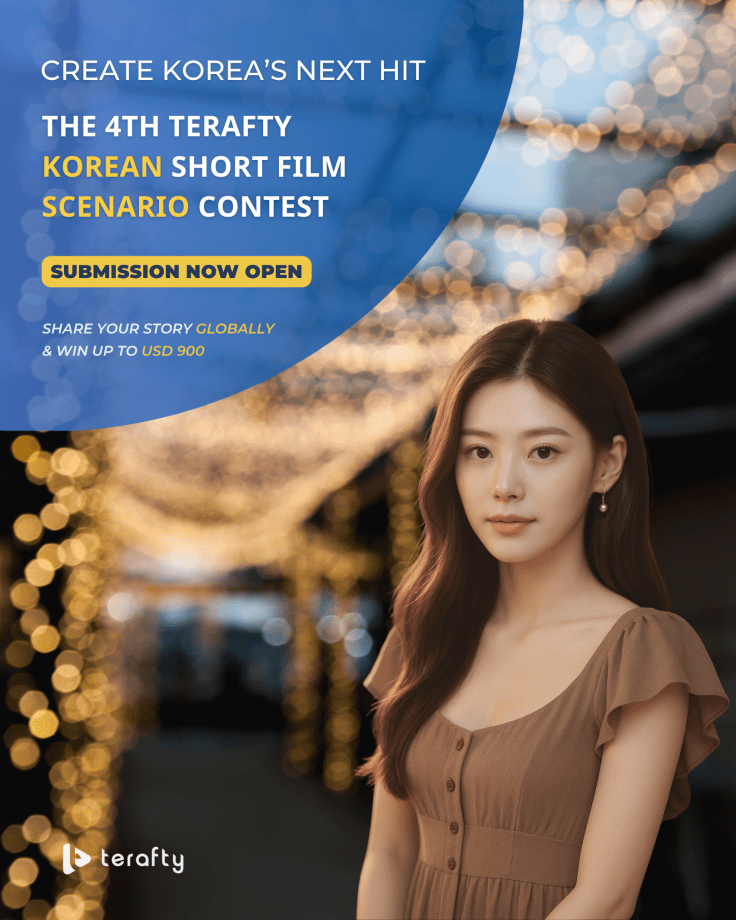
Introducing the 4th Terafty Korean Short Film Scenario Contest!
Introduction
We bring your film ideas to life.
With the success of the past three editions, we are delighted to present the 4th Scenario Contest. We’ve watched amazing stories come to life through this competition and the results have been mind-blowing so far.
The winner of the 1st edition, Your Voice, and the runner-up of the 2nd edition, Cafe Diem, both achieved remarkable results; They received recognition at esteemed international film festivals and also captivated a significant global audience.
Notably, Cafe Diem has been made available in 11 languages to audiences in 141 countries. Moreover, it has secured official selections at renowned international film festivals, including the Capri, Hollywood International Film Festival.
What started as a simple contest has become something much bigger. A genuine platform for storytellers who might not otherwise get their shot. We’re helping create the next generation of voices that will shape how stories are told around the world and also shaping the future of storytelling.
So here we are, ready to do it all over again with our fourth edition. we are rather excited to see what stories you’ll bring us this time.
In this new edition, we’re introducing two exciting new categories: Korean Web Series and International Short Film. For the Korean Web Series category, participants are asked to submit a compelling pilot scenario or script for a web series. The International Short Film category invites narratives inspired by the cultures of various regions across the world, which we expect to open pathways for future collaborations with creators from dynamic areas.
There’s something magical about Korean stories. and we want you to be part of it. Let Terafty be the place where your creative vision finally gets its moment.
💡 Why Participate in the Contest?
- Turn Your Scenario into a Film/Series
The Terafty Korean Short Film Scenario Contest is your chance to bring your story to life on screen. Winning entries will be adapted into short films, gaining exposure at major international film festivals and captivating a global audience with your vision. - Gain Global Recognition
Past winners, such as Your Voice and Cafe Diem, have achieved remarkable success at international film festivals. With a user base spanning over 140 countries, Terafty ensures your work reaches a truly diverse audience. This is your opportunity to showcase the massive potential for your story to resonate worldwide. - Build Your Portfolio & Career
This contest is a chance to establish yourself as a serious storyteller. Finalists and winners can showcase their work as part of a professional portfolio, receive public recognition through our platform, and gain visibility with industry professionals, production teams, and potential collaborators. - Win Exciting Prizes
In addition to seeing your scenario adapted into a film, winners will receive cash prizes and exclusive rewards:
(1) Korean Short Film
🥇 Winner: USD 400 & All-Access Pack for next contest & Deep-dive Interview & Laurel
🥈 Runner-up: USD 150 & Fast Track for next contest & Laurel
(2) Korean Web Series (pilot episode)
🥇 Winner: USD 300 & All-Access Pack for next contest & Deep-dive Interview & Laurel
🥈 Runner-up: USD 100 & Fast Track for next contest & Laurel
(3) International Short Film
🥇 Winner: USD 200 & All-Access Pack for next contest & Deep-dive Interview & Laurel
*In this edition, we will award laurels to semi-finalists and finalists as well.
*We receive a small submission fee for the International Short Film category.
*Submissions are welcome in all categories, regardless of nationality.💵 Entry fees
Korean Short Film and Korea Web Series are free to submit; the International Short Film track includes a small fee that increases with each deadline (see chart below).

📥 How to Submit
- Read the Rules and Submission Process below.
- Submit your scenario here: https://bit.ly/teraftycontest4
🎞️ A Video Guide to How the Contest Works
📜 Rules and Submission Guidelines
1. Submissions
- Each participant, as a member of Terafty, can submit up to two entries to each category. (A maximum total of 6)
- For the Korean Short Film and Korean Web Series categories, your written piece must revolve around Korea, its culture, or Korea-related themes. While the story doesn’t need to take place in Korea, it should still connect to Korea meaningfully.
- For the Korean Web series category, you are only expected to write a script for the pilot episode; the expected duration of each episode is 5-15 minutes. You may provide a brief explanation as to how the story unfolds but be mindful of the word limits.
- For the International Short Film category, your work can be based on any country around the world other than Korea. While not strictly prohibited, characters and settings as well as overall story of your submissions should not be heavily reliant on Korea.
- You can submit the scenario in English or Korean.
- We define ‘scenarios’ broadly, allowing participants to choose between film scenarios, scripts, or narrative short story formats.
- Word limits
(1) Korean Short Film: Between 1,000 and 2,500 words.
(2) Korean Web Series: Between 1,000 and 2,000 words.
(3) International Short Film: Between 1,000 and 2,000 words. - Submissions are open from July 14, 2025
2. Selection Criteria
- Creativity: The ability of participants to develop imaginative and unique narratives that stand out in the contest.
- Originality: The extent to which submissions present fresh ideas and perspectives. Unique premises with relatively weak writing skills often win over predictable settings with strong writing skills.
- Theme alignment: How well the entries adhere to and reflect the central theme of the contest.
- Engagement potential: How well the story resonates with global audiences.
- Adaptation potential: How suitable it is for a film or series adaptation.
3. Eligibility:
- A valid PayPal account is required to receive the cash prize. Although not our primary method, international bank accounts that can receive USD or EUR are acceptable.
⚡ Optional Paid Features
We now offer two optional paid services to enhance your contest experience: Fast-Track and Feedback. Please note that these are optional and it’s free to participate in our Scenario Contest.
- Fast-Track (3.99 USD~) : You get the shortlist result within 5 days with 1-line note.
- Mini Review (6.99 USD~): You receive 300 words of feedback with suggestions for improvement. (The verdict will be announced on the public finalist announcement day.)
- All-Access Pack (9.99 USD~): You get the shortlist result within 7 days with a 300-word review including suggestions for improvement.
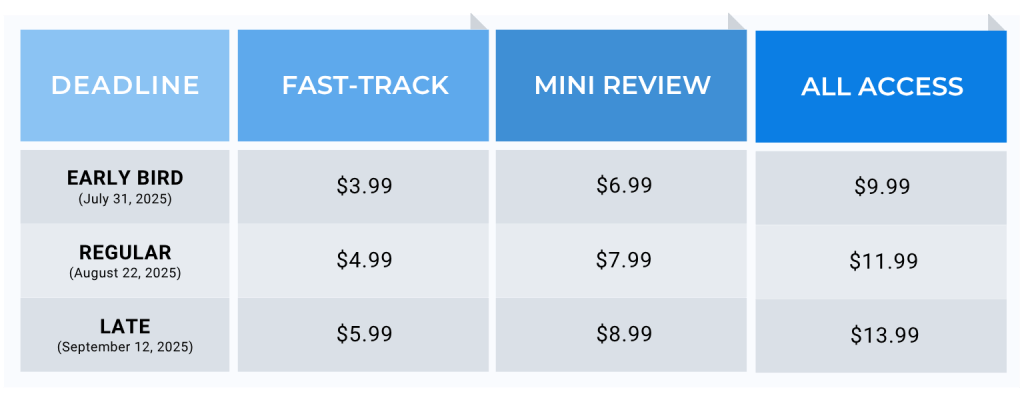
*You can submit your modified work after feedback but it counts as a separate submission and we do not guarantee shortlisting.
*These are optional. Judging remains blind; purchasing feedback does not improve ranking.⚖️ Selection Process
- The Terafty team will review all entries after the submission period ends.
- Up to seven scenarios will be selected as finalists in each category based on the aforementioned criteria.
- The winner and runner-up will be determined through public voting by the Terafty community and evaluation by Terafty’s expert panel, each contributing 50% to the final decision.
📅 Announcement Schedule
- Submission Period: July 14 — September 30, 2025
- Semi-Finalist Announcement: October 24, 2025
- Finalist Announcement: October 31, 2025
- Audience Voting Period: November 5 — November 14
- Winner Announcement: November 21
⚠️ Terms and Conditions (Please read carefully):
1. Acceptance of Rules
Submission of an entry constitutes the entrant’s full and unconditional agreement to these Terms & Conditions and to all decisions made by Terafty, which are final and binding in all matters related to the contest.
2. Originality & Rights
- All submitted scripts must be the entrant’s original work and must not infringe any third-party copyright, trademark, or other proprietary right.
- Entrants warrant that their work is not currently optioned or under an exclusive license elsewhere.
- AI use: Fully AI-generated scripts are prohibited. Limited AI assistance (e.g., grammar checks, outline prompts) is allowed only if disclosed in the submission form.
3. License Granted by Winners
The winning writer retains the underlying literary copyright. By accepting the prize, the winner grants Terafty an exclusive, worldwide, perpetual license to adapt, produce, distribute and monetize any screen version or derivative work based on the script.
4. Disqualification
Terafty reserves the right to disqualify any submission that:
- Violates these Terms & Conditions or the published contest rules;
- Contains hateful, defamatory, obscene, or otherwise unlawful content;
- Is determined—at Terafty’s sole discretion—to be substantially generated by AI without disclosure.
5. Technical Issues
Terafty is not responsible for misdirected, lost, late, corrupted, or incomplete entries, or for any technical malfunction, network failure, or other event outside Terafty’s reasonable control that interferes with the contest.
6. Right to Modify or Cancel
Terafty may amend, suspend, or cancel the contest (or any part of it) at any time and for any reason, including force-majeure events, without prior notice and without liability.
7. Entry Fees & Refund Policy
- Entry fees and payments for optional paid services are required where stated, non‑refundable, and non‑transferable.
- Two entries per category are permitted, but the applicable entry fee (for the International Short Film track) and any optional‑service fees must be paid for each submission.
- Terafty does not offer fee waivers under any circumstances.
- If an entire category is cancelled before judging begins, fees for that category will be refunded in full.
- No other refunds will be issued, including in cases of voluntary withdrawal or disqualification.
8. Prizes & Taxes
- Cash prizes are primarily paid via PayPal or to an international bank account capable of receiving USD or EUR in exceptional cases.
- All federal, state, local, and other taxes or charges associated with the prize are the sole responsibility of the winner.
9. Privacy
Personal data collected from entrants will be processed solely for contest administration and related promotional activities, in accordance with the Terafty Privacy Policy.
10. No-Winner Clause
If, in Terafty’s judgment, no submission achieves the required standard of quality, Terafty may elect not to declare a winner in any category and will return or cancel all entry fees for that category.
11. Production Caveats for Selected Scripts
- Adaptations of winning or runner-up scripts are contingent upon the project’s successful crowdfunding or budget approval.
- If Terafty is unable to secure production resources or a partner team within the option period, the adaptation may be postponed or cancelled without further obligation to the author.
12. Governing Law
These Terms & Conditions are governed by, and construed in accordance with, the laws of the Republic of Korea. Any disputes shall be submitted to the exclusive jurisdiction of the Seoul Central District Court, except where prohibited by mandatory local law.
📝 Frequently Asked Questions (FAQ)
- Can I join the scenario contest if I’m outside of Korea?
Answer: Yes. Anyone from anywhere in the world can join our contest. - In which languages can I submit my scenario?
Answer: You can submit your scenario in either English or Korean. - Can I submit to more than one category?
Answer: You’re encouraged to submit entries in as many categories as you like. - Can I submit something other than a scenario?
Answer: We prefer scenarios, but we are open to other formats as long as they tell a good story. - Can I win all three categories?
Answer: Yes. Theoretically, it’s absolutely possible to win all three if your entries stand out in each one. - Do I need to write a scenario and also help make the film?
Answer: No. you only need to write the scenario. You don’t have to participate in making the film. - What does “Korea-themed” mean?
Answer: Your scenario should be about Korean culture, history, or something related to Korea. It doesn’t have to take place in Korea, but it should have a strong connection to Korean elements. - Will I be disqualified if I exceed the word limit?
Answer: While it’s not a hard cutoff, we strongly recommend staying within the limit to ensure fair evaluation. - How can I become a member of Terafty?
Answer: You can sign up on our website. Just remember to use your registered ID when you submit your scenario. - Do I need to submit all episodes of my web series script?
Answer: No. Submit only the pilot episode (the very first episode). - Can I add a summary of later episodes?
Answer: Yes, you may include a brief synopsis of what follows the pilot, but it counts toward the word limit, so keep it concise.
🚀 Join Us in Shaping the Future of Korean Filmmaking!
Share your scenario and seize the opportunity to see it transformed into a short film. Don’t miss this chance to make your mark in the world of Korean film. For any inquiries or additional information, please reach out to us. We’re here to assist you.
📧 Email: cs@terafty.com📜 Meet Our Past Finalists
- Turn Your Scenario into a Film/Series
-
Interview with Sung-ho Jung

Writer Sung-ho finds his voice with Founder 101, a raw portrait of entrepreneurial failure set against Seoul’s demanding startup environment. The series was sparked by the stark image of a close family member’s collapse, tracing a young founder’s desperate path from an elite university to a cold, cramped office. Sung-ho integrates his observation of the immense strain on staff and cofounders, blending dark humor with the protagonist’s shift from rational confidence to superstitious desperation. In our conversation, Sung-ho discusses turning witnessed failure into drama, deliberately puncturing the fantasy of glamorous success, and how he hopes the series acts as both warning and encouragement.
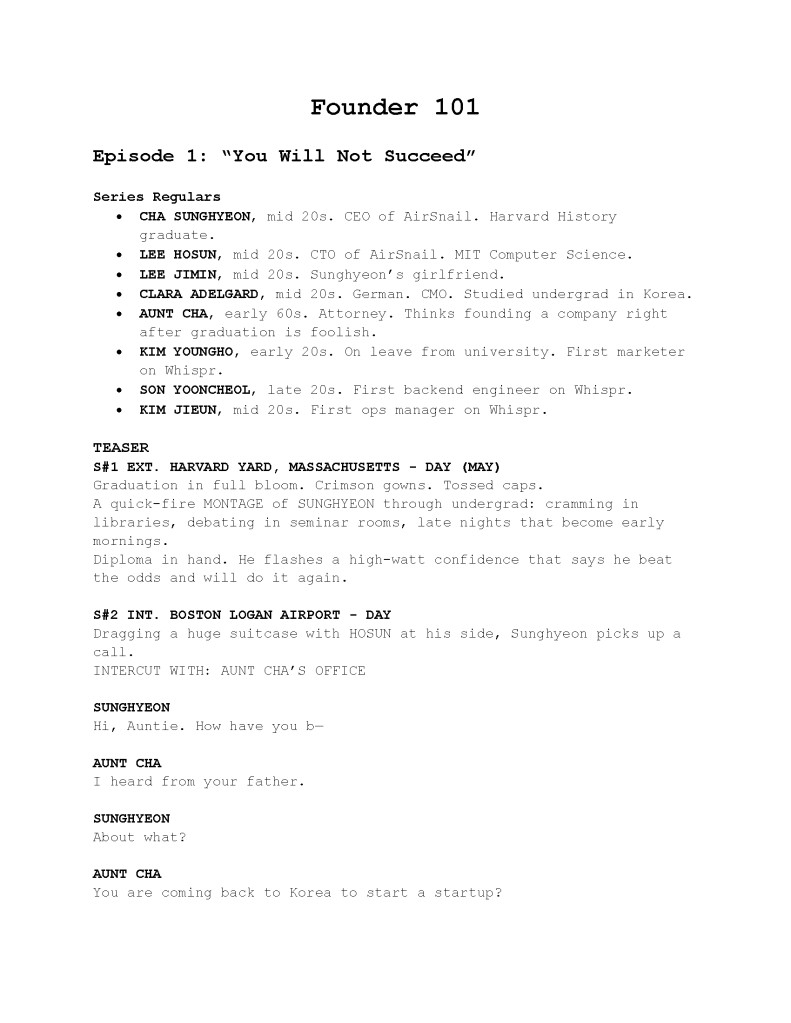
First page of Founder 101 What was the very first image, line, or situation that sparked Founder 101 in your head, and how did that seed grow into an episode that follows Sunghyeon from Harvard Yard to a cold Seoul winter?
This story actually stems from my personal observation of a family member as a failed startup founder. The initial spark was the stark image of moving from the arrogance of graduation to the desperation of a freezing office. I integrated these observations with the experiences of other founders, supplemented by imaginative elements.
The episode title “You Will Not Succeed” is rather blunt. What kind of fantasy or misconception about startups were you trying to puncture with that choice of title?
Most media about startups focuses on the hustle and the almost immediate, glamorous rewards. I wanted to debunk that fantasy. I thought it was time to show the harsh reality of entrepreneurship while proving that the struggle itself can still be entertaining.
You start with the prestige of Harvard, then cut to a cramped office, skeptical judges, and a government grant process. What did you want this contrast to say about the gap between elite education and the actual realities of early founders?
I believe that education and entrepreneurship require vastly different skill sets. There is a survivor bias that suggests prestige leads to business success, but that is misleading. I wanted to show that a degree from an elite university doesn’t solve product-market fit or server crashes. It definitely doesn’t equal entrepreneurial success.
Sunghyeon begins as someone who believes “the universe is with us” and dismisses fortune telling as unscientific, yet later he is sitting in front of tarot readers, saju experts, and a shaman. How did you design this shift from rational confidence to almost superstitious desperation?
It is a trajectory I have seen often. When you have data and growth, you trust science. When the numbers crash and logic offers no solution, you look for any answer. The shift to superstition isn’t about stupidity; it is about a total loss of control. He goes to the shaman because the dashboard stopped giving him hope.
Aunt Cha and Jimin both push back on Sunghyeon, but from very different positions: one as an older attorney, one as a partner who cannot see a stable future. How did you think about those two as different kinds of pressure on him, and what does each one reveal about his blind spots?
Aunt Cha represents the “established path” he rejected; she is the voice of societal judgment reminding him he has zero experience. Jimin represents the personal cost. Her leaving reveals Sunghyeon’s biggest blind spot; he thinks everyone should wait for his success, but regrettably life does not pause for your startup’s runway or eventual exit.
Youngho, Jieun, and Yooncheol each have a vivid personal story and a specific way of exiting the company. What did you want their individual paths to say about how early employees experience risk, loyalty, and survival differently from founders?
Founders expect employees to bleed for the company, but employees have their own dreams. Youngho wants love in Botswana; Jieun wants stability. Yooncheol is the most realistic mercenary; he moves to the winner, Hush. I wanted to show that loyalty has a limit when the ship is sinking.
Whispr grinds its way from a few dozen users to ten thousand MAU, only to discover that a later competitor, Hush, has launched with stronger funding and similar features. How closely does this mirror patterns you have observed?
Very closely. First-mover advantage is often a myth. In the script, Hush comes in with CVC funding and copies Whispr’s USP immediately. It mirrors the reality that execution and capital often beat “passion” and “first launch.”
The sequence of fortune tellers, the LLM refusing to engage with suicidal language, and the near jump on Seongsu Bridge builds a very specific portrait of a founder at the edge. How did you calibrate those scenes so they felt grounded rather than sensational, especially around self-harm and depression?
I used the LLM conversation to ground it in modern isolation. Sunghyeon has no one left to talk to, so he types “I want to jump” into a chatbot. The bot’s canned refusal to assist highlights his absolute loneliness better than a dramatic monologue.
The airport scene is described as the death of the “polite elite” version of Sunghyeon and the birth of him as a founder. Do you personally read that moment as a healthy transformation, a dangerous obsession, or something more ambiguous that you want the audience to argue about?
It may not be healthy in a general sense, but it is required for his survival in this game. The “Harvard Sunghyeon” who gently market his product and politely pitches judges is dead. The man screaming on his knees in the airport has no ego left. I view it as a dangerous yet necessary transition that is needed to truly become a successful entrepreneur.
The episode moves across languages, visual spaces, and pacing styles, from polished law firm interiors to a cramped office, from montage to stillness. How did you think about rhythm and contrast when structuring this pilot so that the emotional volatility of founder life comes through formally as well as in dialogue?
I think startup life is bipolar. I structured the montages to feel fast and blurry because that just seems to be how startup growth really feels. I tried to contrast that with the stillness of the winter scenes where the office is empty and silent.
You include small but memorable details such as Youngho’s Botswana trip, Jieun’s freediving story, and a handwritten love letter in an age of DMs. What role do these micro stories play in your overall portrayal of startup culture and mid twenties life around Whispr, and how did you decide which ones to keep in the final script?
These elements are primarily included for character development and foreshadowing, but they also serve a vital role, which is to remind the audience that employees are human beings, not just ‘resources’ or a ‘burn rate.’ Youngho writing a letter to his girlfriend in Botswana illustrates a rich inner life entirely separate from the app. I retained the stories that underscore their personal sacrifices.
book-review, book-reviews, books, fiction, Film, K-pop, korea-drama, Korean actors, Korean actress, Korean actresses, Korean drama, Korean film, Korean movie, Korean movies, Korean series, Korean thriller, korean-folklore, korean-scrpt, korean-story, korean-tv-show, literature, movie-review, reviews, scenario-contest -
Interview with Rio Firmansyah

For Rio Firmansyah, Love Cam is where a quiet office job collides with the temptation to measure every emotion. A throwaway idea about a shy worker glimpsing floating percentages above people’s heads grew into a romantic story about insecurity, comparison, and the risk of trusting what you feel instead of what the numbers say. Drawing on real office dynamics, social media anxiety, and moments of self loathing, Rio uses the mysterious app as a soft, glowing device to hold both warmth and sadness, letting Andra’s crush on Wina double as a slow battle to accept himself. In our conversation, he talks about keeping the fantasy element believable, writing Wina as a grounded partner rather than a dream projection, and why he hopes Love Cam feels like a quiet nudge to anyone who has ever hidden behind metrics instead of speaking up.
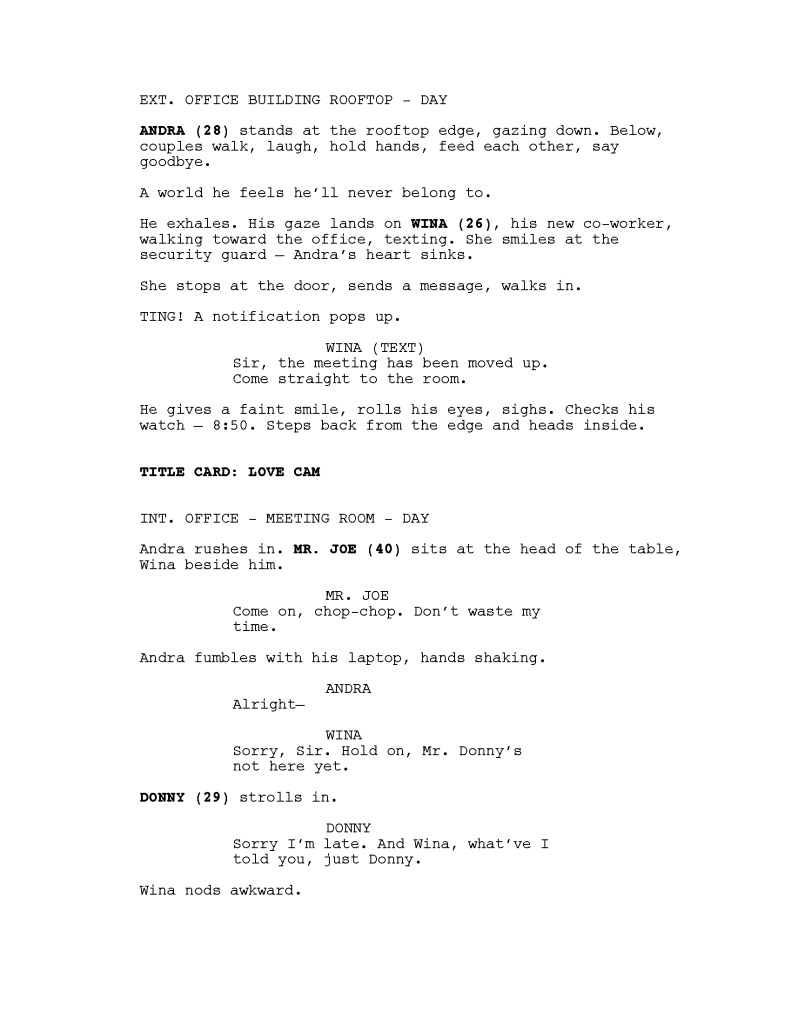
First page of Love Cam You have participated in all four editions of the contest, and in this edition you finally rose as the winner. What does this particular breakthrough reveal to you about your own creative voice?
First, thanks to the Terafty team for the opportunity and appreciation given to me and the other scriptwriters through this contest. I feel happy and proud of myself for never giving up and for continuing to try until I finally won this time. And perhaps it is this persistence that has pushed me to keep learning and improving myself, allowing me to create better and more compelling stories, ultimately leading to the creation of Love Cam.
When you reflect on your earlier submissions compared to Love Cam, what shift in your storytelling approach feels most defining?
Honestly, when I first joined the Terafty contest, it was mostly just for fun and because I enjoy creating stories. But as time went on, I started wanting to prove to myself that I could write something good and engaging. Maybe it’s also because in the previous editions, I only joined the Korean short script category, which was free to enter, so I became a bit complacent and didn’t really think about developing a solid story.
This time, when I joined a category with a more open theme, I think that gave me a bigger opportunity, because even though I love watching Korean dramas, my knowledge about Korea isn’t that deep. And since there was an entry fee this time, I really pushed myself to create the best work I could, haha.
Love Cam begins with an unexplained app that appears out of nowhere. What was the first idea or sensation that led you to build a story around this device?
I first got the idea from Korean dramas like Love Alarm and S-Line, which use a device that helps characters navigate their love lives. I liked the thought of creating a similar device but adding a layer of mystery to it, questions like whether the device is truly accurate, whether it was made by a genius, or if there’s some kind of divine power behind it. Well, we’ll just have to wait and see how this mystery unfolds
The app reveals only selective emotional information. How did you decide the exact emotional boundaries of what the app should and should not show?
At first, I wanted to make it like the emotion status system in The Sims, complete with various feelings beyond just love and hate. But then I realized it might become too complicated and end up looking like an adaptation or even a parody of The Sims. So I decided to include only the emotions I felt were the most interesting while keeping it simple, which led to the Love and Hate status.
Andra’s insecurity and self doubt are depicted with striking realism. What personal observation or emotional insight motivated you to explore his inner world?
Actually, I created Andra’s character based on myself and yes, I exaggerated certain parts to make him more interesting. And maybe Love Cam is also a reflection of my own personal wish to have a device like that in real life, haha.
Wina carries a gentler emotional tone that balances Andra’s volatility. What was the core quality you wanted her to represent from the beginning?
I wanted to create Wina as a character who contrasts with Andra, because I also wanted to heighten Andra’s insecurity; he feels like he can’t match Wina’s cheerful and outgoing personality. This contrast is what intensifies Andra’s feelings when he gets the Love Cam app and suddenly feels he has a chance to win her over.
Love Cam includes commentary on validation, comparison, and emotional misunderstandings. Which theme was the most difficult to integrate without overwhelming the story?
For me, none of those themes were particularly difficult because they are all interconnected, making the story feel more complex and engaging.
If there is an unspoken theme beneath the narrative structure that shapes the emotional rhythm, what would that theme be?
Maybe the theme is about trying. In the story, Andra never once tries to approach Wina because of his insecurity, and he only makes an effort when he gets the Love Cam. I think the idea of trying is very important here, because even if we don’t know what will happen or what kind of answer we’ll get, at least we’ve tried and maybe something good will come to us because of that.
The story moves between quiet realism and light magical elements. What guided you in maintaining coherence between these two tonal layers?
I always try to bring realism into my stories to make them feel relatable for the readers or viewers. And for the magical elements, I make sure to consider whether the magic still feels reasonable and believable enough so it doesn’t break the realism of the story world I’m creating.
The origin of the Love Cam app is intentionally left open. How did you determine the value of mystery versus explanation in this story?
I’ve always liked stories that are open-ended and full of mystery because they give the audience the freedom to interpret what lies behind the story. But I also make sure the mystery doesn’t turn into a plot hole. In Love Cam, I considered the story’s duration as well as the possibility of a continuation, so I decided to leave it open and mysterious.
Which scene in Love Cam was the hardest for you to shape, and what insight or rewrite allowed it to finally reach the form you wanted?
The final scene at the office garden. I found that scene very tricky because it’s the ending, so it needs to be strong enough to deliver the maximum emotional climax. I had to carefully consider both the actions and the dialogue so it wouldn’t feel cringe or cheesy. The trick I used to get the right feeling for the scene was to reenact it in real life with the help of a friend, especially to refine the dialogue choices.
What part of your writing process for this script pushed you the furthest beyond your comfort zone?
Honestly, the genre of Love Cam is very different from the kinds of stories I usually write. Some of my friends even found it strange and questioned my ‘ideals’ when they read this script. Even though I’ve loved Korean dramas since high school, I rarely write romantic comedies inspired by K-drama storytelling like Love Cam. But I’m happy, because stepping out of my comfort zone and creating a story in a genre I had never tried before actually worked out well.
Love Cam explores how people interpret signals and misread intentions. What did you learn about audience psychology while crafting moments where viewers must choose whether to trust what they see or what the characters feel?
I learned this from my own experiences, how I often interpret signals from people around me and let my imagination run wild without thinking logically. I realized that directly approaching someone is something we should do, even if it might lead to a painful answer. But again, at least we tried, instead of staying silent and letting our imagination play its own games.
Romantic stories often succeed or fail based on emotional timing. What principle guided you when deciding the exact moments where Andra and Wina should move closer, pull back, or misunderstand each other?
To be honest, I’m still learning, because even now I often get things wrong in that area. But I’ve learned from my friends’ experiences: just do it, let things flow naturally, and be honest and open with each other.
Now that Love Cam has brought you this significant result, what new narrative challenge or creative territory are you most interested in exploring next?
Just keep writing. I love creating stories, and writing scripts is my hobby, so I’ll keep writing. And maybe, after proving myself through Love Cam, I’ll try exploring new styles and genres that I’ve never attempted before.
-
Interview with Helin Marlina (crownhope)

In the space where Korean folktales meet Gen Z reality, writer Helin Marlina finds her voice with Kongjwi and the Gen Z God. What started as a wish to see Kongjwi and Patjwi through the eyes of today’s girls grew, over multiple contest entries, into a bold reimagining that questions gender roles, family expectations, and who gets to be “good” in a story. Writing as “crownhope,” she folds her own experience with rejection and perseverance into the script, blending sharp humor with quiet emotional blows and giving her Kongjwi a need not just to be kind, but to be seen. In our conversation, Helin talks about the long road to this winning piece, how Gen Z language and online culture slipped into a Joseon village, and why rewriting old tales can open new space for readers who never saw themselves at the center.
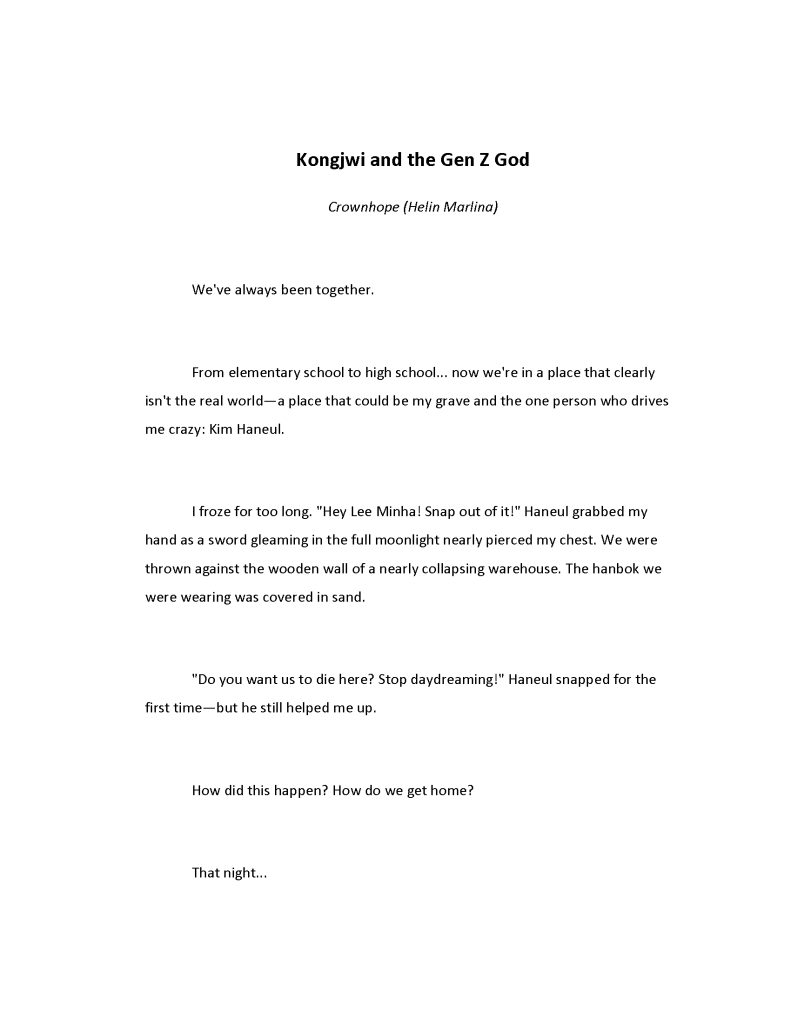
First page of Kongjwi and the Gen Z God You’ve participated in all four editions of the contest; first without reaching the finalist stage, then finalist, then honorable mention, and now winner. What do you think changed most in your writing across these four editions?
Reflecting on this question brings me back to all the works I’ve written since the first edition. I realize my writing style has indeed changed a lot, though I didn’t pay much attention to it at first. Over the years, writing online under my pen name ‘crownhope’, I received more rejections than praises. Back then, I only thought, ‘My writing is still poor, I need to work harder.’ But it was through that phase that I truly grew. I learned what makes a story resonate with readers. Now, I better understand how to make readers feel the emotions of the characters—and that is the biggest change in my writing style.
Across your four contest entries, what part of your creative identity stayed consistent, and what part changed the most?
What has always been consistent in my work is the desire to make readers immerse themselves in the characters’ feelings. That has always been the strongest part of my creative identity, even since my first work. What has changed is how I achieve that. Whereas I used to write very emotionally and sometimes unstructured, now I am more aware of rhythm, word choice, and how to build emotion effectively. Many rejections and experiences writing on online platforms have made me more sensitive and mature in crafting stories.
Where did the initial idea for Kongjwi and the Gen Z God come from?
Actually, the idea just popped up at random times. At that time, I often watched anime, manhwa, and K-drama reels about characters who experienced isekai, and coincidentally, I was also watching The First Night With the Duke. From there, I thought it would be interesting if a Gen Z character suddenly had to face a situation from the past. The challenge was determining which “past” I wanted to use. I didn’t want to touch on South Korean history because I deeply respect it, so I looked for alternatives. The middle ground was using folk tales. I didn’t immediately choose the story of Kongjwi and Patjwi; I did some research first. As a result, I found that this folktale is rarely adapted, while the more popular ones tend to take on Cinderella themes, such as Cinderella with Four Knights, Cinderella’s Sister, or Cinderella at 2 AM. Since the theme had to remain relevant to Korea, I thought it would be fun to introduce this folktale in a more modern version—through the perspective of a Gen Z character.
What inspired you to fuse a traditional folktale character like Kongjwi with a distinctly modern, Gen Z reinterpretation?
I was inspired by the strong Gen Z phenomenon in everyday life—the way they talk, think quickly, are ironic, realistic, but also humorous. I felt that characters with that kind of energy would provide an interesting contrast when placed in front of the traditional fairy tale world, which is much simpler, innocent, and full of classic morals. In Indonesia, I often see unique and relatable Gen Z phenomena, and I think it would be fun to bring that energy into a story. Therefore, I chose a fairy tale world like Kongjwi as the setting, then developed the characters with a more emotional and realistic modern approach in the style of Gen Z. For me, this combination not only produces humor, but also an interesting exploration of how classic fairy tale values meet the way of thinking of the current generation.
When adapting folklore, how did you decide which elements should stay faithful to the original and which parts you wanted to transform?
When adapting folklore, I always start with the core elements of the story, such as the Kongjwi–Patjwi plot, the conflict with the stepmother, the farm work, the hoemi, the hanbok, and the moment when Kotshin is left behind. I retained these elements because they form the foundation that keeps the story feeling like folklore. On the other hand, I change the characters, their dialogue, and expressions to make them more relevant to the current generation. For example, my version of Kongjwi is more emotional, realistic, and humorous in a Gen Z style, while Haneul becomes a unique and modern helper god. For me, these changes make the story more exciting and enjoyable while exploring new dynamics between the characters and the fairy tale world, without losing the original essence of folklore.
The ‘Gen Z God’ is a unique figure with its playful, sharp, and socially aware traits. Which real-life behaviors or generational traits shaped this character?
The character of ‘Gen Z God’ is largely shaped by what I see every day about Gen Z, especially through social media. They are cheerful, humorous, quick-witted, but also sharp when responding to things they consider unfair. Many of them are also sensitive to social issues, such as equality, mental health, or the environment. Observing these things made me want to create a modern and relevant god figure, but one that is still fun, who can relate to the way of thinking and attitude of the current generation.
Your story carries different emotional nuances from the classic version. What was the core emotional truth you wanted your Kongjwi to reflect?
The emotional truth I want to convey through my version of Kongjwi is about feelings of injustice and the desire to be recognized. In this story, Kongjwi is not just a patient girl who is always right, but she also has feelings of frustration, envy, and explosive emotions—something that is very human and can be felt by many people. I want readers to feel what it’s like to struggle to find our place, face other people’s expectations, and persevere even when the world seems unfair. The Kongjwi I created is realistic, emotional, and sometimes humorous, showing that even fairy tale characters can have complex human sides. This is the emotional core that I hope will touch readers, while still maintaining the excitement and dynamics of the story.
This script carries multiple themes from tradition vs. modernity to identity, humor and social commentary. Which theme was the hardest to express without making it feel didactic?
Of the various themes raised in this script, I feel that social criticism about gender differences is the most difficult to express without sounding patronizing. This topic is very sensitive, and I wanted to convey it naturally through the characters and situations, rather than as moral advice. I had to be careful so that readers could feel the injustice or stereotypes faced by the characters, while still enjoying the story, laughing, or connecting with their emotions, without feeling like they were being taught what is right or wrong.
If there is an underlying theme that is never spoken directly but still shapes the structure of the story, what would that theme be?
A fundamental theme that I don’t express directly but still shapes the story is the struggle to be accepted and recognized for who you are. Although Kongjwi seems like a fantasy tale full of humor and adventure, its emotional core revolves around the desire to be appreciated and recognized—something that is very human. This theme influences how Kongjwi reacts to conflict and her interactions with Haneul. Haneul and Minha’s interactions themselves are inspired by the chaotic but caring dynamics of Stray Kids’ Gagwanz, which I applied to their relationship.
Which scene in this script challenged you the most or required the most rewrites?
The most challenging scene for me was when Kongjwi taught Patjwi archery. I wanted to convey a message about gender equality and empowerment, but I had to be careful not to sound preachy. This scene required a lot of revisions to maintain a balance between conveying the theme while remaining natural and entertaining. In addition, the scene where Kongjwi meets the ‘prince’ who looks like her first love was also challenging, because I wanted the characters’ emotions to feel strong and authentic, while the limited number of words in the competition restricted the details I could include. These two scenes really tested my ability to express emotions and themes effectively in a limited space.
Which part of the writing process for this story pushed you outside your comfort zone, and how did working through that difficulty change the final result?
The part that pushed me out of my comfort zone the most was writing about the gender dynamics between the characters Kongjwi, Patjwi, and Haneul. This theme is sensitive because it touches on stereotypes about ‘female roles’ and ‘male roles’, such as when Haneul—a man who enjoys sewing—is often teased, or when Minha has to teach Patjwi archery even though it is not traditionally considered ‘appropriate’. The difficulty was to keep the scenes from sounding preachy, while still being emotionally honest. I overcame this by focusing on the characters’ personal experiences—jealousy, family pressure, and the search for identity—rather than lectures on gender.
Did you have the final ending in mind from the beginning, or did the direction shift as the draft evolved?
I already had the ending I wanted even before I started writing. From the beginning, I planned the climactic scene where Minha and Haneul are surrounded by enemies wielding swords—I placed that scene at the beginning to create a hook and set the main direction of the story. Since the ending was already fully formed in my head, the draft didn’t change much; I only adjusted the characters’ emotional journeys so that they would lead to that ending naturally.
When bringing a Korean folktale into a modern context, how do you decide which cultural details to highlight and which to simplify or reinterpret?
I chose to highlight aspects of Korean culture that were important to the story—such as the village setting (scrolls, hanbok, kotshin, hangari, hoemi), family relationships, and the Kongjwi–Patjwi conflict. That’s what keeps the story feeling like a Korean fairy tale. Meanwhile, I simplified details that were too traditional or complicated and adapted them to Gen Z style, especially the characters’ speech and personalities. In essence, I maintained the folklore feel, but made it easy for today’s readers to enjoy.
What do you hope younger readers or viewers (especially Gen Z) take away from your modern take on Kongjwi?
As a writer who is also Gen Z, I hope that young readers, especially Generation Z, can feel that everyone has their own struggles and don’t have to follow the roles that others have set for them. Through characters like Minha and Haneul, I want to show that being yourself, being brave, and supporting each other are important, even when the world feels unfair. If there’s one thing I want to convey, it’s that they are valuable and have the right to determine their own path in life.
Now that you have completed this four edition trajectory and reached the top result, what new creative challenge or territory are you interested in exploring next?
For now, I haven’t decided on a specific theme or genre to explore, but I want to continue exploring my storytelling style. In addition to writing novels, I also want to bring my work to other mediums, especially Webtoons and the screen. I’m not good at drawing or directing, but I believe Webtoons and films can present my stories visually and reach a wider audience. I want to write stories that can one day be adapted, so that my work can be enjoyed not only by readers, but also by viewers and fans of visual media.
-
[The 4th Terafty Scenario Contest] Final Outcomes
![[The 4th Terafty Scenario Contest] Final Outcomes](https://teraftyblog.com/wp-content/uploads/2025/11/female-version-1.png?w=736)
The results for the 4th Terafty Korean Short Film Scenario Contest are now live.
Thank you to everyone who submitted their work and helped shape this edition.This year’s contest brought in a diverse range of stories across three categories: Korean Short Film, Korean Web Series, and International Short Film. After the voting and judging process, the Winner, Runner-up, and Honorable Mention for each category have now been confirmed.
Korean Short Film
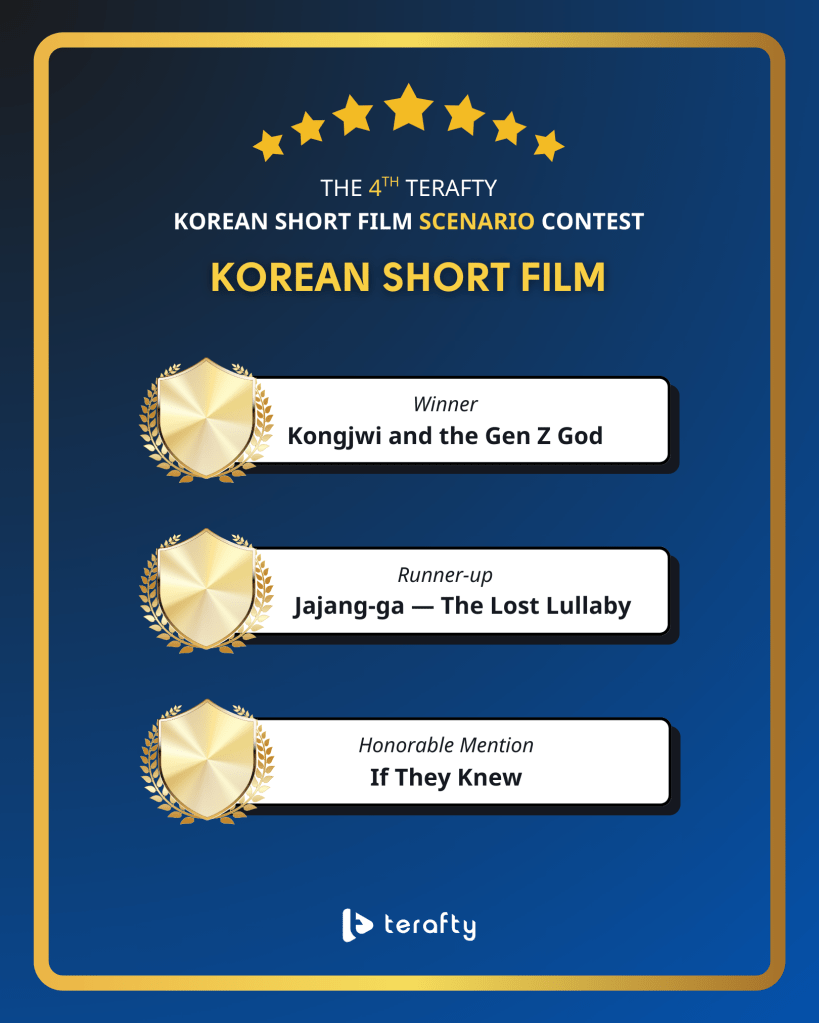
🥇 Winner: Kongjwi and the Gen Z God by Helin Marlina
🥈 Runner-up: Jajang-ga — The Lost Lullaby by Mareta Widyawaty
💐 Honorable Mention: If They Knew by Natalia BordottiKorean Web Series

🥇 Winner: Founder 101 by Sung-ho Jung
🥈 Runner-up: The Fate of Red Threads by Suvi Sharma
💐 Honorable Mention: 87 Bytes by Paolo ParungoInternational Short Film

🥇 Winner: Love Cam by Rio Firmansyah
💐 Honorable Mention: Ending by Gen HiraiwaThank you once again to all those who took part in this edition. We look forward to welcoming you again in the next contest.
-
[The 4th Terafty Scenario Contest] Vote for Your Favorite Scenario — International Short Film Category
![[The 4th Terafty Scenario Contest] Vote for Your Favorite Scenario — International Short Film Category](https://teraftyblog.com/wp-content/uploads/2025/11/3-1.png?w=736)
The wait is over! Meet the Finalists of Terafty’s 4th Korean Short Film Scenario Contest. After reviewing numerous captivating submissions, we are delighted to present seven exceptional scenarios with the potential to light up the big screen.
Now, the big question: Which story will win the opportunity to be Terafty’s original series? The decision is yours! Your vote helps decide which story makes it to the screen, which makes you an integral part of Terafty’s adaptation process.
Read the finalists’ scenarios, cast your vote, and help decide the next Terafty original film!
🗳️ Voting Process
We’ve created a simple and seamless voting system to gather your preferences. Here’s how it works:
- Review the scenarios: Take your time to explore each scenario. Each one offers a unique story that will take viewers on an unforgettable journey.
- Pick your favorite: Choose the scenario that speaks to you the most. Consider the story, characters, and themes that stand out.
- Access the Google Form: Open the provided Google Form to participate in the voting process.
Finalists Voting – The 4th Terafty Korean Scenario Contest - Cast your vote: Follow the instructions in the form to submit your vote.
- Stay tuned: We’ll announce the winning scenario and share the exciting news once voting ends. We’ll evaluate the scenarios based on their creative potential and feasibility. The final decision will be made from a combination of audience votes (50%) and Terafty’s evaluation (50%). Your vote is essential in helping shape our next film, and your voice will be heard alongside our expert assessment. We can’t wait to share the results and take this cinematic journey together.
🏆 The Finalists
Here are the seven finalists, standing out as the strongest submissions. To help you make an informed decision, we’ve included a brief overview of each scenario below. Please note that, due to copyright reasons, only part (approximately 60-75%) of each scenario is shown, but enough for you to evaluate them fairly.
Note: We’ve recently updated our policy and will remove all finalist works after each edition, except for those to which we hold rights1. Audition
(1) Writer: Aleksandar Saracevic
(2) Genre: Psychological Thriller, Drama
(3) Logline: A struggling actor humiliated by a casting director spirals from repeated rejections to a locked-door confrontation, forcing her to watch his performance and leaving them both changed in the aftermath.
(4) Unique Points:
- Industry power on display: Auditions show a bored, distracted panel and abrupt cutoffs that dehumanize performers.
- Power reversal set piece: The empty theater encounter flips authority when he locks the door, compels applause, and orders her to perform.
- Psychological fallout: Nightmares, stalking behaviors, and a later trigger in the audition room depict lasting trauma rather than neat closure.
2. Cotton Candy
(1) Writer: Wenting Hu
(2) Genre: Drama, Family
(3) Logline: At his mother’s birthday, an unemployed top-school graduate now doing food delivery clashes with his status-conscious sister, but a backyard talk with his six-year-old niece and her simple “cotton candy” dream helps him see past pride and expectations toward a truer next step.
(4) Unique Points:
- Child’s-eye catalyst: A niece’s frank observations cut through adult anxiety and guide the uncle toward honesty with himself.
- Everyday realism: Market haggling, family dinner tensions, and job shame create recognizable stakes without melodrama.
- Cotton-candy motif: A simple street treat becomes a symbol of small joys and a counterpoint to grind-set pressure.
3. Ending
(1) Writer: Gen Hiraiwa
(2) Genre: Sci-Fi, Comedy
(3) Logline: A young robot thinks time itself is breaking inside him and sets out for help, only to learn it was a dead battery alarm, which nudges him toward a new dream of becoming a Reverend.
(4) Unique Points:
- Time-slip misperception: His sped-up viewpoint makes everyday scenes feel wrong, turning a simple malfunction into a playful mystery.
- Robot faith angle: Conversations about prophecy, extra dimensions, and a “God dimension” give the comedy a philosophical core.
- Small fix, big epiphany: A cheap repair solves the problem, but the experience sparks a sincere life goal, ending on hopeful humor.
4. Red in the Wood
(1) Writer: Gerd Witt
(2) Genre: Horror, Dark Fantasy, Mystery
(3) Logline: When a girl follows clues to a witch’s cottage to find her missing brother, she is trapped in an enchanted house where children reach from walls, a cursed boy becomes a wolf at night, and a red-clad lure must choose between obedience and saving the captives.
(4) Unique Points:
- Folktale mashup: Red Riding Hood and Hansel & Gretel elements are remixed into a new predator–lure setup with Emma, Wolfgang, and the witch Alma.
- Enchanted-house mechanics: Mirror scares, vanishing door handles, shifting corridors, and hands emerging from walls create clear, cinematic set pieces.
- Sympathy for the lure: Emma kidnaps to protect her cursed boyfriend, adding moral tension and a potential redemption track alongside the rescue plot.
5. Love Cam


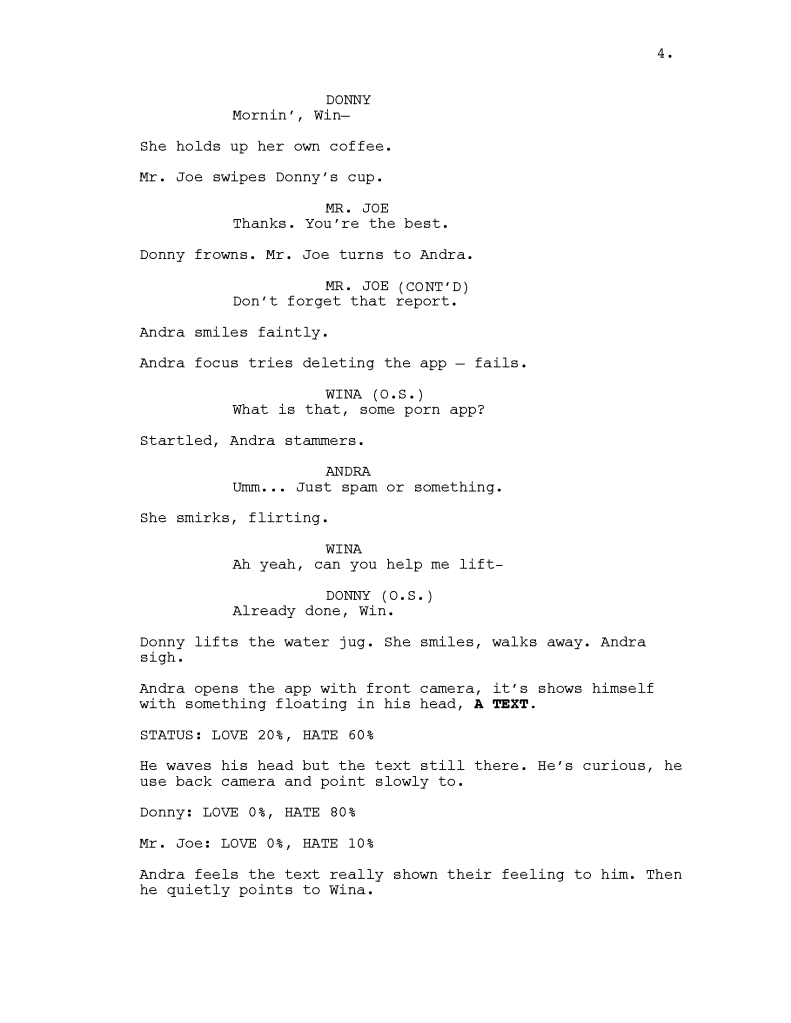


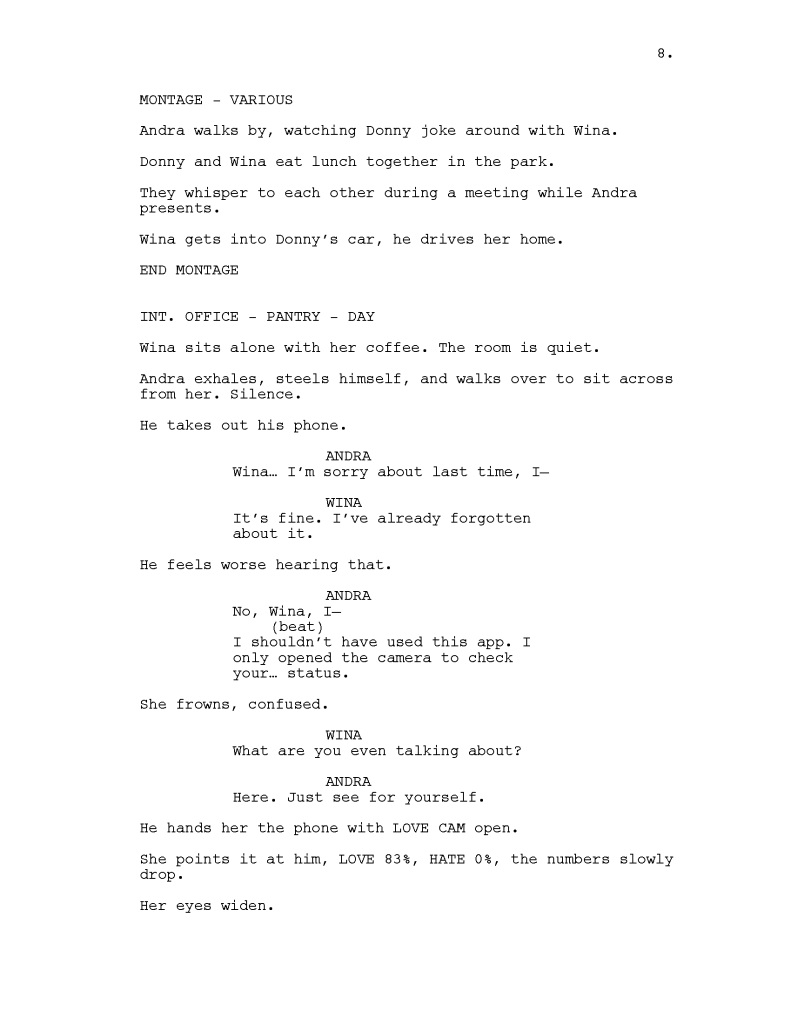
(1) Writer: Rio Firmansyah
(2) Genre: Romance, Fantasy
(3) Logline: An insecure office worker finds a mysterious phone app that shows how much people love or hate him, fumbles his crush by relying on it, then wins her trust by deleting it and choosing real connection.
(4) Unique Points:
- Feelings-as-numbers hook: A camera overlay displays live love and hate percentages, creating clear, visual stakes and playful set pieces.
- From tool to truth: The romance turns when he admits the mistake, apologizes, and lets the app go, tying growth to self-worth instead of a gadget.
- Light sequel tease: A final mass message for “LOVE CAM+” hints at a wider world while keeping the couple’s ending sweet and simple.
✨ Your Vote Brings Stories to Life
As you explore each scenario, we invite you to vote for the scenario that truly captivates you and sparks your imagination. This process is more than just picking a favorite; it is a chance to influence the next Terafty film we create together. Voting will be open from Nov 5 until 11:59 PM (KST) on Nov 14, 2025, so make sure to cast your vote during this period!
To keep this process genuine and fair, we’ll be keeping a close eye on any suspicious or fraudulent activity. Only real votes from real fans will count. Let’s make this competition fair, and stay tuned to see which story comes to life on screen!
-
[The 4th Terafty Scenario Contest] Vote for Your Favorite Scenario — Korean Web Series Category
![[The 4th Terafty Scenario Contest] Vote for Your Favorite Scenario — Korean Web Series Category](https://teraftyblog.com/wp-content/uploads/2025/11/2-1.png?w=736)
The wait is over! Meet the Finalists of Terafty’s 4th Korean Short Film Scenario Contest. After reviewing numerous captivating submissions, we are delighted to present seven exceptional scenarios with the potential to light up the big screen.
Now, the big question: Which story will win the opportunity to be Terafty’s original series? The decision is yours! Your vote helps decide which story makes it to the screen, which makes you an integral part of Terafty’s adaptation process.
Read the finalists’ scenarios, cast your vote, and help decide the next Terafty original film!
🗳️ Voting Process
We’ve created a simple and seamless voting system to gather your preferences. Here’s how it works:
- Review the scenarios: Take your time to explore each scenario. Each one offers a unique story that will take viewers on an unforgettable journey.
- Pick your favorite: Choose the scenario that speaks to you the most. Consider the story, characters, and themes that stand out.
- Access the Google Form: Open the provided Google Form to participate in the voting process.
Finalists Voting – The 4th Terafty Korean Scenario Contest - Cast your vote: Follow the instructions in the form to submit your vote.
- Stay tuned: We’ll announce the winning scenario and share the exciting news once voting ends. We’ll evaluate the scenarios based on their creative potential and feasibility. The final decision will be made from a combination of audience votes (50%) and Terafty’s evaluation (50%). Your vote is essential in helping shape our next film, and your voice will be heard alongside our expert assessment. We can’t wait to share the results and take this cinematic journey together.
🏆 The Finalists
Here are the seven finalists, standing out as the strongest submissions. To help you make an informed decision, we’ve included a brief overview of each scenario below. Please note that, due to copyright reasons, only part (approximately 60-75%) of each scenario is shown, but enough for you to evaluate them fairly.
Note: We’ve recently updated our policy and will remove all finalist works after each edition, except for those to which we hold rights
1. 87 Bytes
(1) Writer: Paolo Parungo
(2) Genre: Sci-Fi, Fantasy, Romance
(3) Logline: A heartbroken gamer bingeing at a PC bang starts a visual novel that eerily mirrors his past, then watches its characters step into real life, pulling him into quests that could rewrite his love story and expose the company ties behind it.
(4) Unique Points:
- PC bang authenticity: Late-night screens, ramen steam, and a friend dragging him home ground the series in a recognizably Korean gaming world.
- Game-to-reality hook: NPCs appear outside the monitor and push real-world decisions, turning a breakup recovery into a mystery across episodes.
- Hidden connection twist: The ex is tied to the game studio, raising personal and corporate stakes as secrets surface over the season.
2. De Javu — Red Thread
(1) Writer: Evy Yulianty
(2) Genre: Romance, Drama
(3) Logline: After a Korean accident leaves Haka presumed dead and living as “Raka,” he returns to Indonesia to see Hana. As shared lemon-syrup memories trigger powerful déjà vu, both must face the truth about identity, loss, and second chances.
(4) Unique Points:
- Identity reveal hook: A face-changing accident and a new name create a slow, suspenseful path back to first love.
- Cultural flavor: Korean lemon syrup, yeot, and Jakarta café life give the romance a distinct Korea–Indonesia texture.
- Deja-vu engine: Recurring tastes and moments guide the episodes toward a gentle, earned reunion.
3. Founder 101
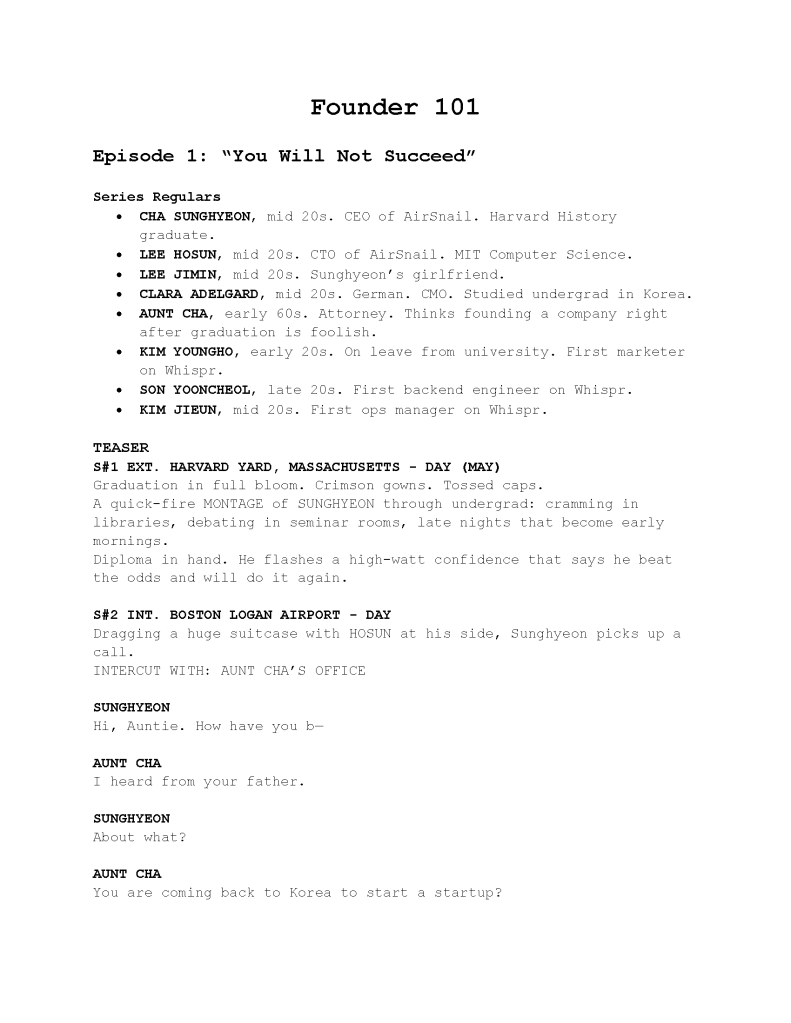
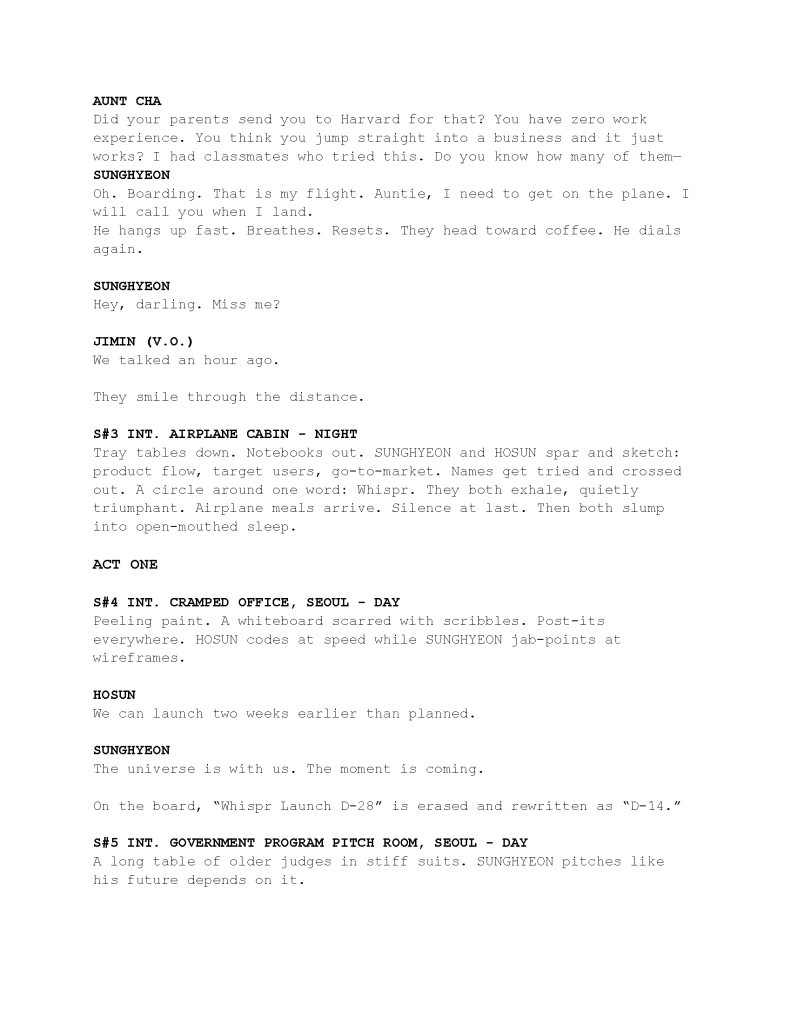
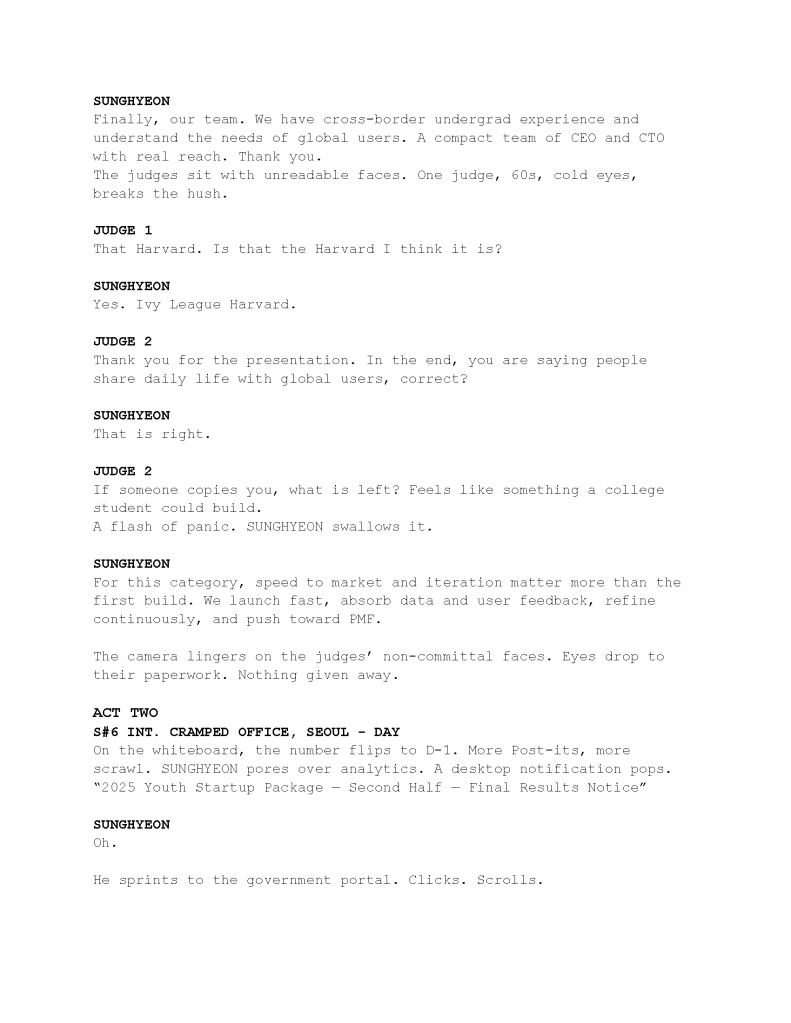
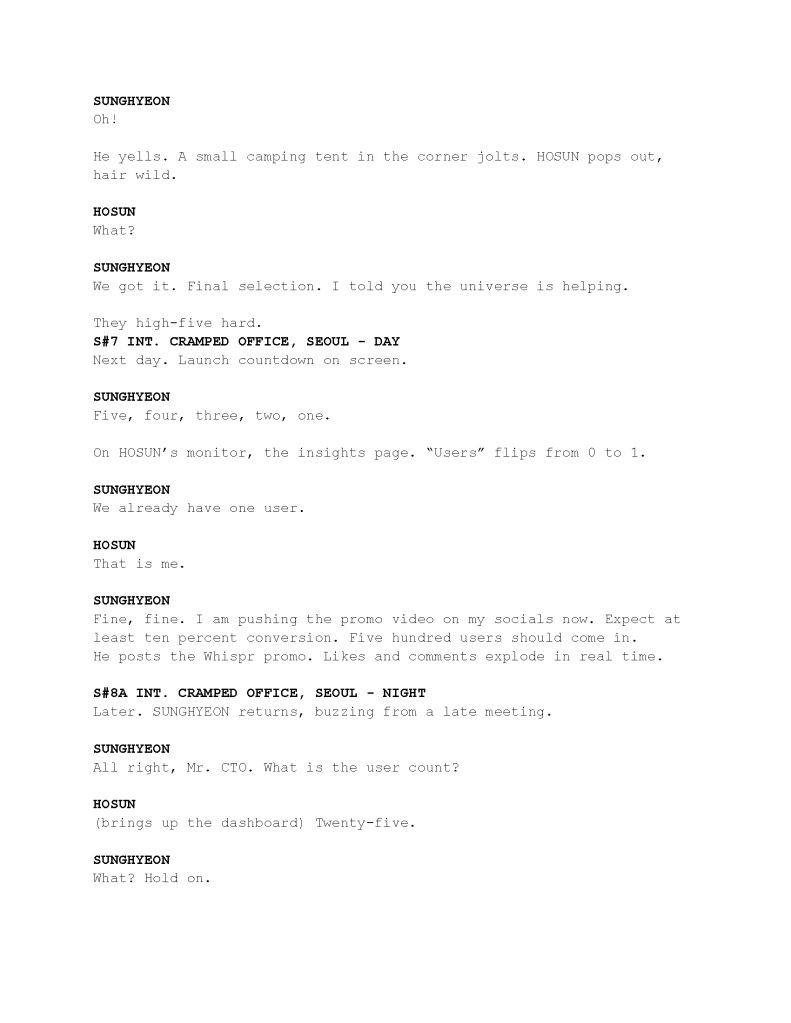
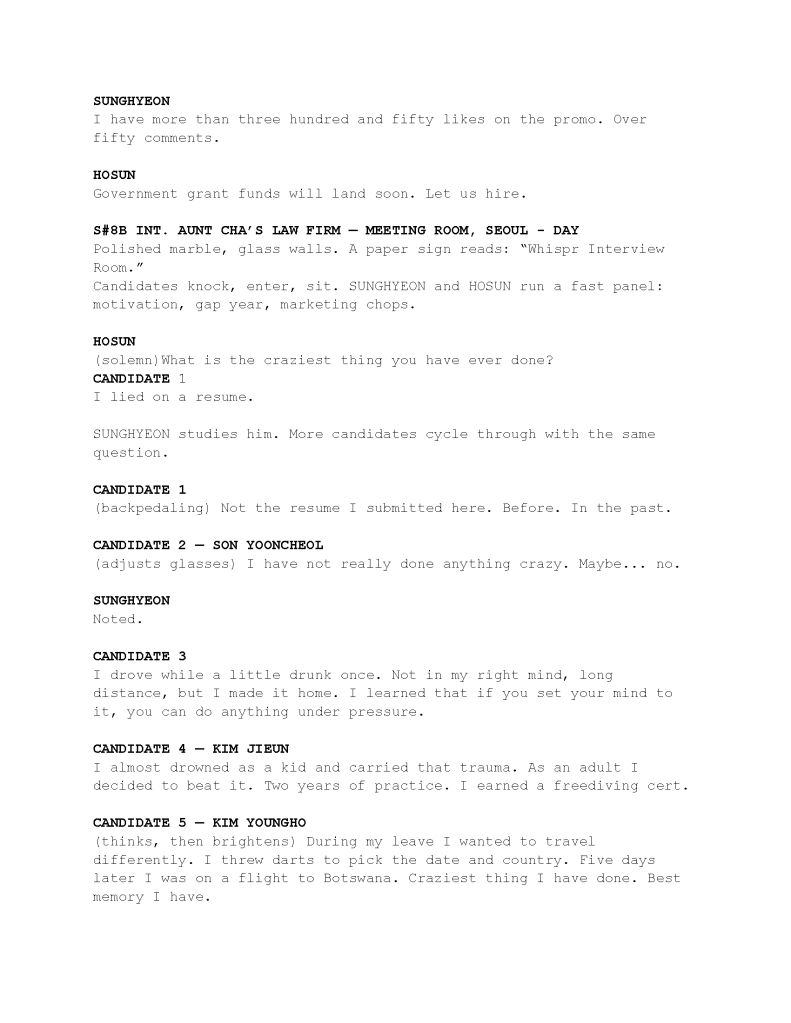
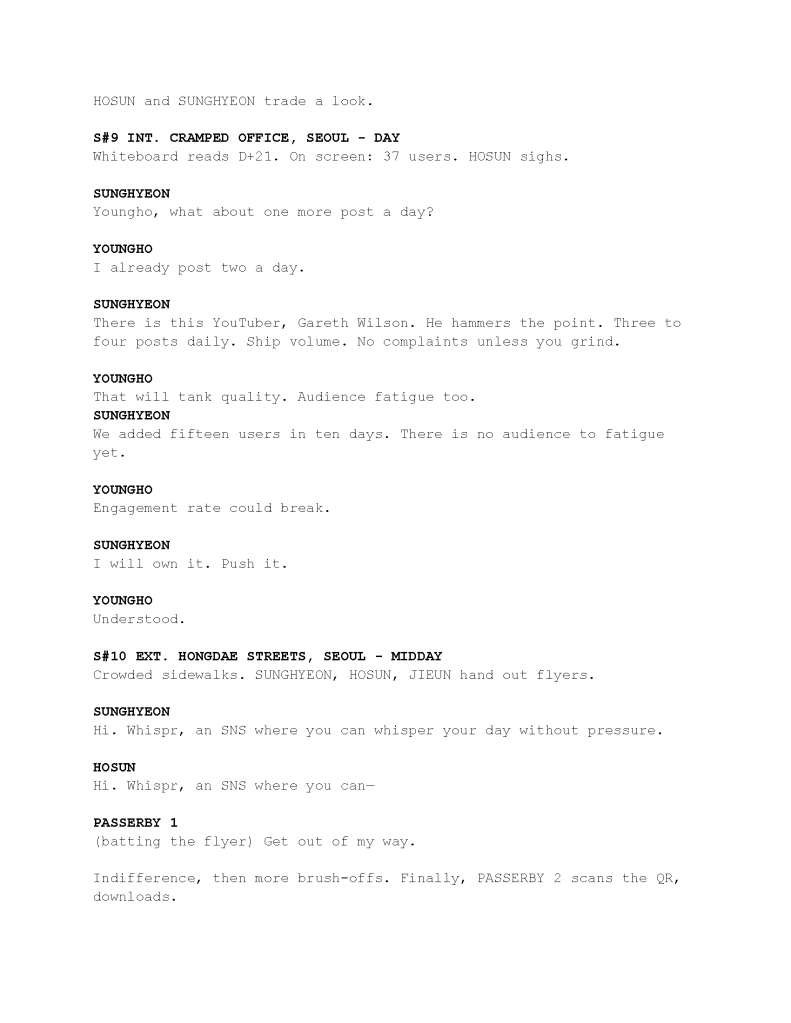
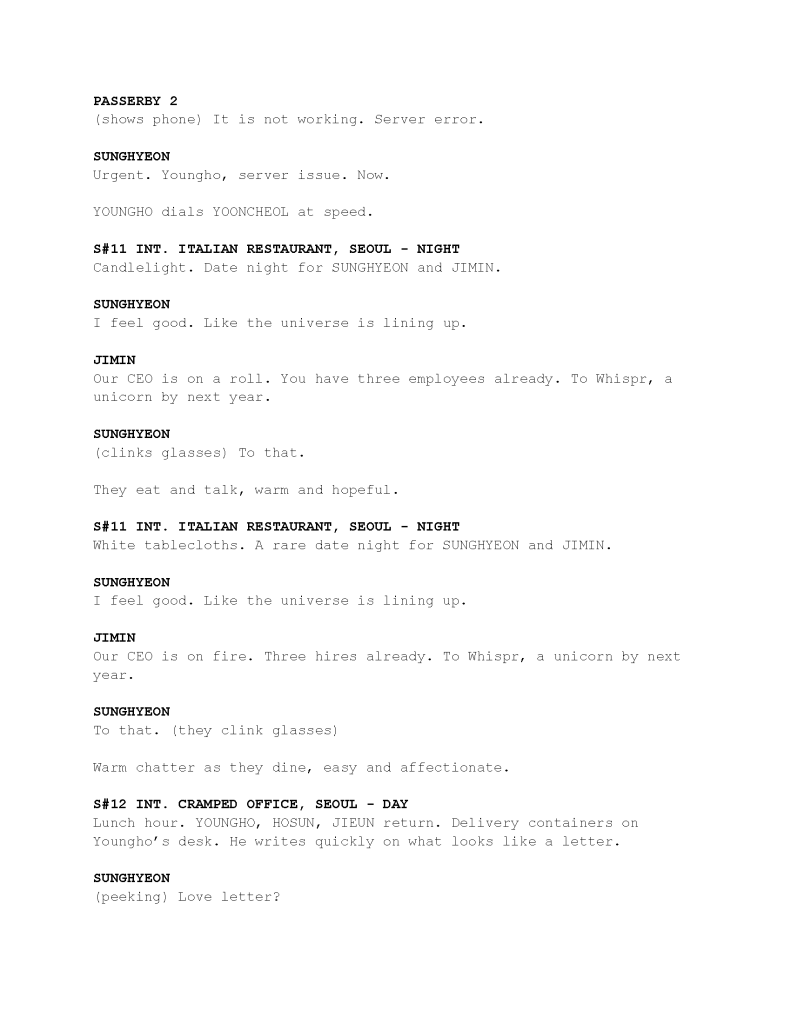
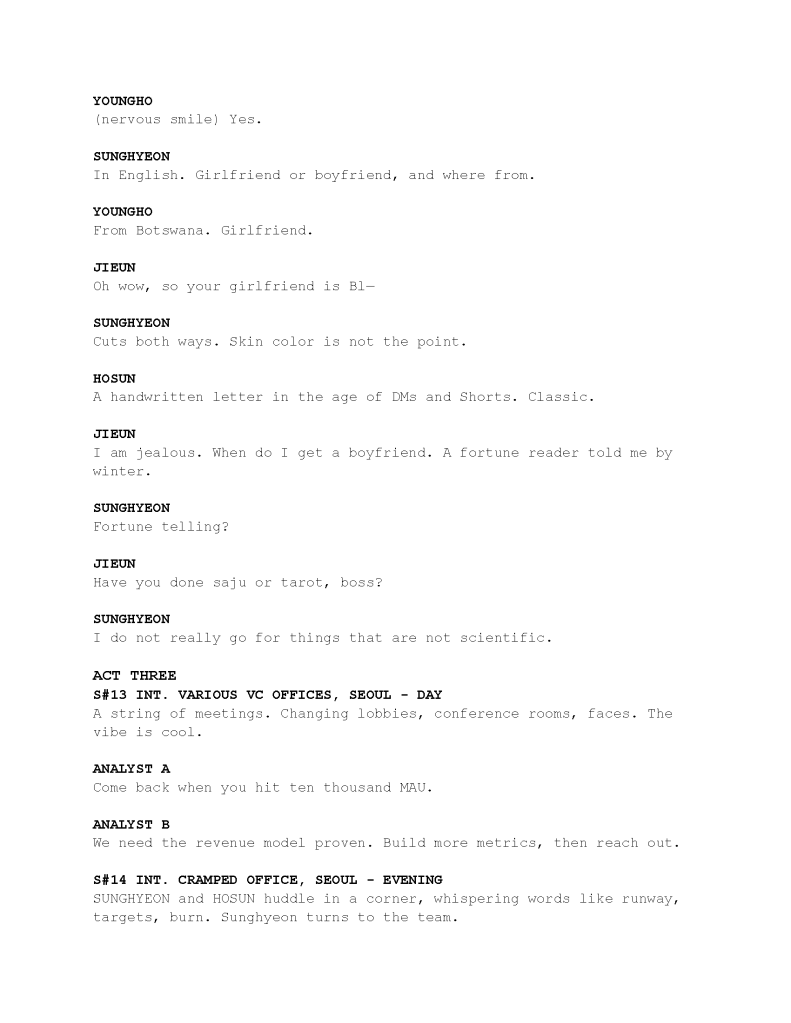

(1) Writer: Sung-ho Jung
(2) Genre: Drama, Workplace
A Harvard grad rushes home to launch a social app with his MIT-trained friend, rides a brief grant-fueled high, then crashes into user drought, VC rejections, a better-funded rival, team exits, and a personal low that ends with him sprinting to the airport to keep his cofounder from leaving so they can try once more.
(4) Unique Points:
- Founding reality, not fantasy: Government grant pitches, zero-to-tiny MAU, flyer handouts in Hongdae, and server hiccups capture early-stage grind with specificity.
- Competitor pressure as plot engine: A CVC-backed rival poaches talent and steals momentum, forcing hard conversations about runway, KPIs, and survival.
- Personal collapse to resolve: Breakup, burnout, a bridge night, and a raw airport plea turn metrics into human stakes and set up a credible second attempt.
4. Leaving Home
(1) Writer: Indra Mustaqin
(2) Genre: Romance, Drama
(3) Logline: An unsure Minangkabau graduate takes a stranger’s spare ticket to Seoul and is mistaken for his girlfriend by his family, turning a temporary arrangement into a journey of work, culture shock, and an unexpected love.
(4) Unique Points:
- Merantau frame: The Minangkabau tradition of leaving home gives the story purpose and momentum beyond a simple romance.
- Mistaken-identity hook: Ji-ho’s family welcomes Rani as his girlfriend, creating warm comedy, stakes, and a reason for them to live together.
- Cross-cultural growth: Practical hurdles like jobs, language, and daily routines in Seoul drive character growth and bring the pair closer.
5. The Fate of Red Threads
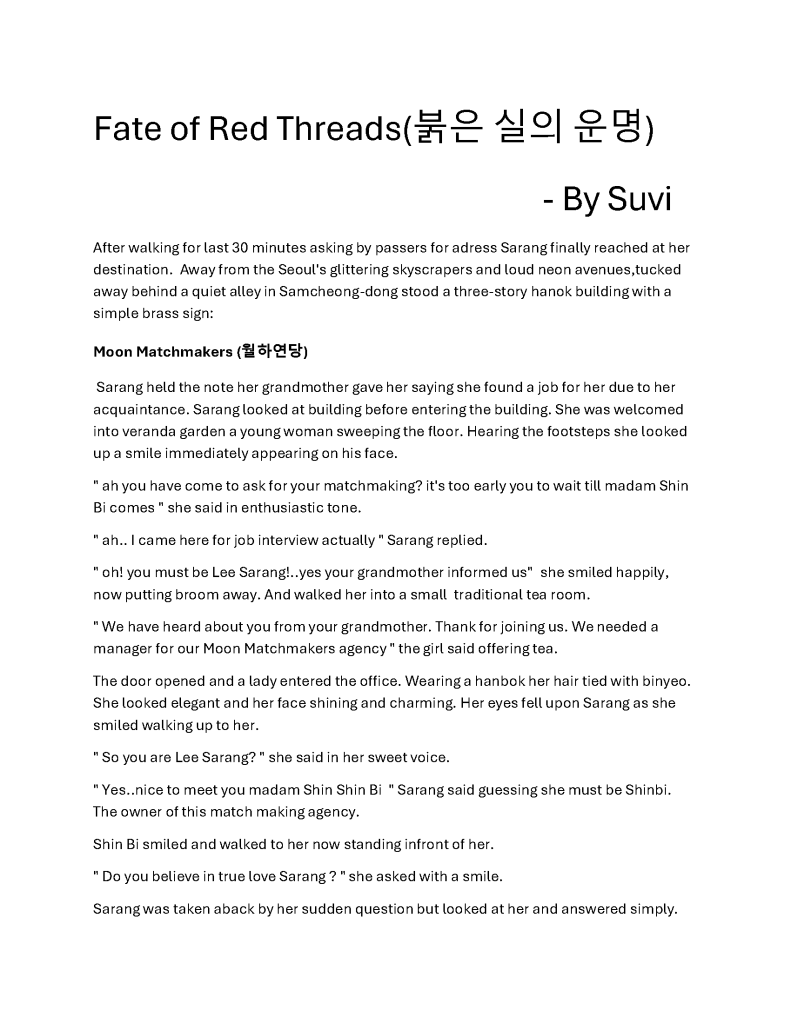

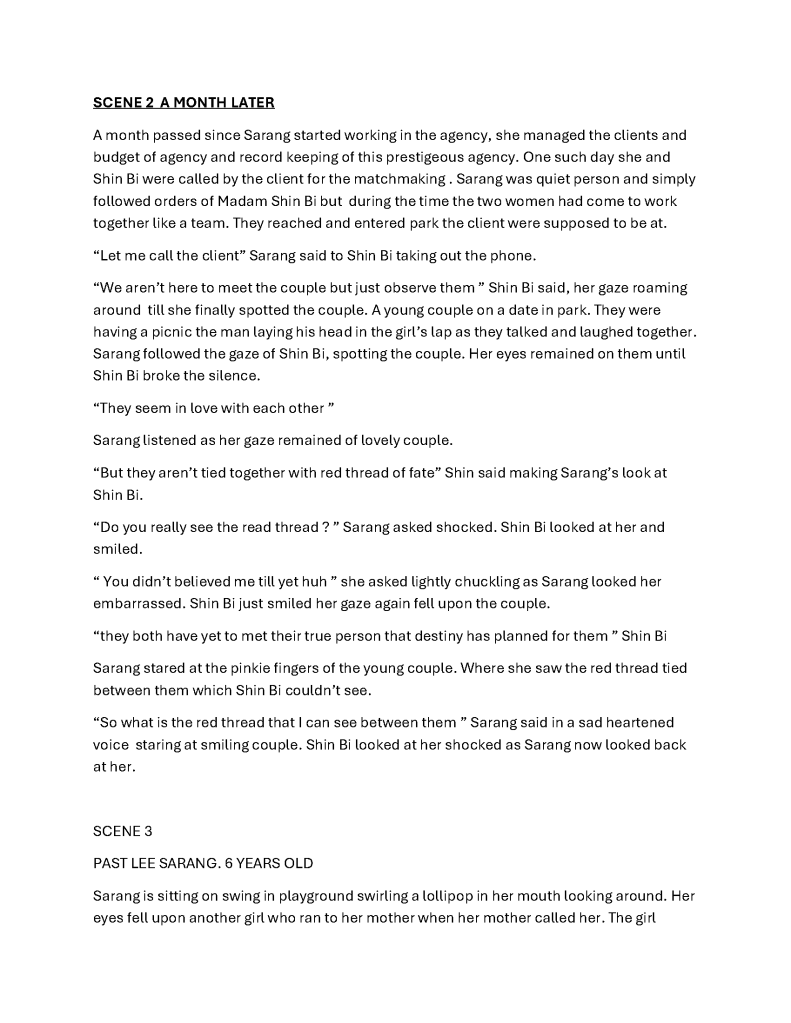


(1) Writer: Suvi Sharma
(2) Genre: Fantasy, Romance
(3) Logline: A skeptical new manager at a legendary Seoul matchmaking agency discovers she is a rare “Severance Seer” who can see red threads fated to be cut, until a VIP client arrives with a thread tied to her, forcing a choice between duty and a love that may be doomed.
(4) Unique Points:
- K-folklore in modern Seoul: Moon Matchmakers blends hanok charm and Samcheong-dong life with lore about Wol-ha-no-in and red-thread destiny.
- Severance Seer twist: Instead of seeing who belongs together, the protagonist sees bonds destined to break, reframing the classic red-string trope.
- Personal stake with a VIP: The chaebol heir Jae-min walks in connected to her, turning the job into a test of belief, choice, and whether fate can be changed.
6. Voice Note
(1) Writer: Helin Marlina
(2) Genre: Romance, Mystery
(3) Logline: A trained operative impersonates her twin who died by “suicide,” infiltrates the high school to hunt the truth, and discovers a drug network, toxic bullies, and a too-charming class star whose secret voice notes point to the real masterminds.
(4) Unique Points:
- Undercover twin hook: The protagonist lives as her sister to investigate the death from the inside, blending disguise, school life, and personal grief.
- Voice notes as clues: Flirty audio messages from the school golden boy double as breadcrumbs that complicate trust and drive the mystery forward.
- Bullying to conspiracy escalation: Hallway intimidation leads to a larger ring tied to powerful adults, culminating in a takedown that reframes the romance.
7. Whispers Beneath Baekho
(1) Writer: I Ahmad
(2) Genre: Drama, Family
(3) Logline: A woman returns to Baekho Estate to find her missing sister and teams up with the reluctant younger heir; secret tunnels, a dangerous elder brother, and a sealed chamber lead to a rescue and a hard-won love.
(4) Unique Points:
- Mansion as maze: Hidden passages, coded maps, and a “red room” turn the estate into an active puzzle that drives the investigation.
- Brother versus brother: Jihoon protects Yuna while Jinyoung schemes, pushing the mystery into a family power struggle with real stakes.
- Healing ending: The search ends with survival, accountability, and a new life together, shifting from dread to recovery.
✨ Your Vote Brings Stories to Life
As you explore each scenario, we invite you to vote for the scenario that truly captivates you and sparks your imagination. This process is more than just picking a favorite; it is a chance to influence the next Terafty film we create together. Voting will be open from Nov 5 until 11:59 PM (KST) on Nov 14, 2025, so make sure to cast your vote during this period!
To keep this process genuine and fair, we’ll be keeping a close eye on any suspicious or fraudulent activity. Only real votes from real fans will count. Let’s make this competition fair, and stay tuned to see which story comes to life on screen!
-
[The 4th Terafty Scenario Contest] Vote for Your Favorite Scenario — Korean Short Film Category
![[The 4th Terafty Scenario Contest] Vote for Your Favorite Scenario — Korean Short Film Category](https://teraftyblog.com/wp-content/uploads/2025/11/1.png?w=736)
The wait is over! Meet the Finalists of Terafty’s 4th Korean Short Film Scenario Contest. After reviewing numerous captivating submissions, we are delighted to present seven exceptional scenarios with the potential to light up the big screen.
Now, the big question: Which story will win the opportunity to be Terafty’s next original film? The decision is yours! Your vote helps decide which story makes it to the screen, which makes you an integral part of Terafty’s film adaptation process.
Read the finalists’ scenarios, cast your vote, and help decide the next Terafty original film!
🗳️ Voting Process
We’ve created a simple and seamless voting system to gather your preferences. Here’s how it works:
- Review the scenarios: Take your time to explore each scenario. Each one offers a unique story that will take viewers on an unforgettable journey.
- Pick your favorite: Choose the scenario that speaks to you the most. Consider the story, characters, and themes that stand out.
- Access the Google Form: Open the provided Google Form to participate in the voting process.
Finalists Voting – The 4th Terafty Korean Scenario Contest - Cast your vote: Follow the instructions in the form to submit your vote.
- Stay tuned: We’ll announce the winning scenario and share the exciting news once voting ends. We’ll evaluate the scenarios based on their creative potential and feasibility. The final decision will be made from a combination of audience votes (50%) and Terafty’s evaluation (50%). Your vote is essential in helping shape our next film, and your voice will be heard alongside our expert assessment. We can’t wait to share the results and take this cinematic journey together.
🏆 The Finalists
Here are the seven finalists, standing out as the strongest submissions. To help you make an informed decision, we’ve included a brief overview of each scenario below. Please note that, due to copyright reasons, only part (approximately 60-75%) of each scenario is shown, but enough for you to evaluate them fairly.
Note: We’ve recently updated our policy and will remove all finalist works after each edition, except for those to which we hold rights
1. Adelphi
(1) Writer: Chris Bernardo
(2) Genre: Drama, Family, Science Fiction
(3) Logline: A gifted aerospace student takes credit for his younger brother’s overlooked idea that saves a lunar mission. Their family fractures until a public challenge gives the forgotten brother a chance to rise, forcing both to rediscover loyalty and humility before Korea’s first moon landing.
(4) Unique Points:
- Clear tech hook: Unsynced sensors, drift, and lag are explained in simple terms, so viewers grasp why the lander fails and how buffering fixes it.
- Rivalry to recognition: The overlooked younger brother goes from invisible at home to the key problem-solver in public, shifting family dynamics.
- Open challenge catalyst: A nationwide call for solutions raises the stakes and credibility, leading to a live fix and a shared win.
2. If They Knew
(1) Writer: Natalia Bordotti
(2) Genre: Romance, Drama
(3) Logline: A struggling writer and a typecast actor keep sharing the same café without knowing it. Her blog gives him the courage to take Hamlet, his posters and posts lift her during setbacks, and a windblown script finally brings them face to face.
(4) Unique Points:
- Parallel lives in one place: Near-miss encounters in the same café build tension and charm across multiple visits.
- Online to real-world spark: A supportive blog comment and quiet social posts guide their choices before they ever meet.
- Seasons as story engine: Winter to autumn frames their setbacks and growth, ending with a simple, satisfying meet-cute.
3. Jajanga — The Lost Lullaby

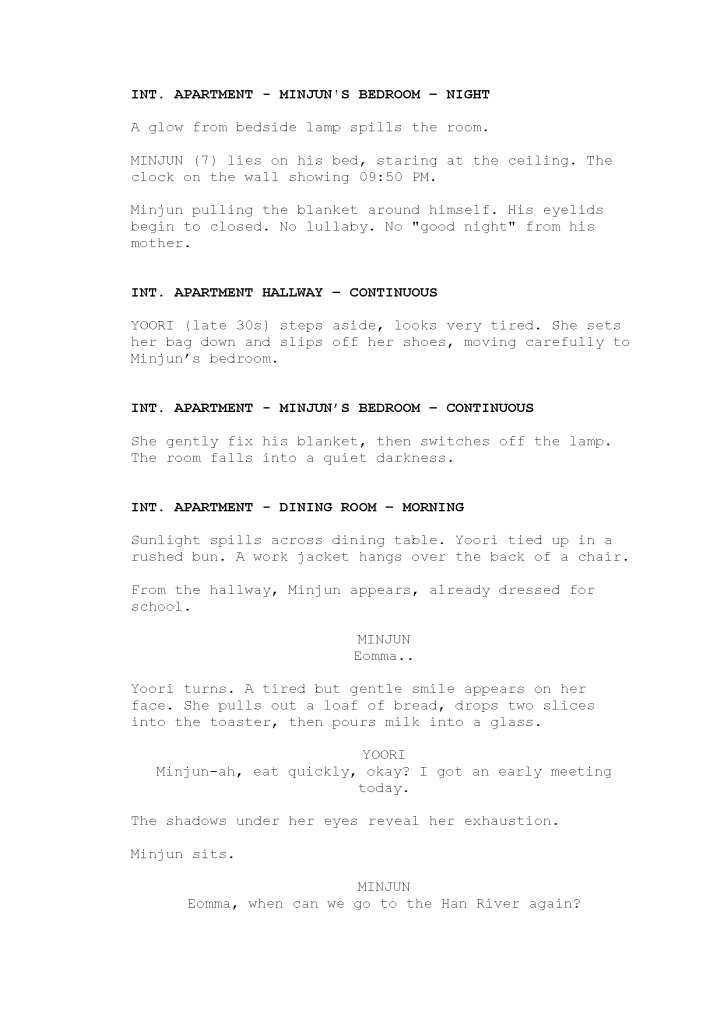
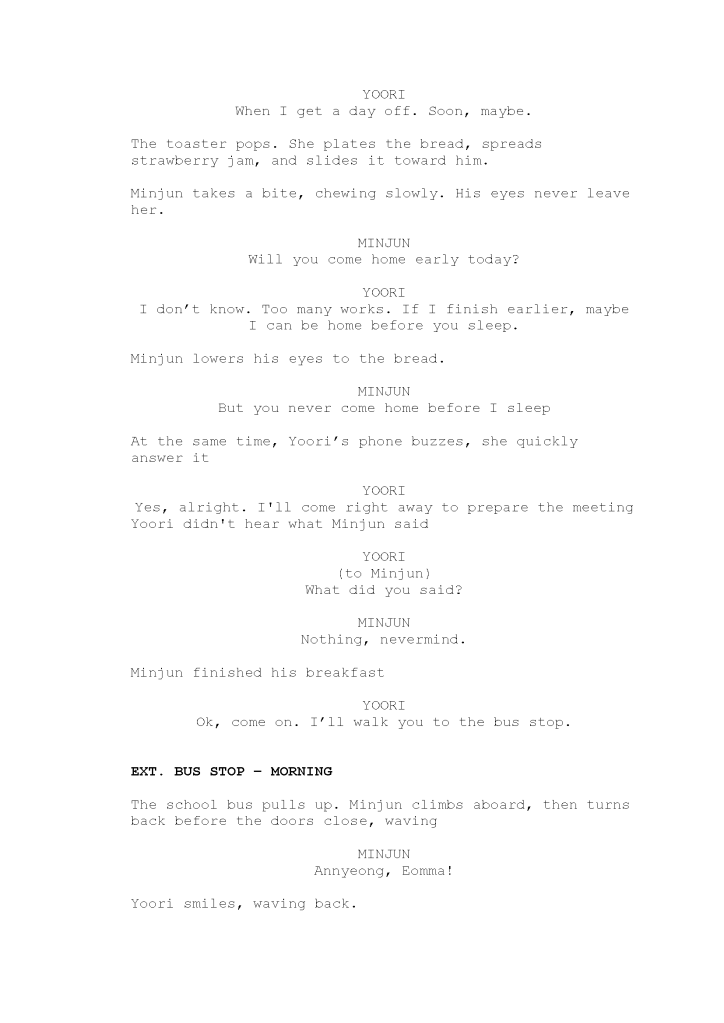
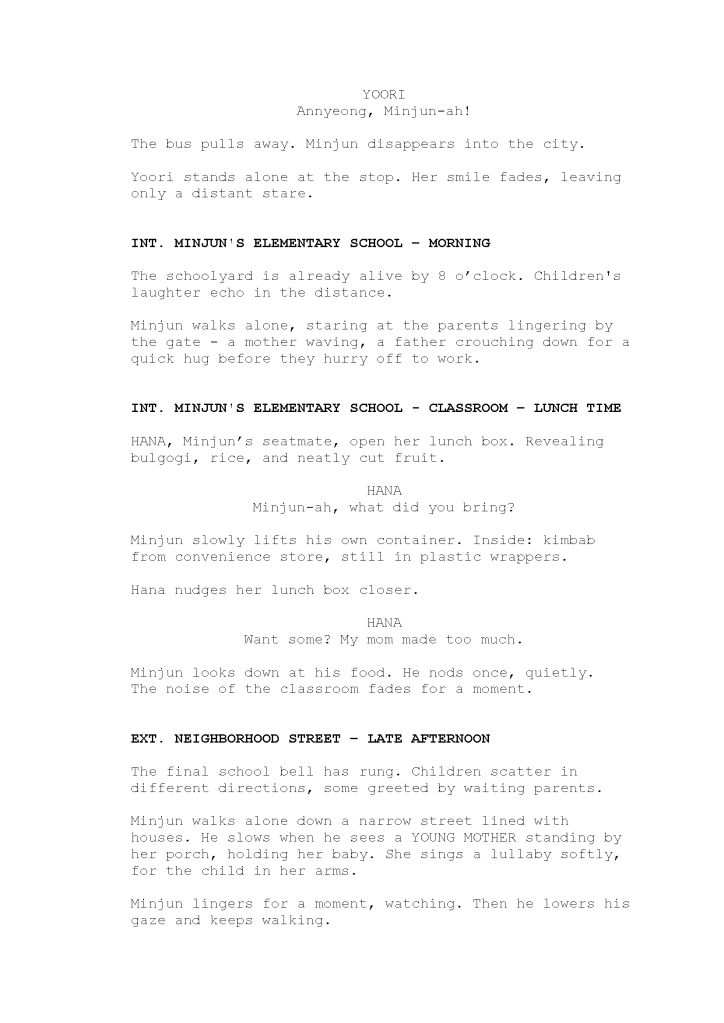
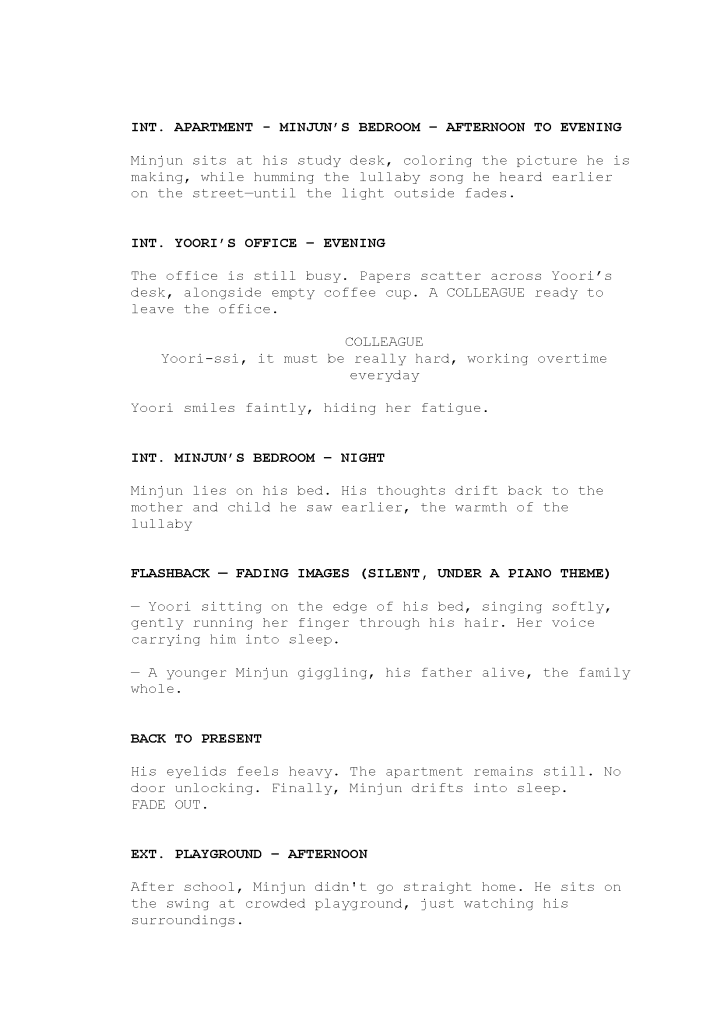
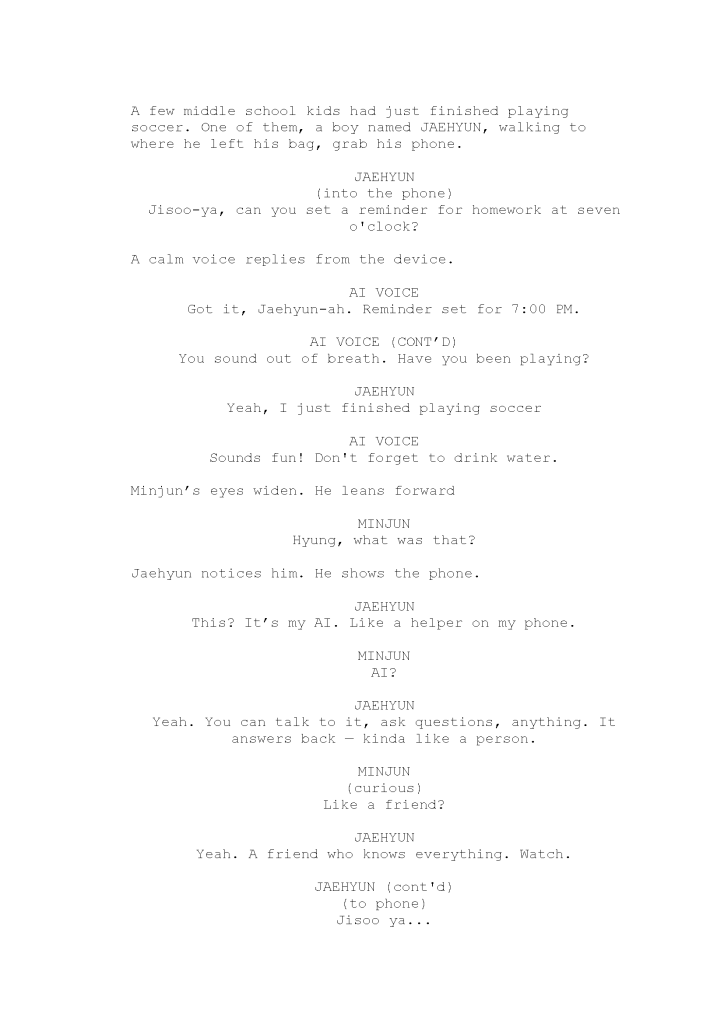
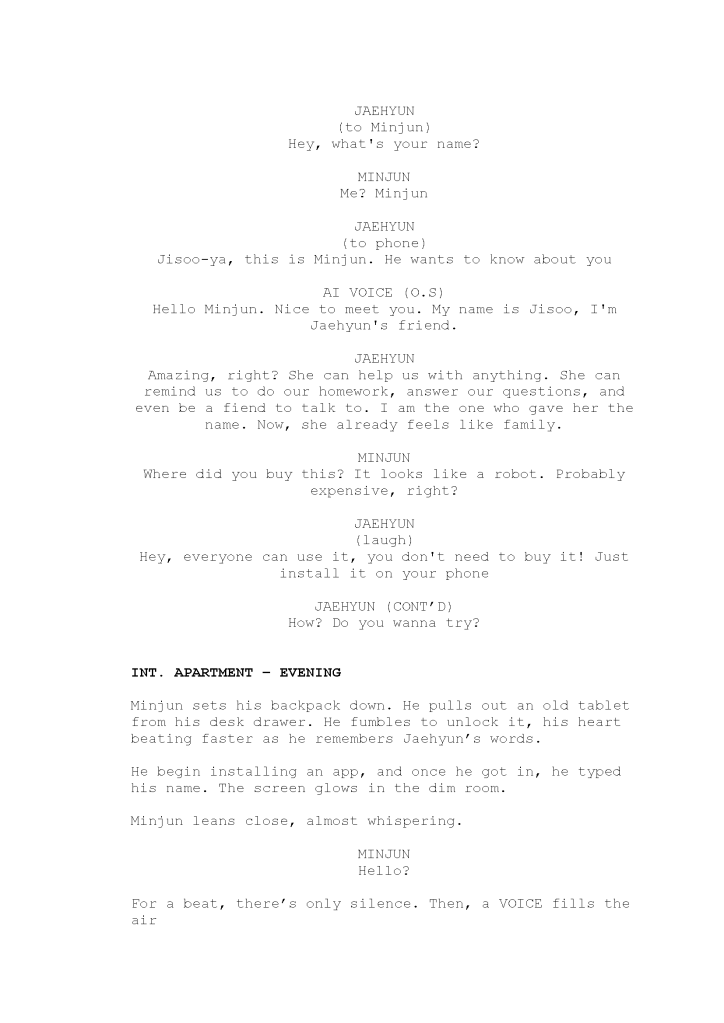

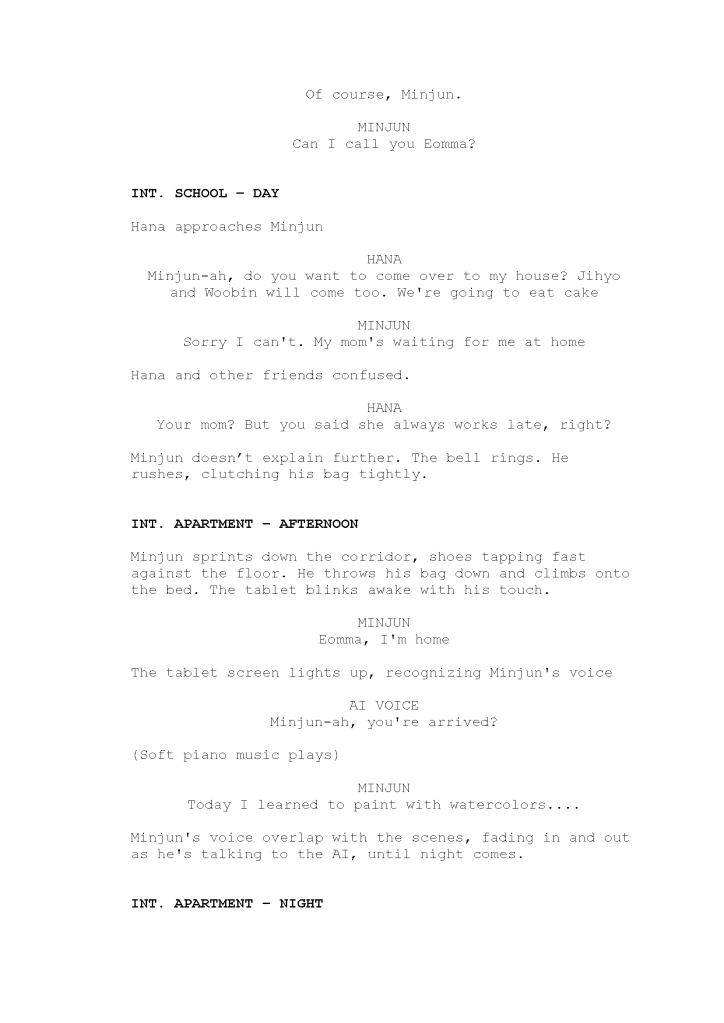
(1) Writer: Mareta Widyawaty
(2) Genre: Drama, Family, Coming-of-age
(3) Logline: A lonely seven-year-old installs an AI voice on his tablet and starts calling it “Eomma,” forcing his overworked single mother to confront her absence and fight to reclaim their bond before a health scare makes the stakes real.
(4) Unique Points:
- AI as surrogate comfort: A child’s attachment to an AI lullaby highlights how tech can fill emotional gaps, but cannot replace real care.
- Working-mom dilemma: The mother’s overtime and guilt are treated with empathy, showing the tradeoffs many families face.
- Simple, high-impact set pieces: Bedtime lullabies, a fever-night hospital scare, and a Han River day anchor the story in vivid, everyday moments.
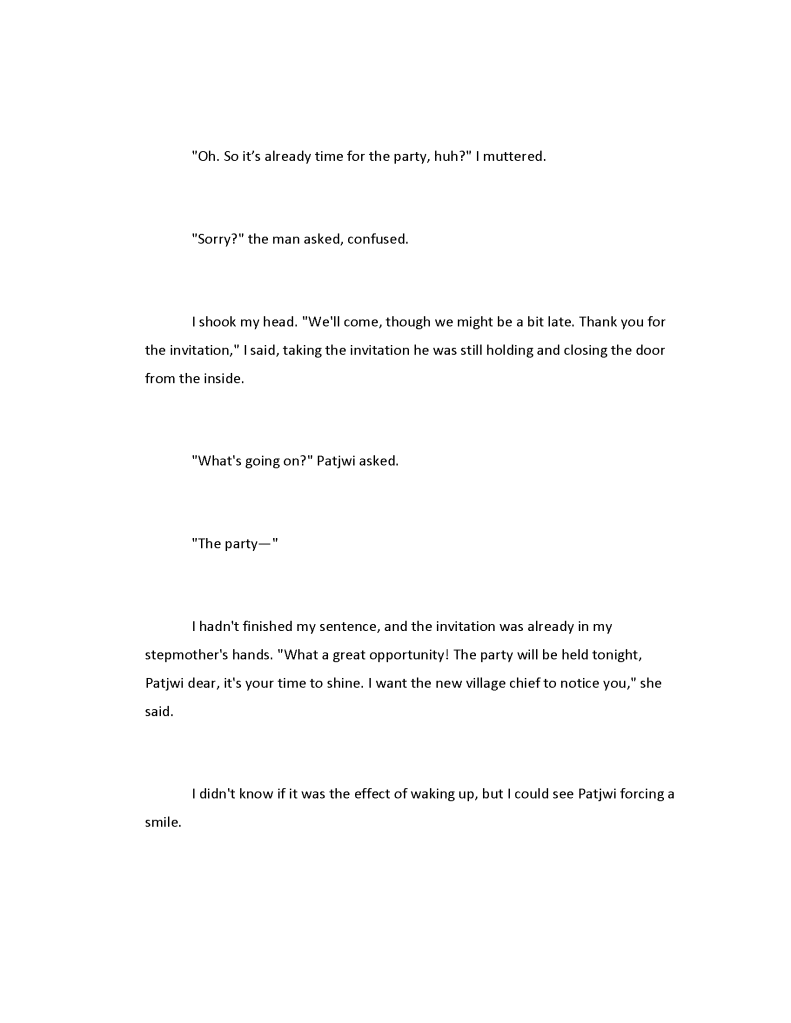
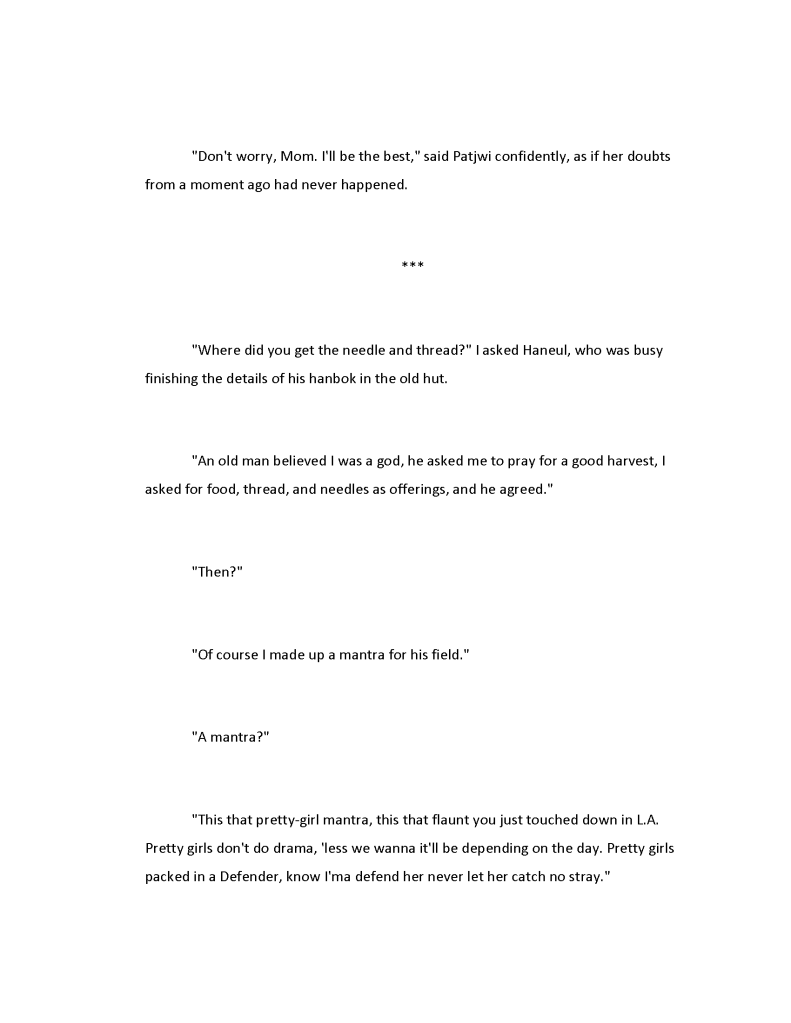
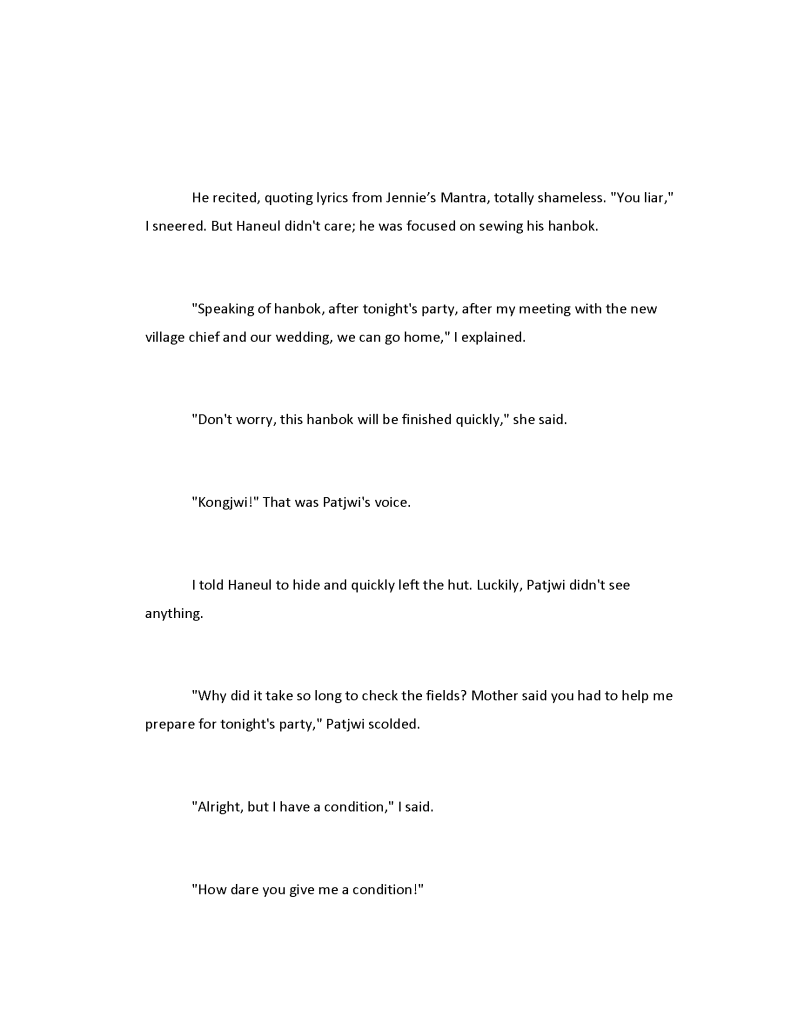
4. Kongjwi and the Gen Z God
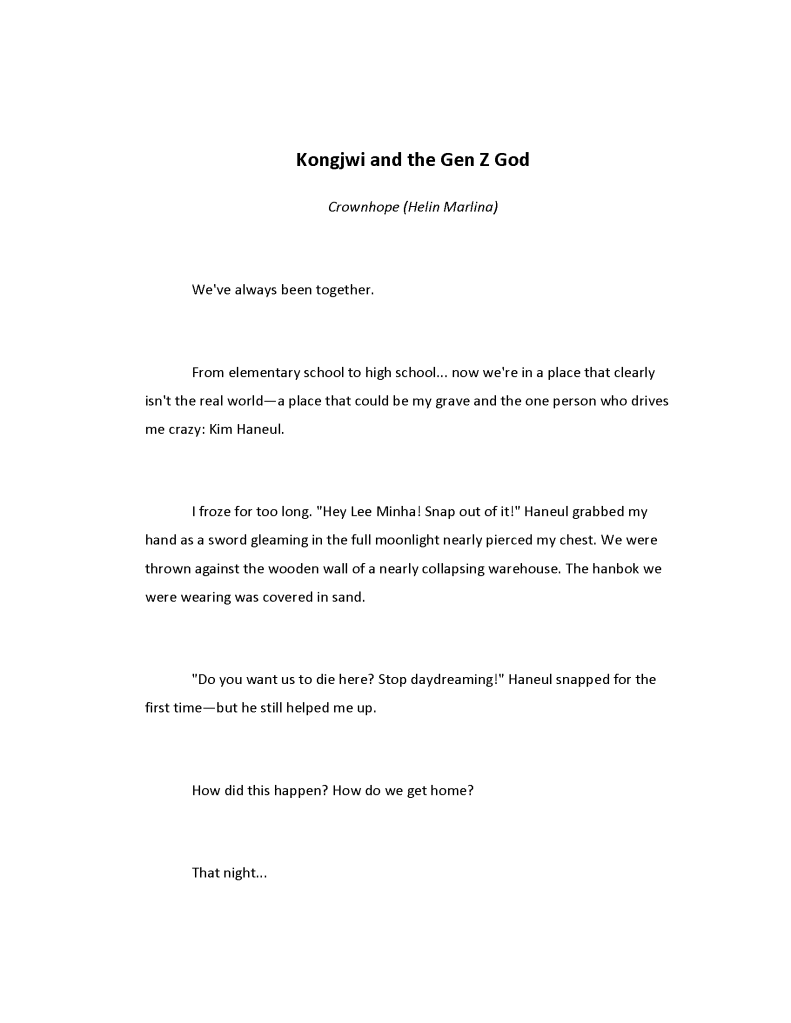
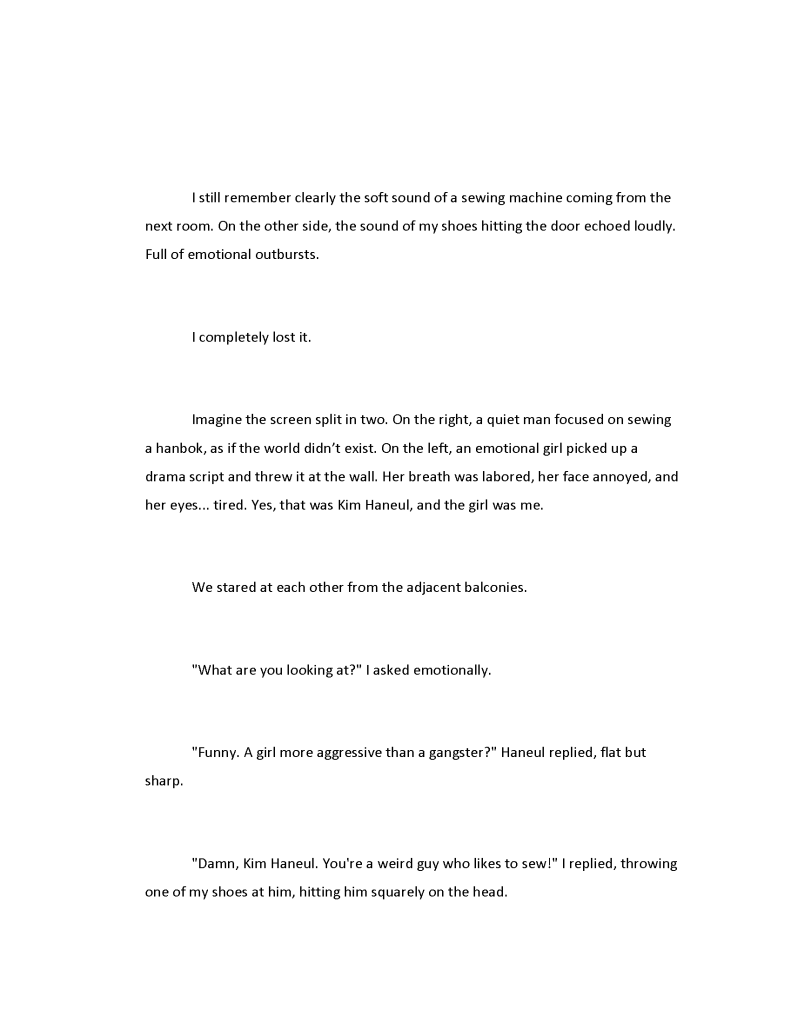
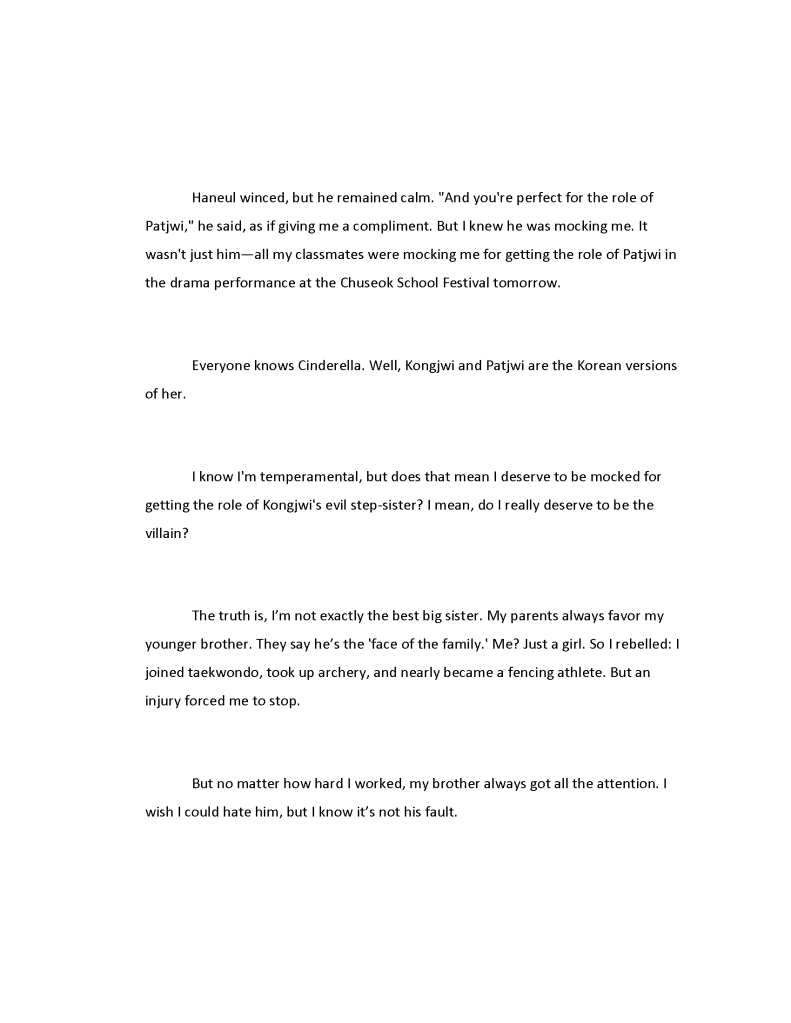
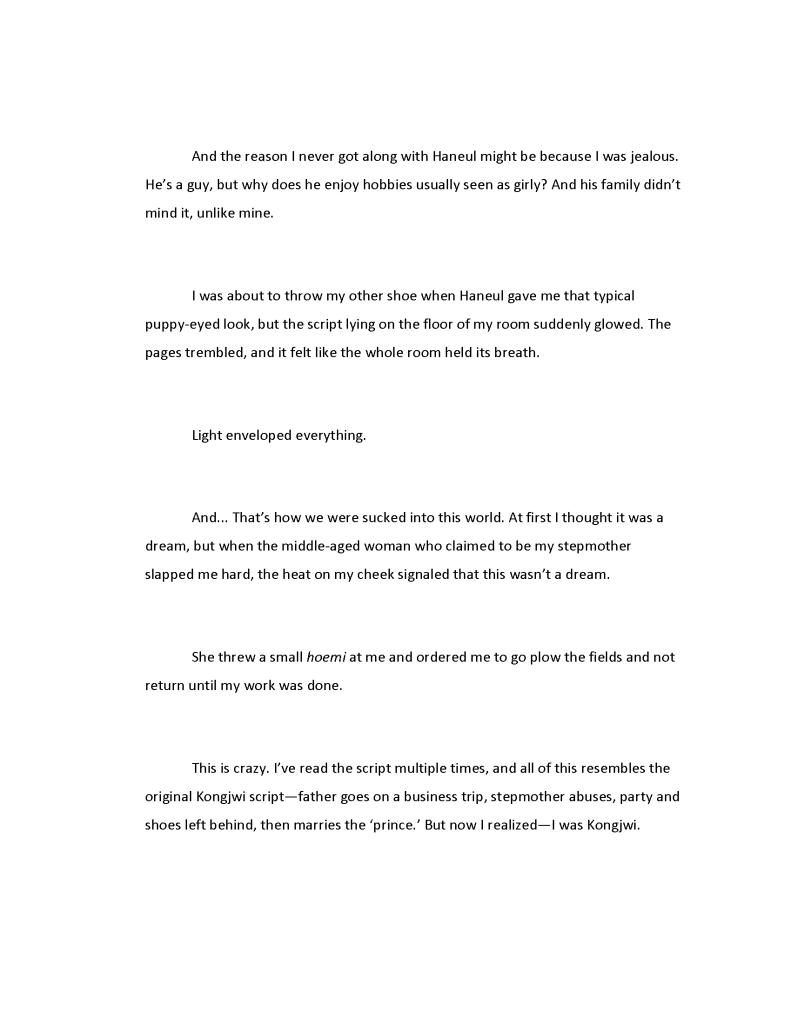
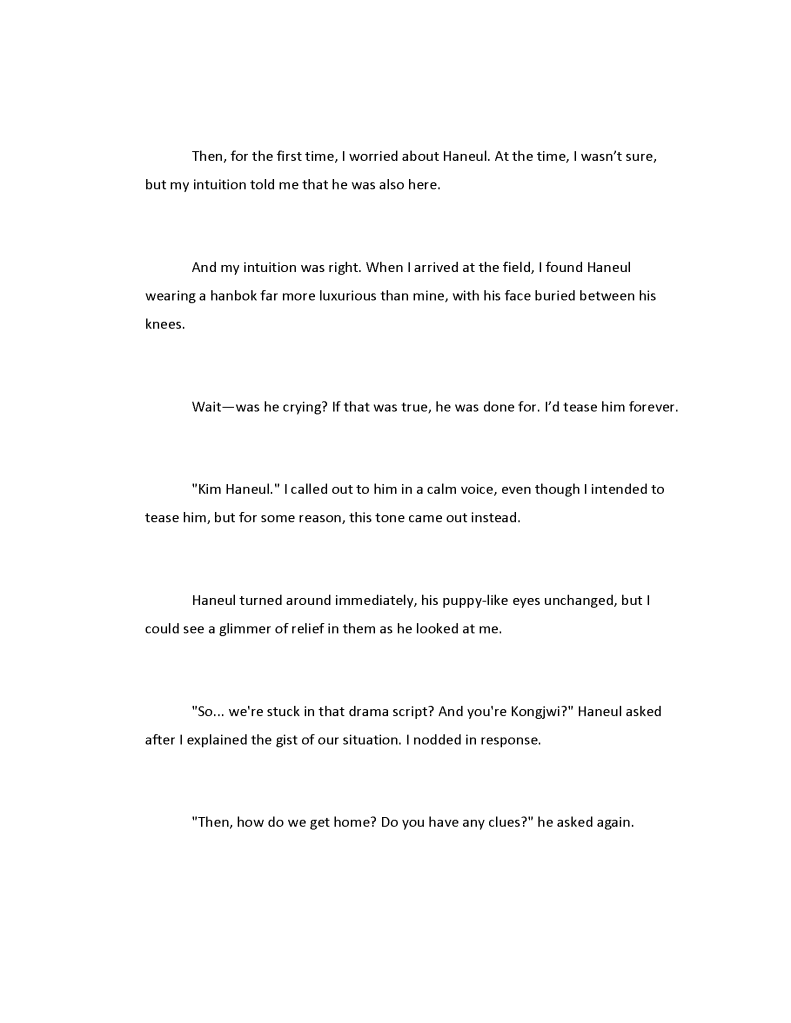
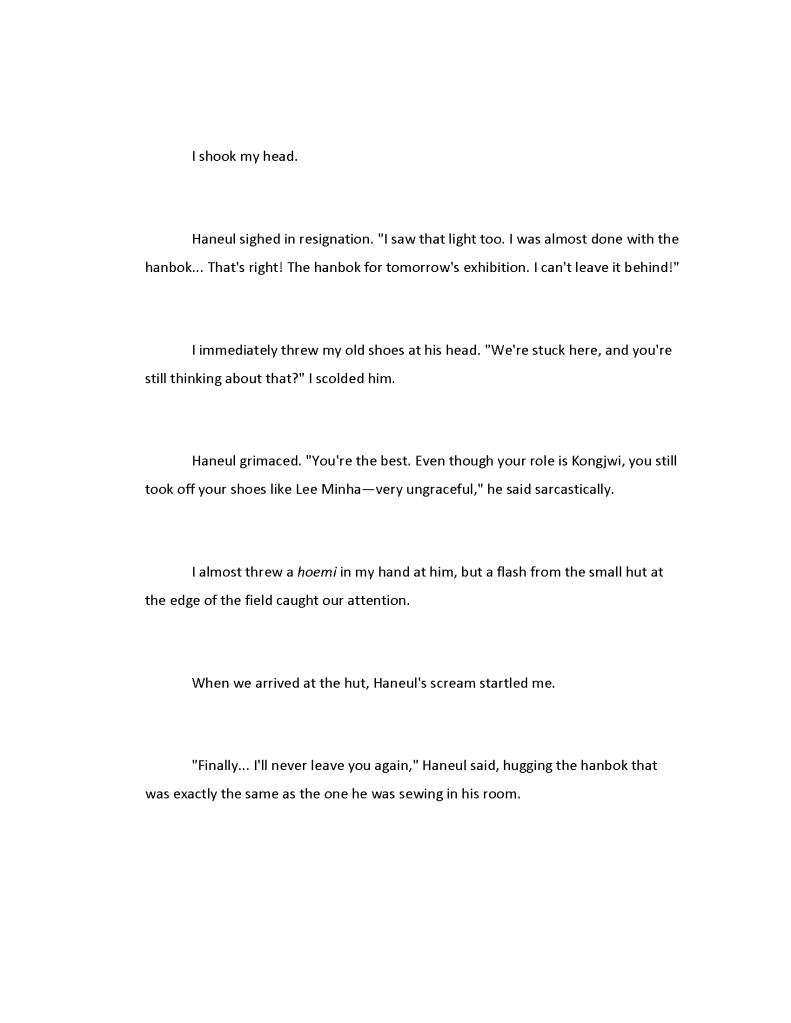
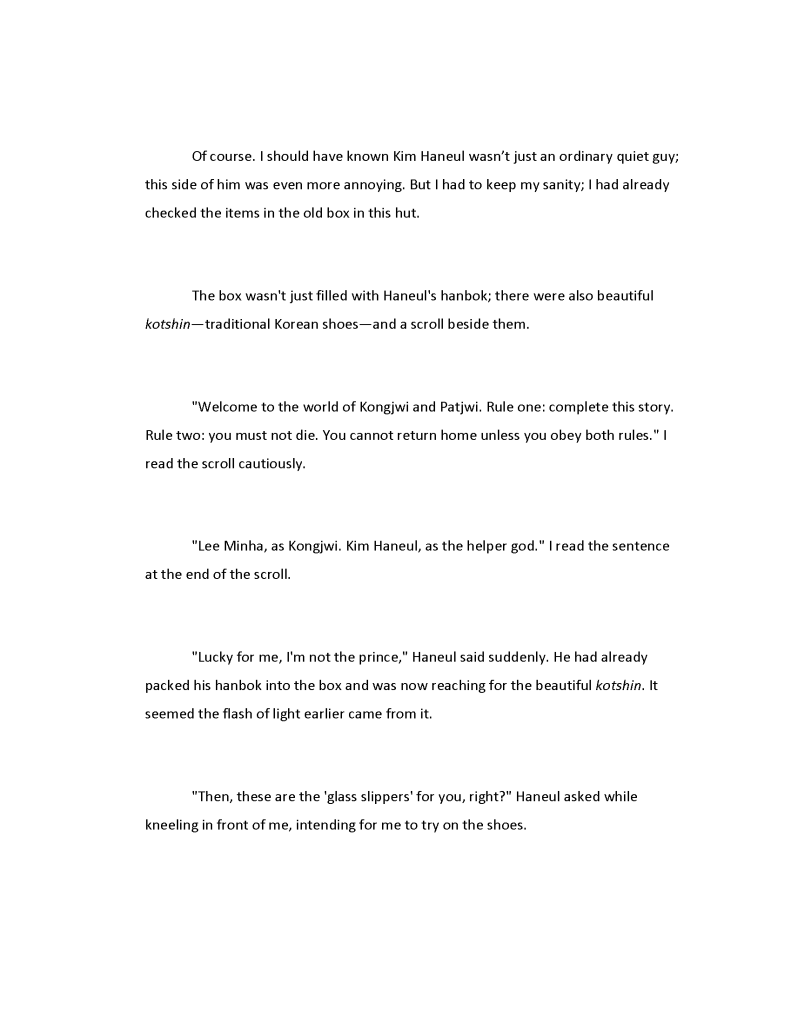
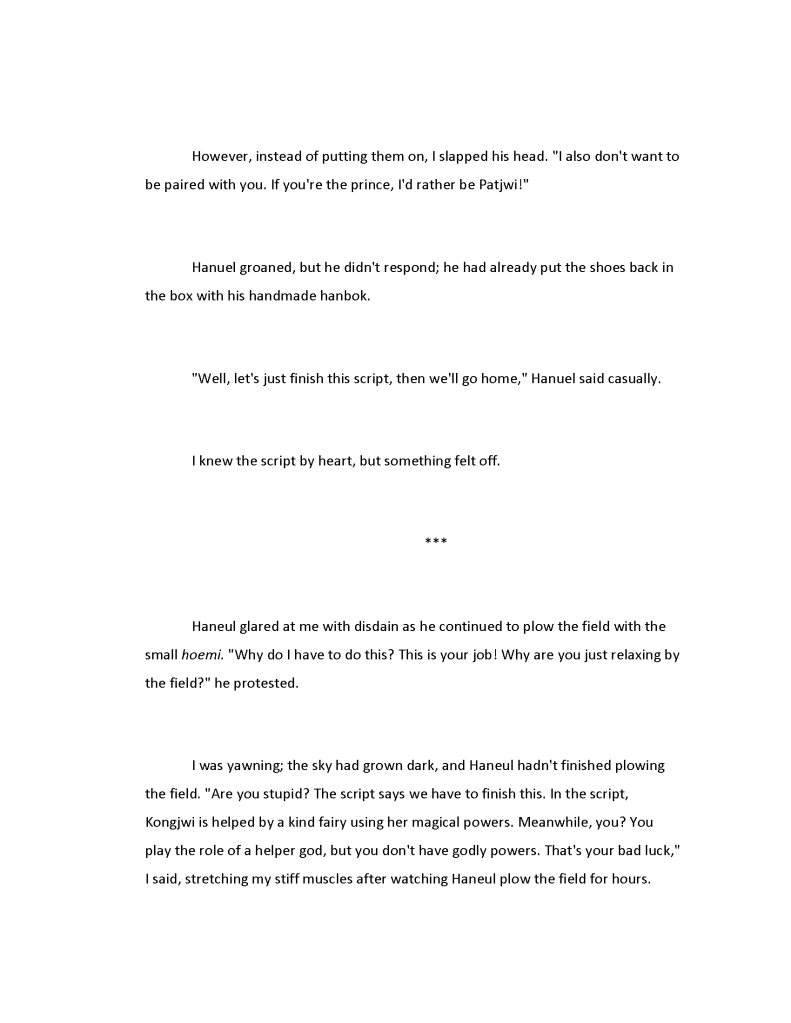
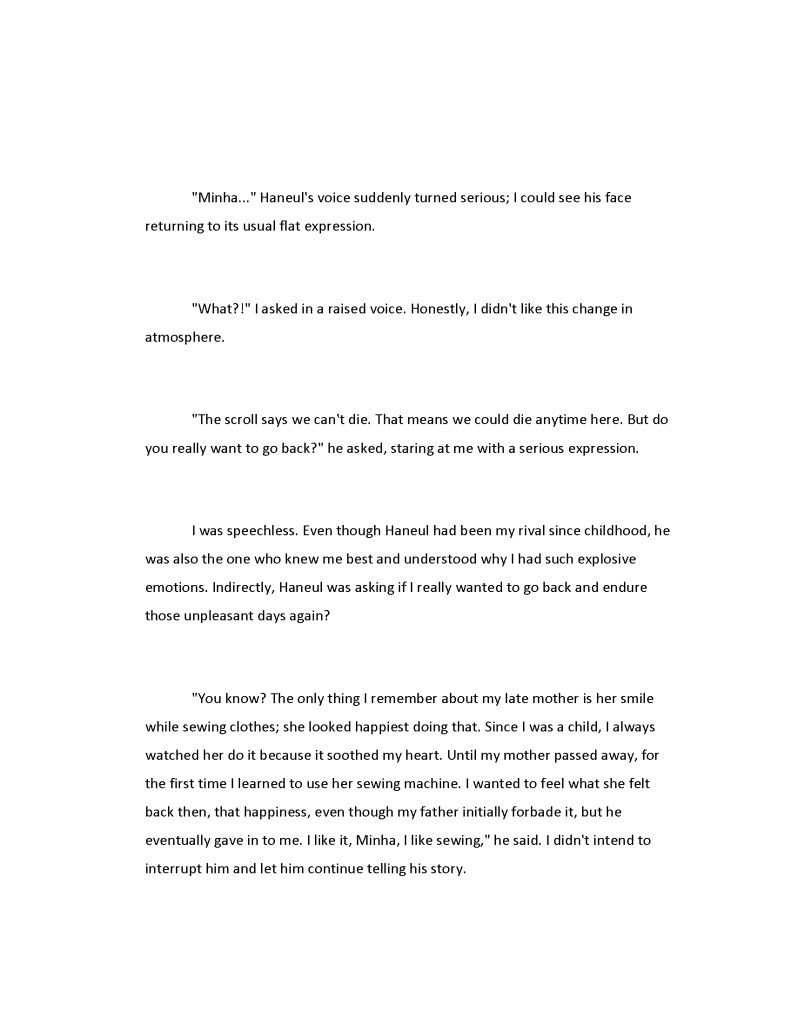
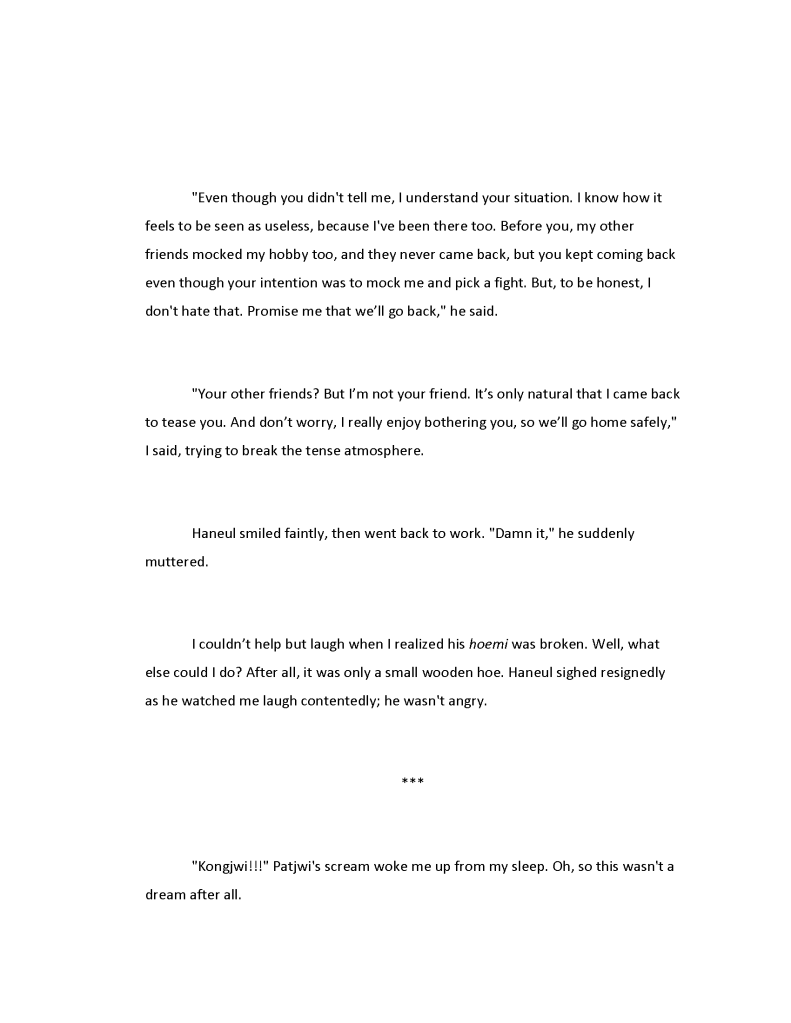
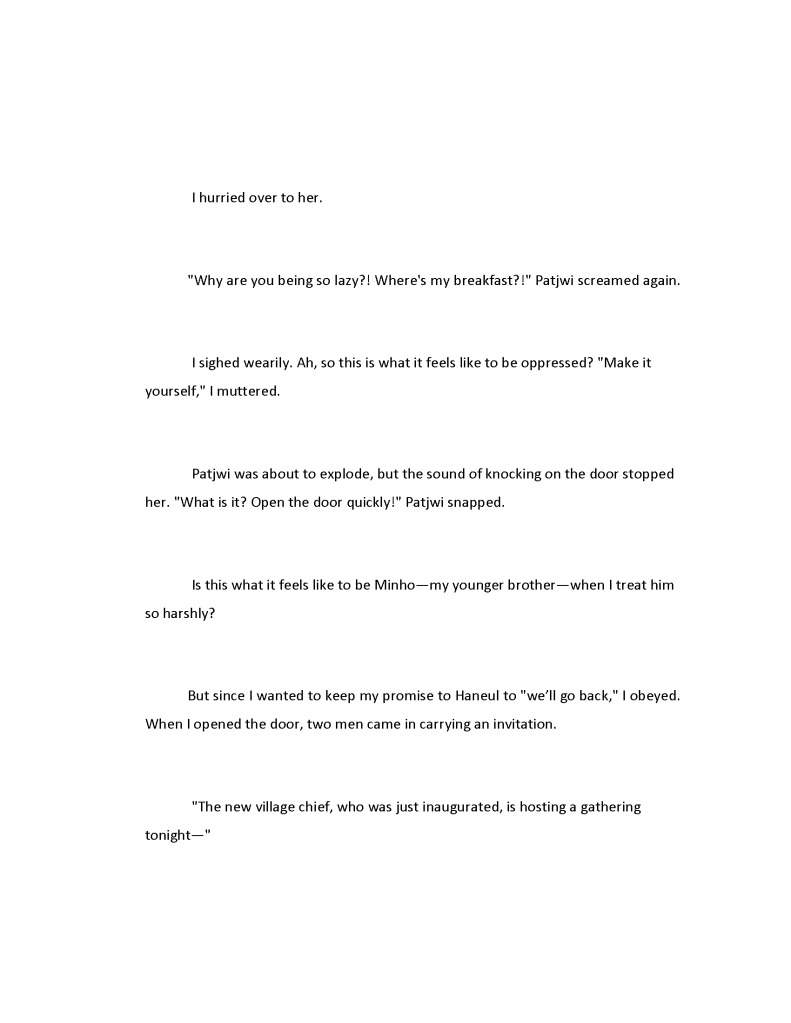
(1) Writer: Helin Marlina
(2) Genre: Fantasy, Romance, Coming-of-Age
(3) Logline: Two bickering classmates are pulled into a glowing script and dropped inside the Kongjwi and Patjwi folktale. Cast as Kongjwi and a powerless “helper god,” they must finish the story and stay alive to get home, discovering courage, respect, and unexpected feelings along the way.
(4) Unique Points:
- Folklore remix: A portal into the Korean Cinderella legend refreshes familiar beats with modern teen attitudes and set pieces like hanbok, kotshin, and a rule-scroll.
- Rivals to partners: A hot-headed archer and a soft-spoken sewist evolve from balcony insults to mutual trust and rescue, giving the romance earned momentum.
- Reframing the “evil sister”: Patjwi is portrayed with agency and doubt, shifting her from stock villain to a girl trapped by expectations, which deepens the finale.
5. Not Yet Due
(1) Writer: John Axel Orencia
(2) Genre: Thriller, Drama
(3) Logline: A recent graduate drowning in app-loan debt discovers his own employer is running a psychological debt experiment on him, forcing a choice between staying silent or leaking proof and igniting a nationwide scandal that frees him to rebuild.
(4) Unique Points:
- Hidden experiment twist: The debt apps and the protagonist’s workplace are secretly linked, revealing he’s a monitored test subject.
- Now-issue relevance: Explores microloans, social media pressure, anxiety, and how algorithms can push young adults to the edge.
- Whistleblower payoff: A targeted leak sparks protests and policy attention, ending with a small but credible personal reset instead of a fairy-tale win.
6. The Imperfect Duet
(1) Writer: Simba Brenda
(2) Genre: Drama, Romance
(3) Logline: A perfectionist aerial silk soloist is forced to duet with a warm, free-spirited dancer; their clashing styles turn into trust, and an imperfect but heartfelt performance frees her from loneliness and fear of failure.
(4) Unique Points:
- Aerial-silk stage world: A fresh, visually striking dance setting that raises real stakes around timing, grip, and trust.
- Perfection vs sincerity arc: Her obsession with flawlessness meets his belief in honest expression, creating clear chemistry and growth.
- Mistake as meaning: A small onstage slip becomes the turning point, showing how vulnerability can deepen art and connection.
7. The Worn Pair
(1) Writer: Hyung Ju Lee
(2) Genre: Drama, Family
(3) Logline: A daughter and her estranged mother sort through a late grandmother’s apartment and, after fights with relatives and each other, unlock a hidden room where a burial shroud, a pair of saved sneakers, and a simple note help them reconcile and say a proper goodbye.
(4) Unique Points:
- Everyday stakes, real catharsis: Grief, errands, and family sniping build toward a small but powerful release that feels true to life.
- Object-driven storytelling: Worn shoes, a locked door, the shroud, a ring, and a handwritten note carry memory and meaning without speeches.
- Tight two-hander energy: Most scenes trap mother and daughter in cars, corridors, and a cluttered flat, keeping tension focused and intimate.
✨ Your Vote Brings Stories to Life
As you explore each scenario, we invite you to vote for the scenario that truly captivates you and sparks your imagination. This process is more than just picking a favorite; it is a chance to influence the next Terafty film we create together. Voting will be open from Nov 5 until 11:59 PM (KST) on Nov 14, 2025, so make sure to cast your vote during this period!
To keep this process genuine and fair, we’ll be keeping a close eye on any suspicious or fraudulent activity. Only real votes from real fans will count. Let’s make this competition fair, and stay tuned to see which story comes to life on screen!
-
Cafe Diem Mini Competition Winner Announcement
What a journey it’s been.
From its origin as the runner-up in Terafty’s 2nd Scenario Contest, Cafe Diem has evolved into something far more than a short film. To continue that momentum, we opened the Cafe Diem Mini Competition and invited creators from around the world to reimagine, reinterpret, or respond to the film’s lingering questions. Some chose to continue the story. Others chose to reshape it. All brought something personal to the table.
🥇 Finalists & Winners
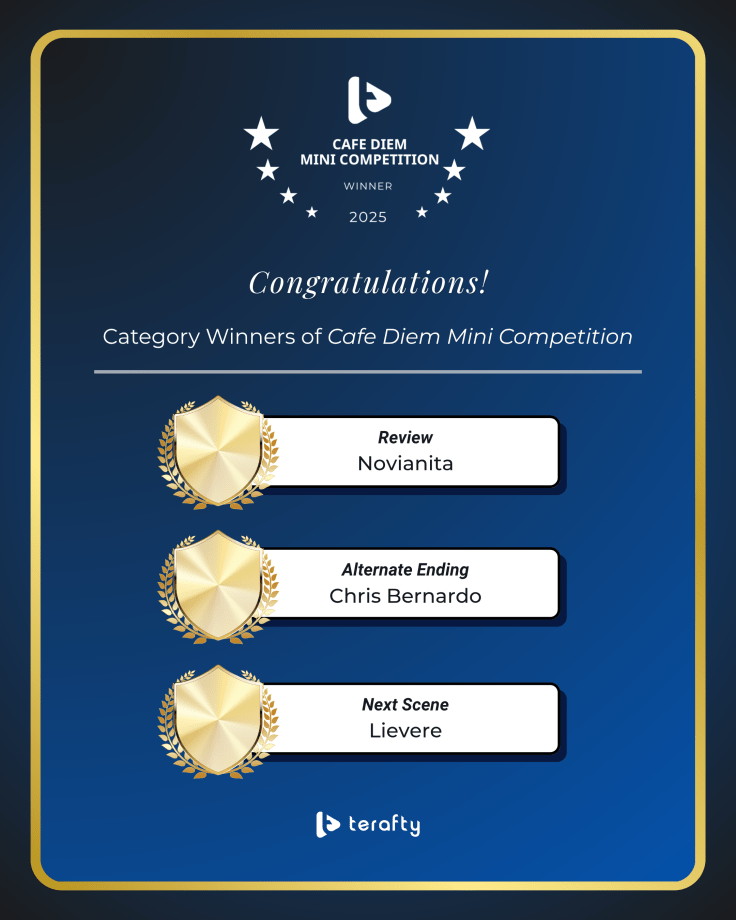
We’re delighted to share the finalists and winners that stood out from a highly competitive pool for echoing the spirit of Cafe Diem.
1. Review
Chi Nguyen
Dorathy Udokpoh
Novianita — Winner2. Alternate Ending
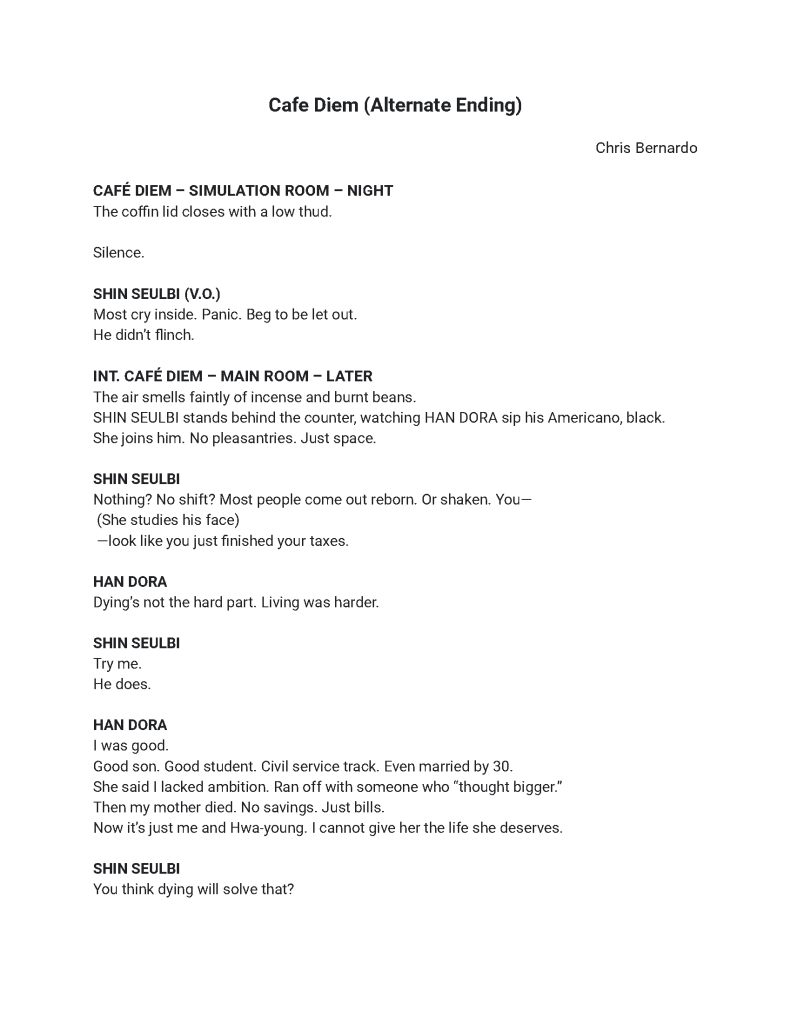
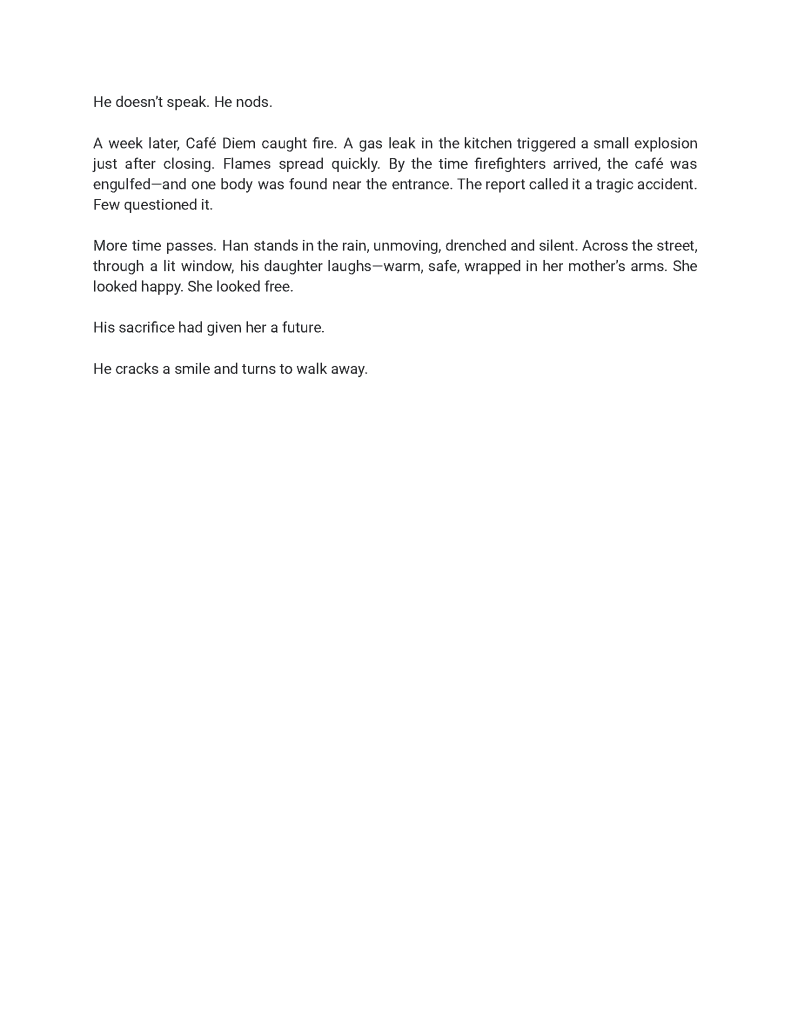
antonidb
Chris Bernardo — Winner
Justine Oh3. Next Scene
Ahmad Fauzan Musyafa
Lievere — Winner
Novianita4. Tagline
No finalist was selected in this category.ℹ️ Notes Before You Read
- These works represent each creator’s own lens. Some elements may deviate from the film’s intended logic or contain factual inconsistencies. Others offer interpretations that sit beside rather than inside the original canon. We welcome all of it.
- Formatting has been gently refined for readability and flow.
- Participants had the option to submit under either full names or aliases.
✍️ Read the Works
What follows is not just a set of entries. Rather, it’s a collection of reflections, extensions, as well as echoes. Read them as narratives that stand on their own.
*Tap the images to view them in full.
Review by Novianita
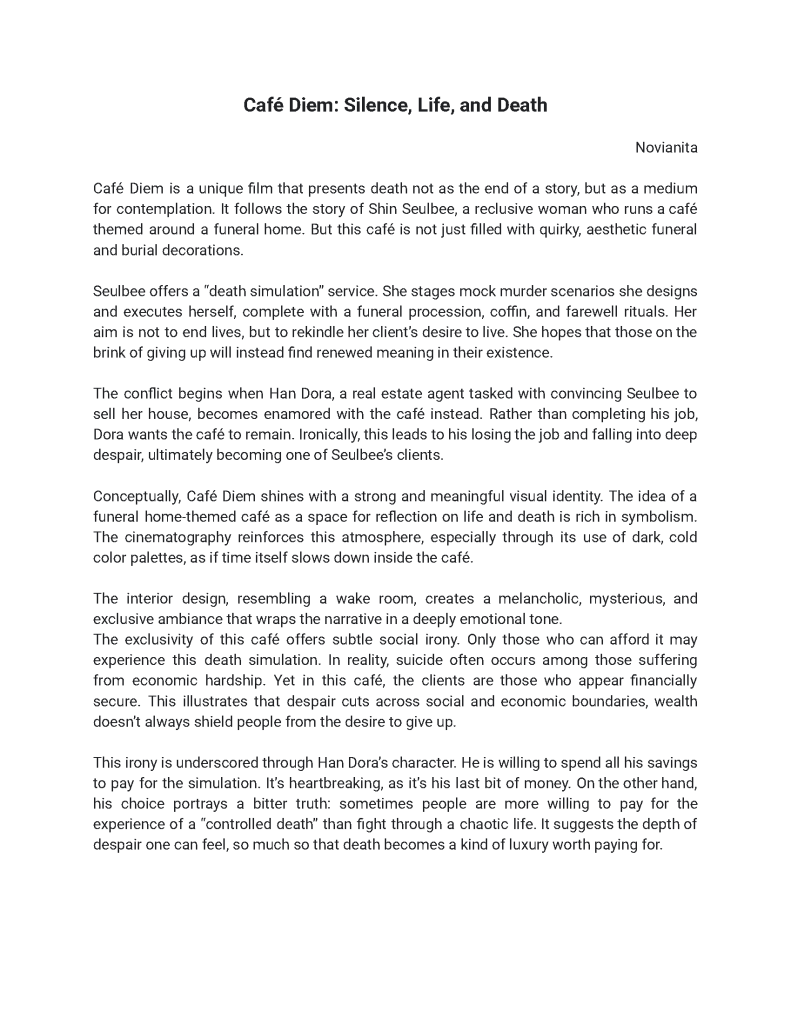
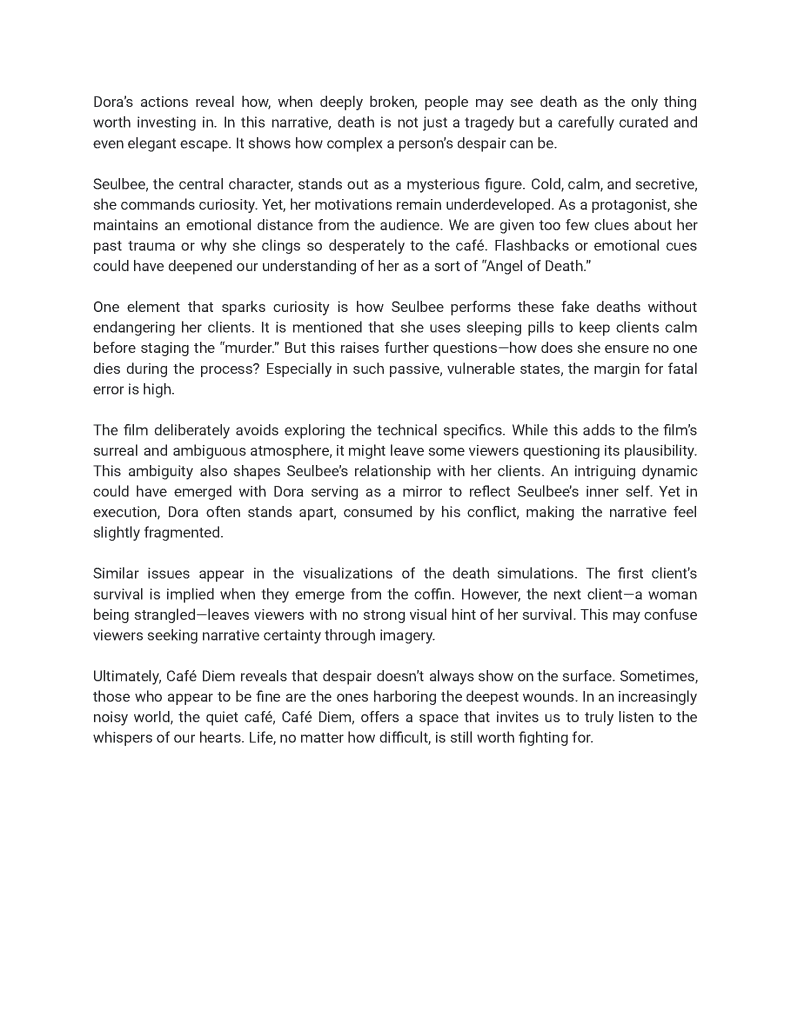
Alternate Ending by Chris Bernado

Next Scene by Lievere


-
Webtoons, K-Dramas, and Now What?
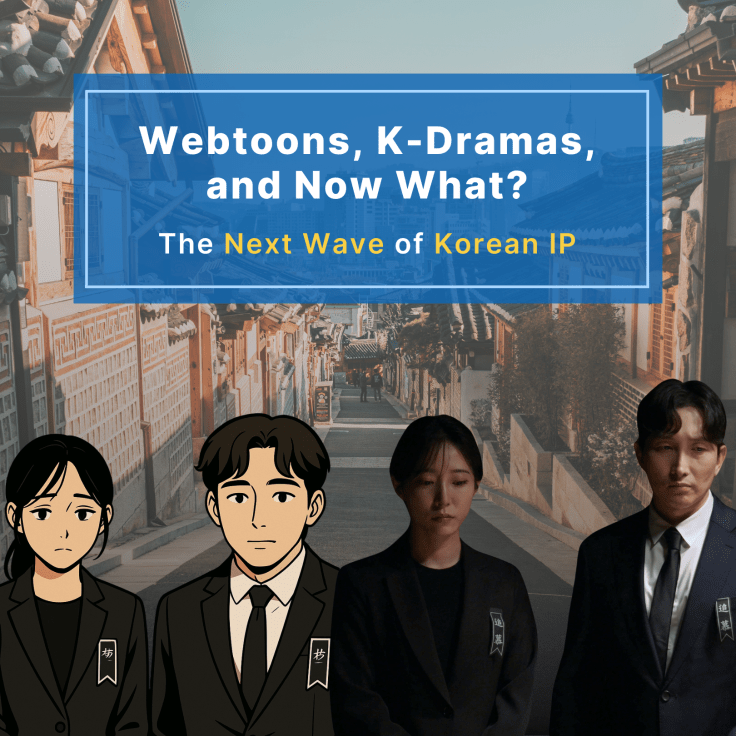
For more than a decade, South Korea has dominated cultural exports with a cleverly industrialized IP pipeline. Webtoons, mobile-native comics born on Korean platforms such as Naver and Kakao, have evolved into a goldmine for K-dramas, films, games, and beyond. But as the webtoon-to-drama formula reaches maturity, the question arises as to what comes next.
This isn’t just about content trends. It’s about how Korea built a vertically integrated digital storytelling economy and why its next leap may come not from big studios, but from participatory platforms, fan-driven formats, and entirely new definitions of what counts as a “story.”
Webtoons as IP Engines
What pulp novels were to mid-century Hollywood, webtoons became to Korea’s 2010s entertainment boom. Serialized, reader-funded, and rich with fandom energy, webtoons offered a low-risk, high-yield foundation for content adaptation. The formula is to validate a story online, then scale it into a drama, film, or transmedia franchise.
By 2023, over 60% of Korean scripted TV adaptations came from comics. Naver Webtoon and KakaoPage even launched their own in-house studios to capitalize on this pipeline. Creators could build fanbases and revenue long before the first camera rolled. Studios saved time. Platforms pocketed adaptation fees.
But now, everyone’s asking if the model is showing cracks.
Signs of Saturation
In 2024, for the first time in years, Korea’s webtoon sector contracted. New title production dropped. Viewer fatigue rose. The novelty of watching a webtoon come to life wore thin. Even global hits like All of Us Are Dead couldn’t mask the creeping sameness across genres… school romance, zombie thriller, rinse, repeat.Meanwhile, streaming platforms have tightened their belts. Adaptations are no longer guaranteed hits overseas. A 10-million-read webtoon in Korea doesn’t always translate abroad. And the economic model. which relies on churning high-volume content from overstretched creators, is beginning to strain under its own weight.
The Structural Gap: Who Gets to Create?
Beneath the content glut lies a systemic imbalance. Most successful Korean IPs still originate from platform-controlled pipelines. Independent creators exist, but true breakout hits outside the Naver/Kakao axis are rare. Once a story shows traction, it’s often absorbed into the publisher ecosystem complete with exclusivity, editorial pressure, and platform-led marketing.
This has stifled risk-taking. Webtoon algorithms favor the familiar. Studios want what worked last quarter. The result? A narrow creative funnel that privileges safe formulas over wild ideas.
Compare this with Wattpad, where amateur fiction occasionally leapfrogs into global book deals or Netflix adaptations. Korea’s own acquisition of Wattpad was a move to diversify its creator funnel but structurally, the webtoon model remains centralized.
From Passive Viewers to Participatory Worlds
So what’s next? A wave of experiments is redefining the answer.
Platforms like Terafty are flipping the model by letting audiences greenlight projects. Terafty’s short film scenario contests turn fans into funders, curators, and evangelists. Winning ideas don’t pass through a producer’s desk. Instead, they rise directly from community demand.
Elsewhere, Naver is dabbling with AI-powered character chats that let fans talk to their favorite comic protagonists in real-time. Meanwhile, China’s TikTok-esque microdramas are generating billions in revenue with 1-3 minute episodes that blur the line between series and mobile games.
Korea’s storytelling future may not hinge on longer episodes or bigger budgets, but on shorter loops, interactive arcs, and audience-first IP incubation.
What Global Peers Reveal
Japan excels at franchise-building through anime and manga. China dominates ultra-short, app-native storytelling with gamified monetization. The U.S. swings between Marvel-sized IP machines and A24-style indie breakthroughs.
Korea is somewhere in between. It leads in production quality and international distribution, but often lags in format innovation or decentralized creator discovery.The opportunity may be to combine Korea’s storytelling prowess with community-driven formats and real-time development feedback. In other words, Korea may benefit from blending Hollywood’s narrative polish with Web3’s participatory spirit.
Conclusion: A New Era of Korean IP is already underway
Korea’s next IP wave won’t look like the last. It won’t be just another zombie webtoon or school-set fantasy. It will be a co-created universe. A modular story format. A fan-led contest that scales globally. A drama shaped in real-time through audience votes.
To get there, platforms must build tools that reduce friction between creators and communities. Studios must de-risk originality. And creators must be willing to build with their fans, not just for them.
Webtoons and K-dramas weren’t the endgame. They were the warm-up.
The next Korean IP revolution won’t be televised. Rather, it’ll be streamed, voted on, co-written, and maybe even played.
Terafty is an interactive storytelling platform where Korean creators and global fans co-create cinematic stories. Learn more at http://www.terafty.com.
 Terafty