
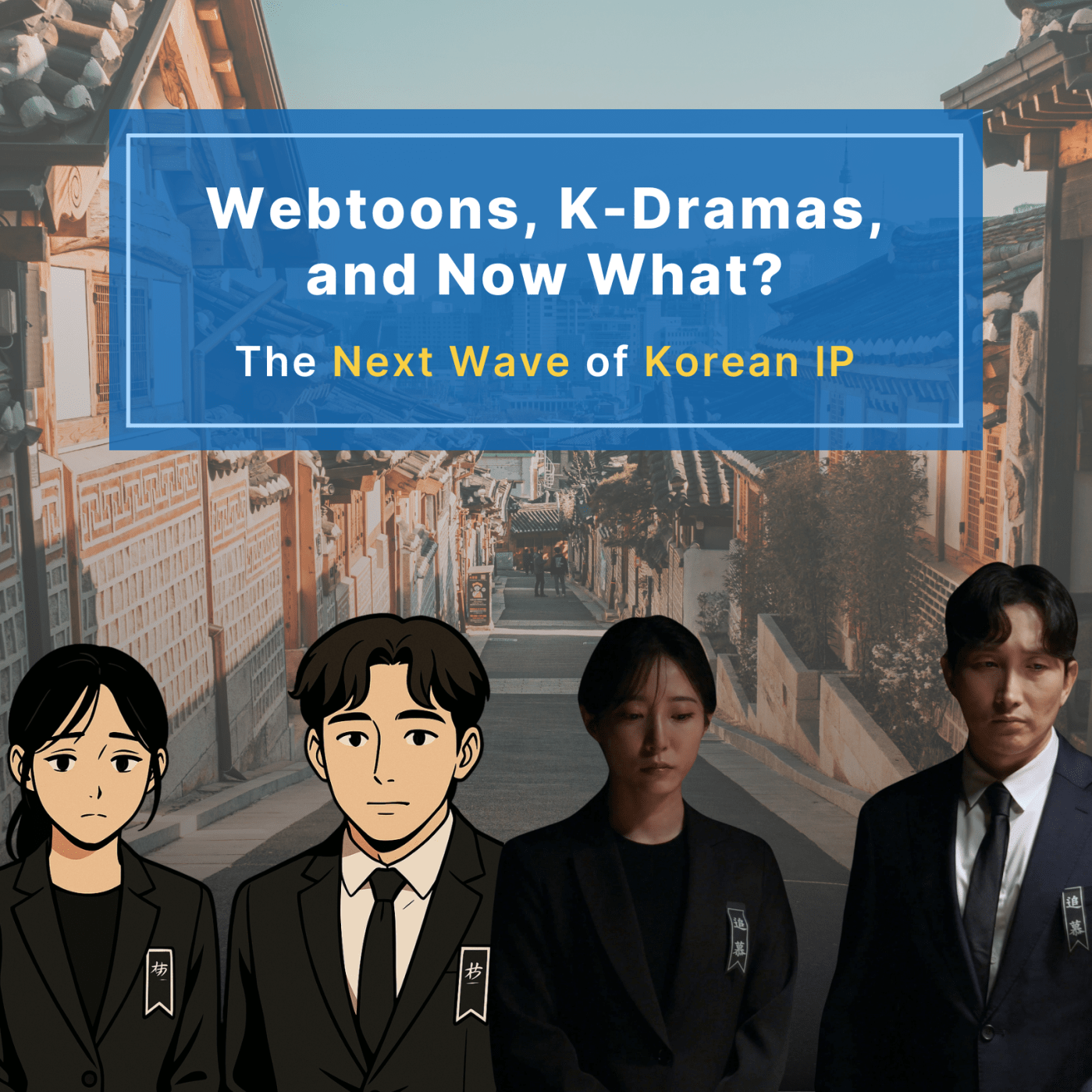
For more than a decade, South Korea has dominated cultural exports with a cleverly industrialized IP pipeline. Webtoons, mobile-native comics born on Korean platforms such as Naver and Kakao, have evolved into a goldmine for K-dramas, films, games, and beyond. But as the webtoon-to-drama formula reaches maturity, the question arises as to what comes next.
This isn’t just about content trends. It’s about how Korea built a vertically integrated digital storytelling economy and why its next leap may come not from big studios, but from participatory platforms, fan-driven formats, and entirely new definitions of what counts as a “story.”
Webtoons as IP Engines
What pulp novels were to mid-century Hollywood, webtoons became to Korea’s 2010s entertainment boom. Serialized, reader-funded, and rich with fandom energy, webtoons offered a low-risk, high-yield foundation for content adaptation. The formula is to validate a story online, then scale it into a drama, film, or transmedia franchise.
By 2023, over 60% of Korean scripted TV adaptations came from comics. Naver Webtoon and KakaoPage even launched their own in-house studios to capitalize on this pipeline. Creators could build fanbases and revenue long before the first camera rolled. Studios saved time. Platforms pocketed adaptation fees.
But now, everyone’s asking if the model is showing cracks.
Signs of Saturation
In 2024, for the first time in years, Korea’s webtoon sector contracted. New title production dropped. Viewer fatigue rose. The novelty of watching a webtoon come to life wore thin. Even global hits like All of Us Are Dead couldn’t mask the creeping sameness across genres… school romance, zombie thriller, rinse, repeat.Meanwhile, streaming platforms have tightened their belts. Adaptations are no longer guaranteed hits overseas. A 10-million-read webtoon in Korea doesn’t always translate abroad. And the economic model. which relies on churning high-volume content from overstretched creators, is beginning to strain under its own weight.
The Structural Gap: Who Gets to Create?
Beneath the content glut lies a systemic imbalance. Most successful Korean IPs still originate from platform-controlled pipelines. Independent creators exist, but true breakout hits outside the Naver/Kakao axis are rare. Once a story shows traction, it’s often absorbed into the publisher ecosystem complete with exclusivity, editorial pressure, and platform-led marketing.
This has stifled risk-taking. Webtoon algorithms favor the familiar. Studios want what worked last quarter. The result? A narrow creative funnel that privileges safe formulas over wild ideas.
Compare this with Wattpad, where amateur fiction occasionally leapfrogs into global book deals or Netflix adaptations. Korea’s own acquisition of Wattpad was a move to diversify its creator funnel but structurally, the webtoon model remains centralized.
From Passive Viewers to Participatory Worlds
So what’s next? A wave of experiments is redefining the answer.
Platforms like Terafty are flipping the model by letting audiences greenlight projects. Terafty’s short film scenario contests turn fans into funders, curators, and evangelists. Winning ideas don’t pass through a producer’s desk. Instead, they rise directly from community demand.
Elsewhere, Naver is dabbling with AI-powered character chats that let fans talk to their favorite comic protagonists in real-time. Meanwhile, China’s TikTok-esque microdramas are generating billions in revenue with 1-3 minute episodes that blur the line between series and mobile games.
Korea’s storytelling future may not hinge on longer episodes or bigger budgets, but on shorter loops, interactive arcs, and audience-first IP incubation.
What Global Peers Reveal
Japan excels at franchise-building through anime and manga. China dominates ultra-short, app-native storytelling with gamified monetization. The U.S. swings between Marvel-sized IP machines and A24-style indie breakthroughs.
Korea is somewhere in between. It leads in production quality and international distribution, but often lags in format innovation or decentralized creator discovery.The opportunity may be to combine Korea’s storytelling prowess with community-driven formats and real-time development feedback. In other words, Korea may benefit from blending Hollywood’s narrative polish with Web3’s participatory spirit.
Conclusion: A New Era of Korean IP is already underway
Korea’s next IP wave won’t look like the last. It won’t be just another zombie webtoon or school-set fantasy. It will be a co-created universe. A modular story format. A fan-led contest that scales globally. A drama shaped in real-time through audience votes.
To get there, platforms must build tools that reduce friction between creators and communities. Studios must de-risk originality. And creators must be willing to build with their fans, not just for them.
Webtoons and K-dramas weren’t the endgame. They were the warm-up.
The next Korean IP revolution won’t be televised. Rather, it’ll be streamed, voted on, co-written, and maybe even played.
Terafty is an interactive storytelling platform where Korean creators and global fans co-create cinematic stories. Learn more at http://www.terafty.com.
 Terafty
Leave a comment