
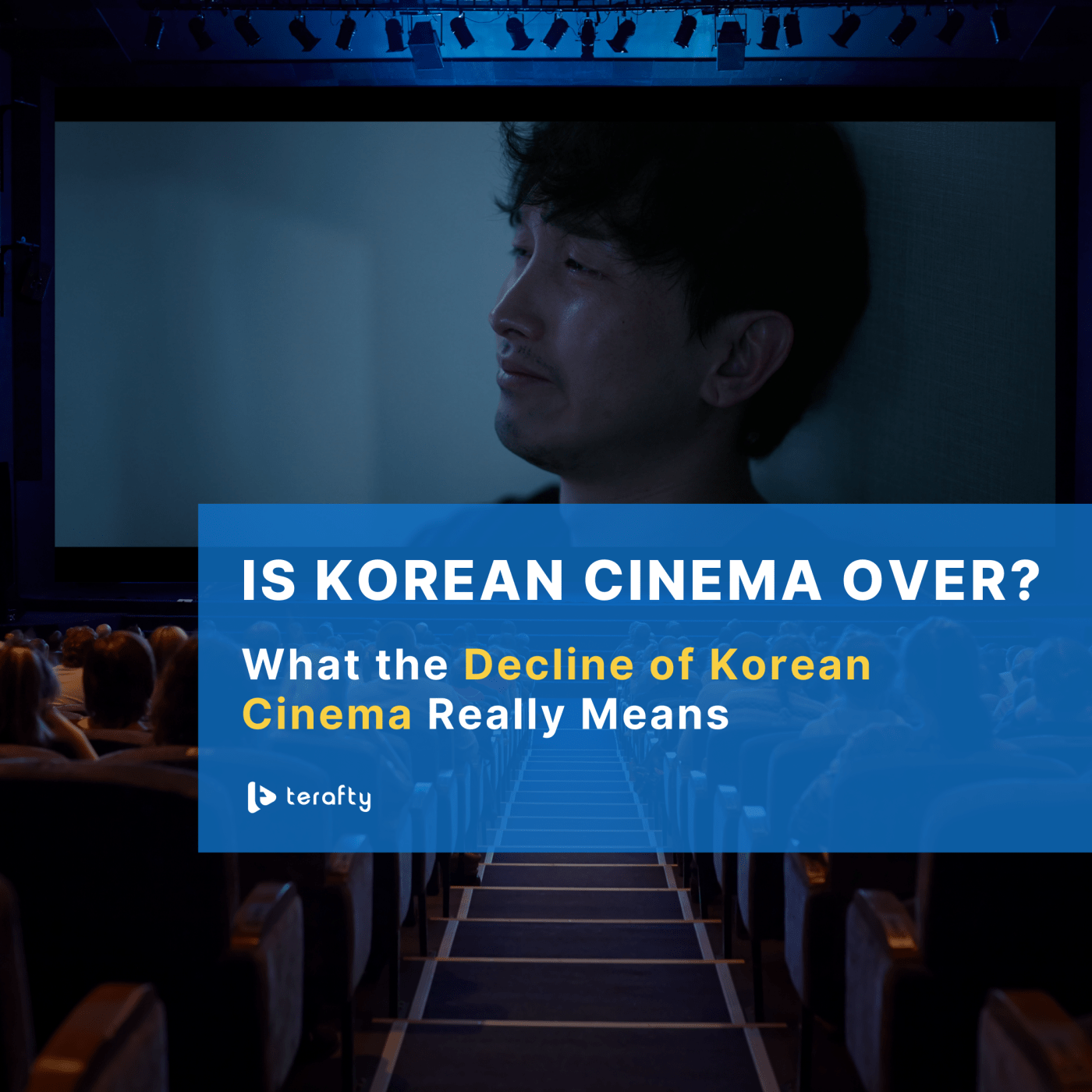
South Korean cinema once felt unstoppable. Parasite’s historic Oscar win, global streaming deals, auteurs turning heads at Cannes made it seem as though the country had cracked the code. However, fast forward to 2025, and the picture is far less celebratory. Theaters are half-empty, audiences are disengaging, and films are flopping.
The numbers are stark. Korea drew just 123 million cinema admissions last year, barely 54% of its pre-pandemic peak. Regrettably, it doesn’t seem like a temporary hiccup. Rather, it is a structural unraveling, which calls for more than nostalgic speeches and government subsidies. So we dug in.
This is a story about attention, risk, and a stubborn gap between creators and their audiences. It’s about how the very forces that globalized Korean content are now disrupting its cinematic core. And it’s about what could possibly come next.
1. Attention Economy Crash
South Korea leads the world in digital connectivity. That connectivity has transformed not only how people consume stories, but what kind of stories they want. In 2025, the average Korean spends nearly 7x more time watching short-form content (YouTube Shorts, TikTok) than on long-form platforms like Netflix.
Short-form delivers quick dopamine hits. The media industry calls it “dofaming” referring to the tendency to chase short, intense stimulation. And it’s rewiring the national attention span. It’s difficult for slow-burn dramas and meditative cinema to compete in a world where viewers are ready to scroll away in seconds.
2. The Streaming Feedback Loop: Faster, Tighter, Hookier
Streaming hasn’t just changed where we watch. It’s changed what we expect.
Audiences now demand faster pacing, tighter narratives, and earlier payoffs. Binge-watching taught us to crave momentum. Streaming blurred the line between TV and cinema, and Korean creators who failed to adjust are losing viewers.A 2023 survey showed the 2nd biggest reason Koreans avoided theaters wasn’t price; it was lack of compelling content. And the 3rd biggest reason? Satisfaction with streaming at home. The story isn’t that Koreans hate movies. It’s that they expect more from them.
3. Safe Bets, Diminishing Returns
Faced with shrinking audiences, investors didn’t double down on innovation. Instead, they retreated to safety (e.g., sequels, remakes, and pre-sold IP). In 2022, just 36 big-budget Korean films consumed over 90% of total investment.
But here’s the catch. Safe bets aren’t exactly working either. In 2023, only six Korean films recouped their production costs. That’s out of over 100 releases.
Essentially, it’s a vicious cycle where fear breeds conservatism, which breeds predictability, which bores audiences, which leads to worse returns, which fuels even more fear.
4. The Audience-Filmmaker Disconnect
A number of Korean filmmakers tend to view cinema as an endangered art. They lament the rise of “shallow” viewers. They mourn the decline of audience taste. Unfortunately, blaming the audience rarely works as a strategy.
Meanwhile, viewers are voting with their attention as well as their wallets. They’re not rejecting depth. They’re rejecting content that doesn’t connect.Some voices inside the industry get it. As one producer put it: “We can’t just make the films we want and guilt people into watching. We have to make films they want to see.”
5. Emotional Appeals Won’t Save Cinema
So far, the response from the industry has leaned on emotion. Calls for loyalty. Pleas for support. Government subsidies.None of that, however, addresses the core problem, that is, a creative ecosystem that no longer knows how to excite its public. Ticket prices have soared, release windows have collapsed, and yet, theaters feel stale. The multiplex no longer feels like a must-go event.
6. Terafty and the Structural Escape Route
There is another way.
Platforms like Terafty are experimenting with new models, which embrace community funding, curated short form content streaming, and audience-first greenlighting. Instead of hoping someone watches, these projects begin with proof that people actually care.
By letting fans vote with their wallets and enthusiasm, Terafty bypasses the old gatekeepers. Projects get funded not because they fit a formula, but because they resonate. A flop here doesn’t kill the studio; instead it teaches. And a hit builds community.
Terafty’s scenario contests, where audiences select the stories they want made, offer a glimpse of what film could look like in a post-blockbuster world: intimate, participatory, and unafraid to take risks.
Conclusion: A Crossroads Rather Than a Cliff
Korean cinema needs to adapt. The old model with big-budget bets, disconnected auteurs, and passive audiences is running on fumes.
To survive, the industry must do more than beg for attention. It must earn it. That means shorter feedback loops. Bolder distribution. Real audience engagement.
It also means embracing platforms that treat viewers not as passive consumers but as co-creators. If that sounds unfamiliar, good. Because unfamiliarity is exactly what Korean cinema needs right now.
Instead of mourning what once was, Korean cinema needs to start building what could be.
Terafty is an interactive storytelling platform where Korean creators and global fans co-create cinematic stories. Learn more at http://www.terafty.com.
 Terafty
Leave a comment