
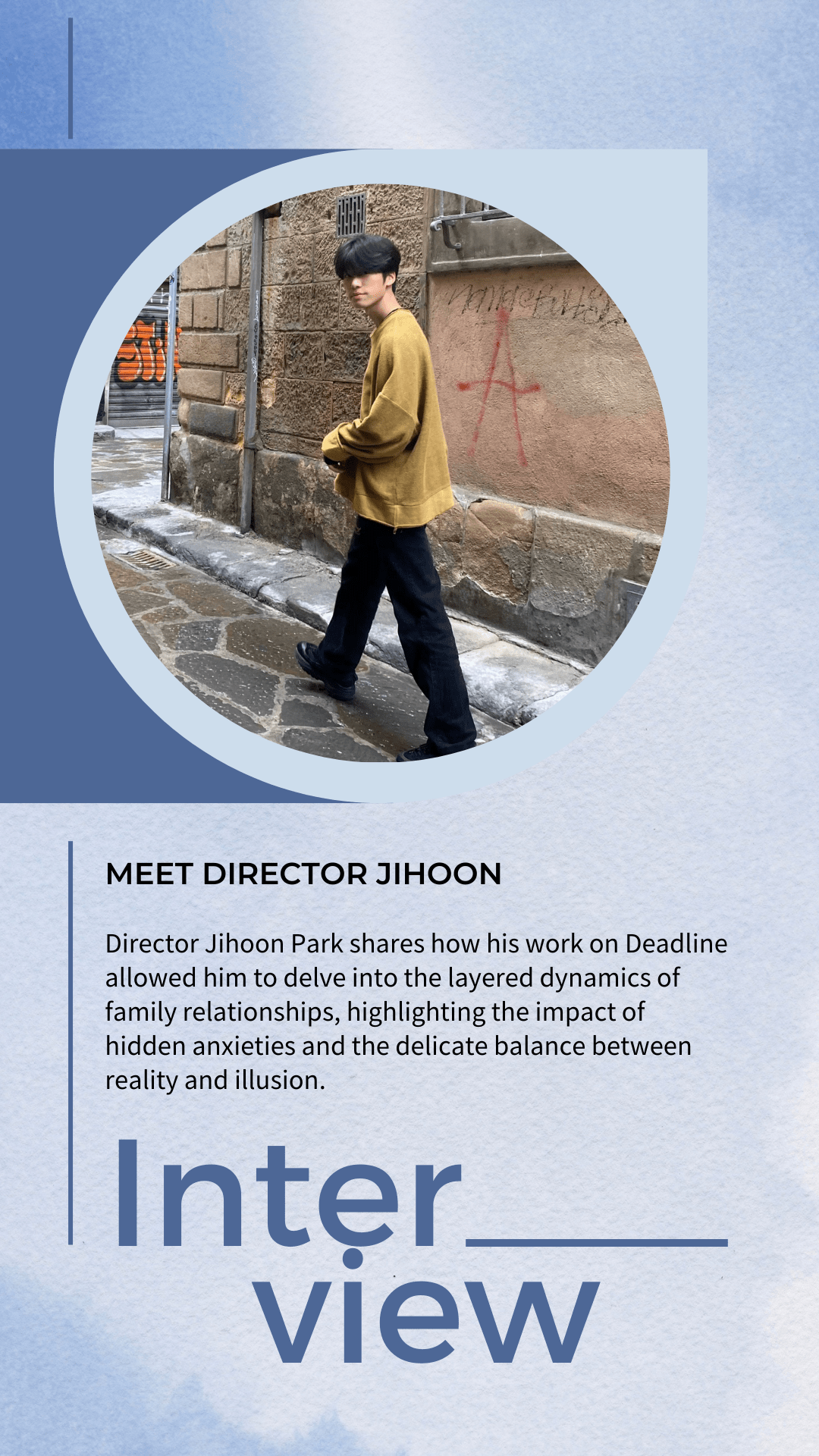
In the world of cinematic storytelling, where each frame is a heartbeat and every glance a revelation, director Jihoon Park crafts a world of quiet intensity in Deadline. With a sharp eye for detail and a profound understanding of the unspoken, Park delves into the tensions of family life, where the weight of hidden anxieties pulses beneath the surface. His film is a haunting exploration of vulnerability, secrecy, and the delicate line between illusion and reality. Speaking to us with the thoughtful precision that characterizes his work, he shares his vision of Deadline—a film that doesn’t just tell a story but reaches into the audience’s own unspoken fears, lingering long after the final scene fades.
What inspired you to direct Deadline?
My inspiration for directing Deadline likely stemmed from the intense allure and curiosity surrounding certain moments and themes. This project tackles dramatic tension through mystery and thriller elements and delves into the intricate psychological shifts that arise in constrained time and space. I wanted to explore how characters make choices when racing against time and how these situations can immerse the audience in suspense.
Additionally, I found the moments when people reveal their true nature under time pressure fascinating. Through Deadline, I wanted to depict unexpected twists that arise when people find themselves at a crossroads.
How did you approach conveying the characters’ emotions within the short 5-minute runtime?
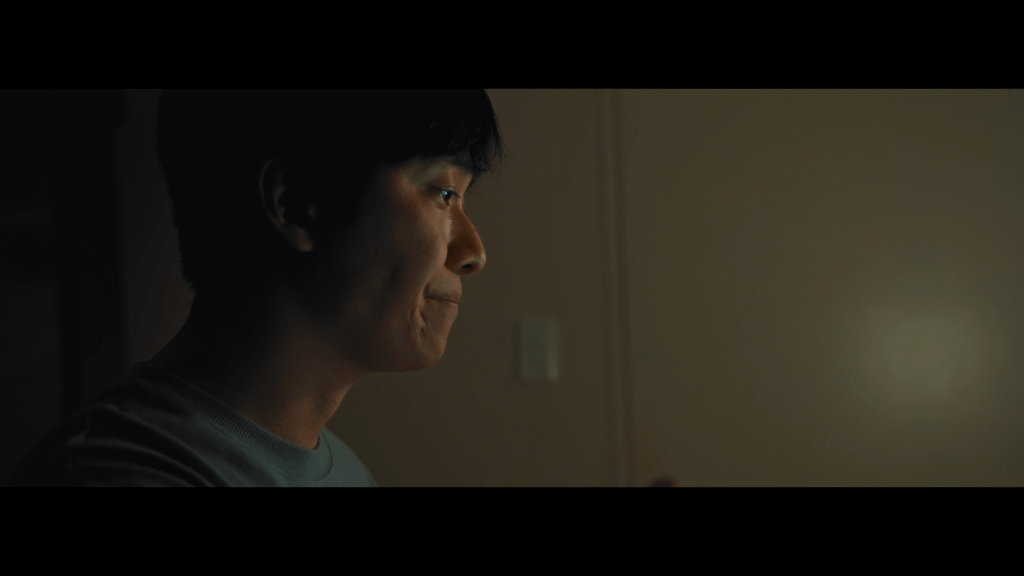
To convey emotions powerfully within just 5 minutes, I focused on a few key elements. First, directing restraint and attention to detail. Since emotions needed to be communicated quickly and effectively, I made sure each scene contained rich information. I directed every nuance, from character expressions and eye movements to subtle gestures, to convey psychological depth. I minimized dialogue, letting emotions speak through non-verbal cues. Second, I used lighting and music to emphasize the characters’ psychological states. Lighting revealed inner anxieties, while sound created suspense and immersion, resulting in brief yet impactful moments. Lastly, I utilized visual contrast and swift transitions to heighten tension, carefully structuring rapid changes and framing each angle to express psychological pressure.
What is the significance of the father hiding his medication from his son?
The father hiding his medication from his son symbolizes his inner sense of responsibility, anxiety, and fear. It reveals his desire to maintain his image as a protector, rather than showing dependence. This act of concealment also reflects the distance and communication gaps within the family. While he cares for his family, he conceals his weaknesses and anxieties, which leads his son to expect a straightforward, reliable father figure, amplifying the psychological tension. Ultimately, the father’s secrecy represents his desire to hide his imperfections and remain a source of strength, highlighting his internal conflict and isolation.
What qualities did you prioritize in the casting process?
In casting, my priority was finding actors capable of delicately expressing complex emotions and psychology. Deadline needed actors who could quickly and effectively portray emotional depth within a limited timeframe. I focused on the ability to convey inner feelings through expressions and eye movements, as there is little dialogue and rapid emotional shifts. The father needed to express strong responsibility, anxiety, and fear naturally, while the child actor needed both a sense of innocence and curiosity, along with the weight to build tension. I also sought natural chemistry between the actors, aiming to maintain a subtle tension amidst the warmth of the father-son relationship.

What was the biggest challenge in making Deadline?
The biggest challenge was maintaining tension within time and budget constraints while capturing the core scenes effectively. Originally planned as a 15-minute film, Deadline had to be reduced to a third due to limitations in location and time, requiring us to convey the urgency and emotional shifts in a highly compressed story. We had to carefully select scenes, distinguishing essential moments and ensuring a seamless flow within the shortened runtime. It was also challenging to use lighting and camera movement to heighten thriller tension within a confined space, but we worked to maximize anxiety and suspense through these visual techniques.
What message do you hope to convey to the audience?
Through Deadline, I wanted to express how people in modern society often hide their inner anxieties and pain, even from family. Parents feel pressured to appear perfect in front of their children, hiding their vulnerabilities, which can create distance within the family. Another theme is the boundary between illusion and reality. I aimed to explore how everyday anxieties can morph into tangible threats, showing how minor fears can permeate daily life and transform into real dangers. Ultimately, I wanted to portray how secrets hidden for loved ones can lead to greater conflicts and fears, prompting viewers to reflect on the importance of communication and understanding in family relationships.
What kind of films would you like to make in the future?
Moving forward, I’d like to create psychological thrillers or mysteries based on everyday fears and anxieties. My goal is to explore the hidden fears and conflicts within people’s emotions, crafting tense stories that audiences can easily relate to. I’m especially interested in delivering intense immersion within short runtimes and bringing fresh perspectives to universal themes.
I’d also like to create films that bring imagination to empty spaces. There are everyday moments, like a suddenly flickering porch light or an oddly captivating empty space, that people often overlook. I hope to use these elements to evoke subtle unease and curiosity, encouraging audiences to recall similar experiences. Through these themes, I aim to evoke underlying anxieties and offer viewers the chance to connect with and interpret these emotions based on their own experiences. Ultimately, my goal is to create films that allow audiences to project their emotions and expand the narrative through personal interpretation.
 Terafty
Leave a comment