
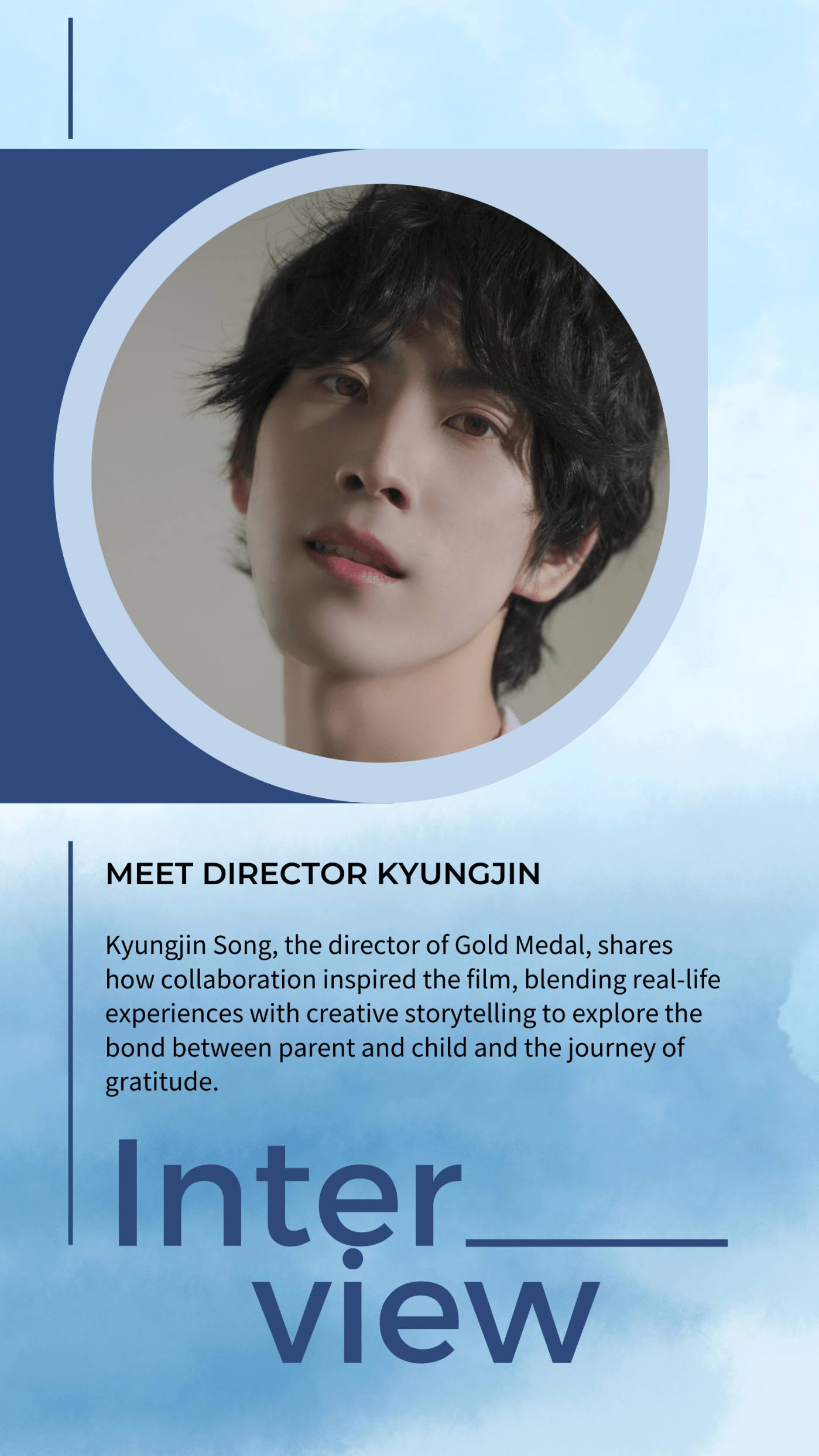
In Gold Medal, director Kyungjin Song brings an intimate lens to the universal complexities of family bonds. Through nuanced storytelling and a touch of real-life inspiration, the film unravels the delicate dance of gratitude and the unspoken emotions that often linger between parent and child. With a heartfelt yet realistic approach, Gold Medal invites us to reflect on the beauty and quiet tension in these relationships, offering a narrative that feels both deeply personal and widely relatable.
What motivated you to produce Gold Medal?
I often chat with Kangmin about different projects over meals or coffee. Before making Gold Medal, we spent a month filming in Jeju, and during that time, we bounced around all kinds of ideas. We thought it would be fun to create something inspired by those conversations, based on real-life events. Kangmin’s personal stories felt touching and relatable, especially for anyone who understands the bond between parents and children. So, we decided to make this film by blending real stories with elements that would resonate universally.

Did any particular work inspire or reference this film?
Rather than a specific reference, we adapted a real-life story with our own unique touch. I usually aim to add authenticity by incorporating real experiences, so I took a similar approach here.
What does the relationship between parent and child represent in this film?
It’s just like the title, Gold Medal. The ultimate reward of great effort is a gold medal, right? For a mother, the “gold medal” could be the result of the pain of childbirth and the dedication she’s poured into raising her child.
For the son, knowing this, he wants to be the kind of child who makes her proud, like a gold-medal son. But in reality, he finds that it’s not easy to live up to this ideal, especially in person, where things feel awkward or he’s not sure what to say. I see it as a journey toward that “gold medal” relationship.
What did you focus on when directing the Taekwondo scenes?
Since Kangmin was a Taekwondo athlete, we utilized real footage from one of his matches, and then we edited it to fit the Gold Medal vibe, using it to set the tone at the start.
Do you have any memorable or funny stories from the shoot?
The restaurant called “Rest” in the film is actually a place that Kangmin and I visit often. It’s where we originally came up with the idea, so filming there was meaningful.
When we were casting for the mother’s role, we contacted a senior actor who is quite shy. I was very careful because she’s a well-respected senior, so I sent a long, detailed email explaining the project. After a few days, she responded, but only by text. Due to a tight schedule, we couldn’t meet beforehand.
She later told us that on the day of the shoot, she was uncertain about coming because she hadn’t heard back directly from me and thought she might have misunderstood. Since she was a senior, I had only texted, thinking it would be respectful.
Even so, the shoot went really well, and afterward, she sent me a message saying, “It was a special day for me, meeting such good people through a remote casting process, which helped make up for unpleasant experiences on previous projects.” It turned into a wonderful memory and a fun story!

What message would you like to convey to the audience through Gold Medal?
When I think of my parents, I always feel I should do more for them, spend quality time, treat them well. But, in reality, I often fail to do that because of work and other pressures.
Sometimes, we even take out our stress on them. In truth, our time with our parents is limited. Rather than having regrets, we should cherish them while they’re here. Even a small gesture, like a hug or sharing a cup of coffee, might feel like giving them their own “gold medal.”
What kinds of films would you like to make in the future?
I want to make deeper, more realistic films. I often write three or four scripts a month, experimenting with different tones and feelings. Mixing these ideas adds depth to situations and characters, so I’d like to create works where the message naturally shows this realism and depth.
I’ve been working on small-scale projects for about six years now, mostly in the melodrama genre. Looking back, my earlier works had a lighthearted college vibe, but recently, I feel there’s more depth and complexity in my storytelling. I’d like to try making a realistic yet deeply relational film in the melodrama genre and expand my boundaries to see how much I’ve grown.

What type of films do you want to create in the future?
There are so many experiences in our lives that can’t be captured in words or photos. I want to carefully collect and show these fleeting moments, sometimes organizing them with a light touch. I aim to create a calm and intimate world where the audience can experience moments without needing them explained.
 Terafty
Leave a comment