

Written by Sesam Rana Magar, Terafty Manager
Photos: All images featured in the blog are sourced from Flickr.
The establishment of the relationship between India and Korea traces its roots back to 48 AD when King Suro of the Karak dynasty married Princess Suriratna of Ayodhya. Technically, neither Korea nor India existed during those times, but, this historical union signifies that the cultural exchanges between the two nations were initiated way before the diplomatic ties established in 1973.
Since the establishment of the formal ties, the countries have shared a politically and diplomatically peaceful relationship. Today, the global phenomenon of Hallyu is playing an integral role in strengthening the relationship between their people as well.
Hallyu, which means the global popularity of Korean culture has transcended far beyond its geographical origins and has deeply resonated with the people of India. Indian enthusiasts of Hallyu have integrated aspects of Korean culture into their own. Let’s delve into how Indian Hallyu enthusiasts have embraced Korean culture.
1. The Impact of Hallyu on Indian Entertainment Content
i) Collaborative Projects Between Indian and Korean Artists
Korean pop (K-pop) music is undeniably one of the most popular music genres in the world. It is evident from the fact that many K-pop songs get top spots for weeks and months in the global music charts. Korean dances and choreographies are equally popular. According to an American music market observer called Luminate, India stood in 5th position for on-demand audio and video streams of K-pop in 2023.
Korean artists are widely recognized for their music, dance and other arts within the entertainment industry. Consequently, it is natural for artists from diverse cultural backgrounds to have a desire to collaborate with them. Furthermore, this desire extends to K-pop fans too. They want their favorite Korean artists to collaborate with artists from their home country.

The singers collaborated on the song “Echo”
In this regard, Indian K-pop fans are in a fortunate position. Recently, there have been many collaborations between the artists of the two nations, showcasing the vibrant fusion between the diverse cultures of India and Korea. Some of the recent notable collaborations are Armaan Malik & Eric Naam’s collaboration on the song “Echo,” as well as Armaan Malik’s project with Tri.be featuring Allu Arjun. These cross-cultural artistic partnerships have further elevated the popularity of K-pop in India.
Talented individuals from India, such as Shreya Lenka of BlackSwan and Aria of X: IN, have embarked on their journeys in the K-pop industry, marking a significant milestone in their careers. Additionally, in India, there is a notable increase in the number of concerts featuring K-pop artists and groups. The recent performance of GOT7’s Jackson Wang at Lollapalooza India is a testament to the burgeoning popularity of Korean or Korea-based artists.
ii) Indian Content Creators Embracing Korean Culture
Indians stand out among the prominent YouTubers specializing in Korean content. A standout example is Pooh in Korea, whose Korea-related videos consistently get no fewer than a million views each. Even her most recent video would have over a million views. She makes videos in Hindi and her viewers predominantly comprise individuals from the Indian demographic. This signifies the profound love of Indians for Korea and their avid interest in Korea-themed content.
The recently introduced ‘E-6 (Culture and Entertainment) Hallyu Visa’ by the Korean government is expected to increase the number of Korea-related content creators, and Indian creators can benefit from this.
iii) Indian Cinema Drawing Inspiration from Korean Filmography

Bharat is an Indian adaptation of “Ode to My Father”
Both the Korean and Indian cinema are big entertainment industries. Korean cinema is widely recognized for its innovative concepts and themes. This has greatly inspired Bollywood movies and influenced its movie productions. Numerous Bollywood movies have drawn inspiration from Korean cinemas. For example; “Bharat” is inspired by “Ode to My Father,” “Ek Villain” is inspired by “I Saw the Devil” among numerous others. Bharat, starring Bollywood superstar Salman Khan, became a commercially successful movie in 2019.
2. The Emergence of Korean Dramas Across India

They were the first dramas that were telecasted on Indian television in 2006.
The first Korean dramas ever broadcast on Indian television channels were “Emperor of the Sea” and “Dae Jang Geum.” They were aired on India’s state television channel “Doordarshan” in 2006. During that time, Korean dramas were particularly popular among the youths of Northeast regions of India.
The popularity ascended when Myanmar started importing Hallyu products with English subtitles from China which in turn found their way into the Northeastern parts of India. During those times, Bollywood movies and Indian television channels were boycotted in many states of Northeast India due to political reasons and this is where the Korean dramas filled the void of entertainment for the Northeastern people.
Today, with the rise of Hallyu, the popularity of Korean dramas has transcended beyond the Northeastern regions of India and the Hallyu fans are well distributed across India.
3. Korean Language Learners in India
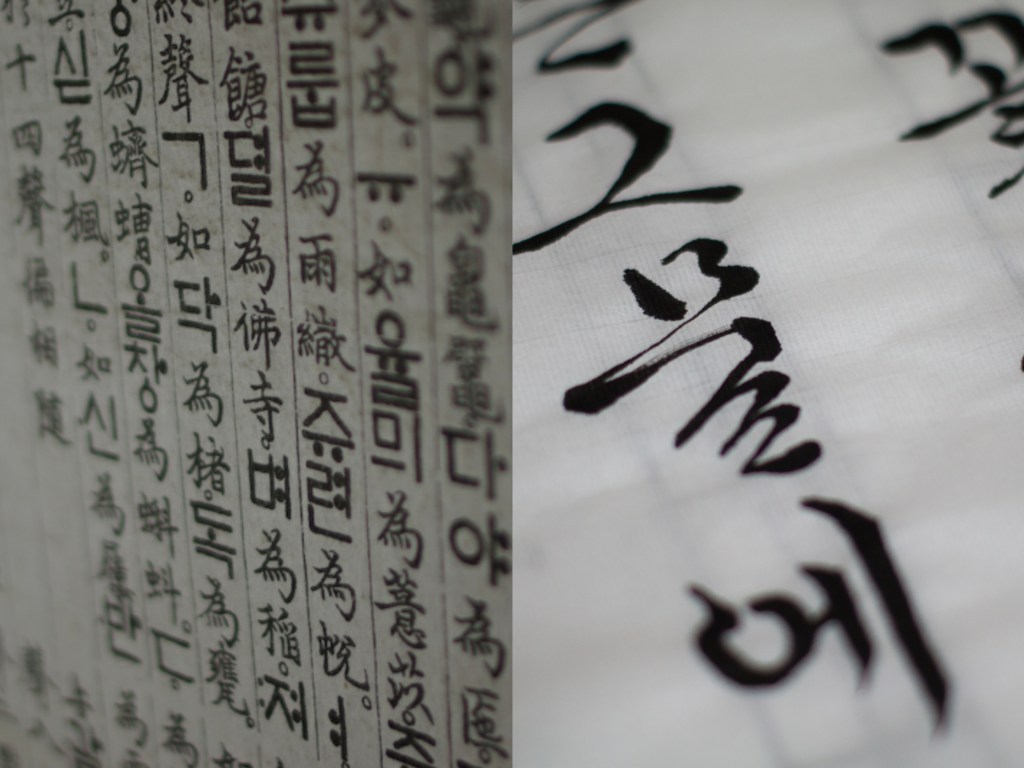
Korean Culture Centre in India (KCCI) frequently announces Korean language classes and many Korean language enthusiasts participate. Besides, with the centre’s help, some schools in India have provided Korean language instructors and textbooks to their students.
The Korean language became the fastest-growing foreign language in India in 2022. There was a 50% increase in Korean language learners in the year. According to KCCI, ever since the Korean language was introduced as one of the second foreign language electives in the revised version of the National Education Policy of India 2020, more schools in India started incorporating Korean language classes.
Indian students find it quite easy to learn Korean as it has the same word order and principles as Hindi. Therefore, there has been a notable growth in the study of the Korean language across India in recent years.
4. Korean Literature
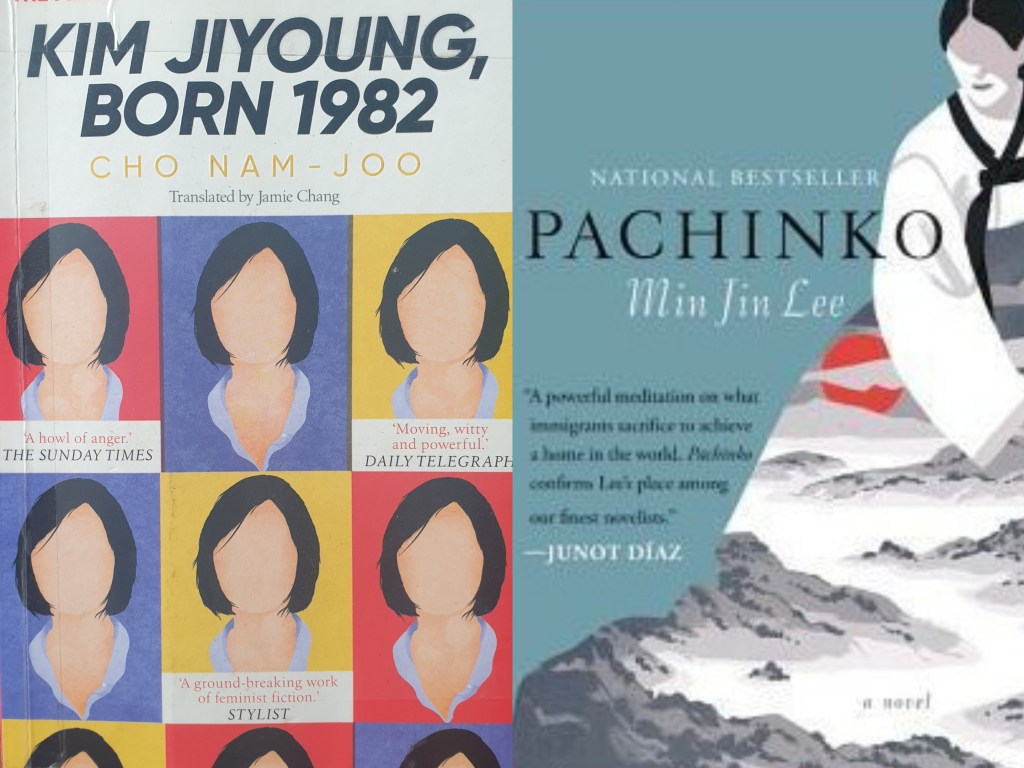
Both are popular Korean books translated into English.
Both India and Korea have shared their mutual admiration through their literature. India’s Nobel Laureate, Rabindranath Tagore, composed a poem in 1929 titled “ Lamp of the East” which states “In the golden age of Asia, Korea was one of its lamp bearers, and that lamp is waiting to be lit once again, for the illumination of the East.” The lines in the poem reflect Tagore’s positive and hopeful vision of Korea’s bright future.
Similarly, Korean Author Lee Ocksoon has written a book titled “There is No Curry in India.” It became the bestselling Korean myth-busting book in India with the sales of 200000 copies in 1997. She wrote 20 books related to India.
Furthermore, Kim Chi Ha was the first Korean writer whose work was translated into Hindi in the mid-1970s by Hindi poet, Rajesh Joshi. He translated “The Groundless Rumor” and “Five Bandits” into Hindi which fascinated the Indian people as they resonated with the mentions of political repressions in the poem.
The reading culture is quite good in India among diverse ages of people. They enjoy exploring new developments in the literature field. Korean literature is increasingly popular, and you can easily find Korean books in Indian libraries and bookshops.
5. Korean Cultural Events in India
Korean organisations in India, such as Korean Embassy and Korean Culture Centre host many Korean events, especially during Seollal, Chuseok and other Korean festivals. Besides, Korean companies, such as LG and Samsung organize contests related to Korea. Interestingly, Korean culture enthusiasts in India also host many small-scale Korean events on their own. These events attract many people. This reflects their dedication and connectedness to Korean culture.
6. Korean Delicacies

The Korean food culture is full of mouth-watering delicacies and Indian people love it. Korean cuisines, such as Kimchi, Ramen, Tteokbokki and others suit the spicy and savory preferences of Indian palates. Indians also appreciate the health benefits of Korean cuisine. Korean restaurants and cafes attract the attention of many food lovers, especially in metropolitan cities.
7. Korean Makeup and Fashion

Since the early 2000s, Korean makeup and fashion have captivated the North-Eastern population of India. However, it was quite a challenge to find Korean brands, as international shipping was not as streamlined as it is now. The popularity of Korean culture opened the door for many Korean brands and today, they have stores in India. The demand for Korean makeup and fashion has transcended beyond North-East to other regions of India and now, the easy access has allowed more people to indulge in Korean trends and experiment with their personal style.
Conclusion
From the monarchial ties and cultural exchanges to international business and trade, Korea and India share a mutual relationship. Besides, the tangible cultural aspects, Indians are deeply fascinated by Korea’s economic progress and they largely attribute the economic success of Korea to the mindset, hardwork and work culture of Korean people.
They resonate with the fact that Korea had to show great resiliency to emerge as a powerful nation. The positive learning attitude of Indian people enables them to learn from Korea, particularly its strong work ethic and resilience.
 Terafty
Leave a comment